What is the Wrocław outdoor escape game?
The Wrocław outdoor escape game is an escape room that leaves the building behind and takes over the city's streets: you play on your phone, and each of the 10 stops holds a puzzle you crack by observing what is around you and thinking logically. In about 2 hours you walk 4.2 km, roughly 58 minutes of it on the move, starting whenever you like.
Each puzzle is tied to a landmark such as Market Square, Tumski Bridge or St Elizabeth's Church, and each one stands on its own, so no storyline links the stops. Stuck? Whether you call for help is your own call, and it comes in no more than three graded steps. Wrocław suits the format well: the route crosses the Old Town, the University and the cathedral island, so the scenery keeps changing and your eyes stay busy.
- Durationabout 2 hours
- Walkingabout 58 min · 4.2 km
- Stops10
- LanguagesEnglish, German, French, Italian, Spanish, Dutch, Polish
What you do on the Wrocław escape game
Solve
Work out the puzzle at each stop from the scene in front of you. No prior knowledge of Wrocław is needed.
Look closer
The clues sit in the details of each place, in façades, monuments and the layout of the square.
Walk
Google Maps guides you from stop to stop: about 58 minutes on foot across roughly 4.2 km.
Take your time
No countdown runs. Use a hint when you need one, stop for a coffee, and come back later or another day.
See the route and attractions →
How it works
- Book online Choose the number of players. Your booking reference arrives by email straight away.
- Get the app Download the World City Trail app from the App Store or Google Play and enter your booking reference.
- Play when you like Start whenever you are ready, walk at your own pace and pause any time. No guide, no fixed schedule.
Who it suits
Friends
The puzzles give everyone something to debate at the next stop, and nobody has to know the city beforehand.
Couples
A shared challenge that keeps you talking as you cross the river towards the cathedral island, with no clock ticking.
Team building
Teams of up to 5 play on their own phones, which makes it a practical choice for colleagues.
Good to know
- Bring a charged smartphone with mobile data; a power bank helps.
- Best started in daylight, so you can see the details the puzzles ask about.
- No entry tickets needed: everything happens outside the buildings. Going inside is optional and paid separately.
- Family friendly; children must be accompanied by an adult.
- Not suitable for wheelchair users and difficult with strollers.
- Teams of up to 5 work best; bigger groups split into several teams, one ticket per player.
- Every purchase helps support stray cats and dogs in Greece.
Puzzle route: from The Passage to Juliusz Słowacki Park
10 stops · about 58 min walking · start: The Passage · finish: Juliusz Słowacki Park
The first puzzle waits at The Passage on Świdnicka Street and the last in Juliusz Słowacki Park, with eight landmarks in between: Nicolaus Copernicus Park, the Museum of Bourgeois Art, Market Square, St Elizabeth's Church, the University of Wrocław, Tumski Bridge, the Cathedral of St John the Baptist and the National Museum. Daylight makes the best start, since the puzzles are solved outdoors and rain or wind slow everything down. Google Maps guides you between stops, the app lets you change the start or the order, and the puzzles need no entry tickets.
Open the route map ↗
1The PassageStart
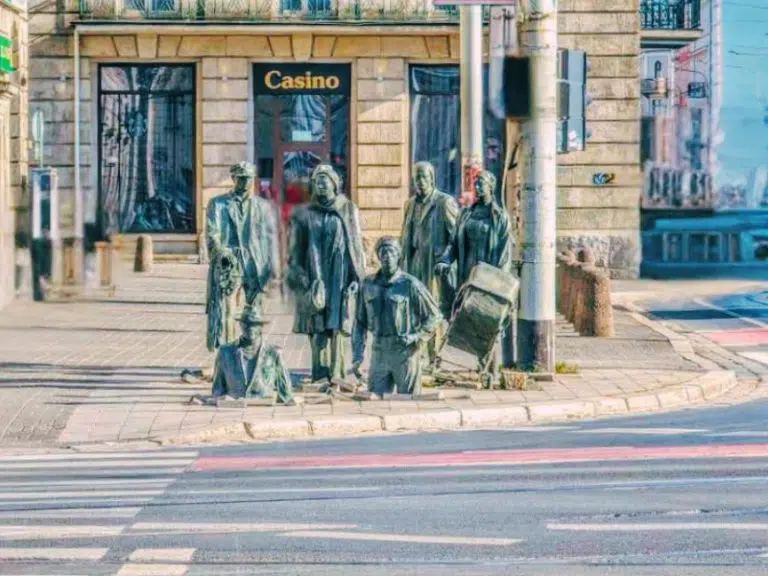
The Passage, Przejście in Polish, is a group of life-size bronze pedestrians by the artist Jerzy Kalina: on one side of the street they sink into the pavement, on the other they rise out of it again. Unveiled in 2005, it recalls the martial law imposed in Poland in December 1981.
Read the full story →
2Nicolaus Copernicus Park
This green park on the way from the Passage into the old town is named after Nicolaus Copernicus, the astronomer who placed the Sun rather than the Earth at the centre of the universe. Its trees and paths offer a short break from the busy streets before the route turns towards the Market Square.
3Museum of Bourgeois Art
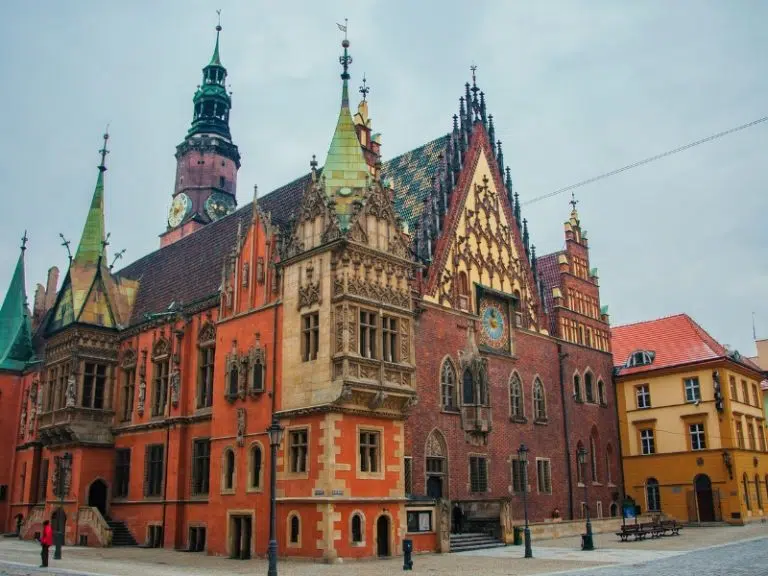
The Museum of Bourgeois Art is housed in the Old Town Hall, a Gothic building that grew between the 13th and 16th centuries and is one of the best-known town halls in Poland. Look for the astronomical clock on its east façade, while inside the museum shows the art and everyday culture of Wrocław's burghers.
4Market Square
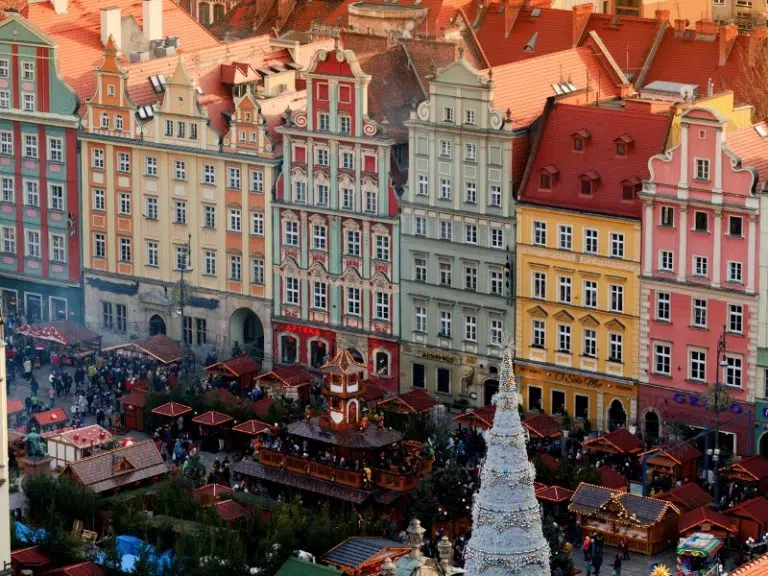
Wrocław's Rynek was laid out in the 13th century and is one of the largest market squares in Europe. Colourful merchant houses line its sides, and on the square stand a reconstructed pillory and a monument to the comedy writer Aleksander Fredro, brought from Lviv after the Second World War.
Read the full story →
5St Elizabeth's Church
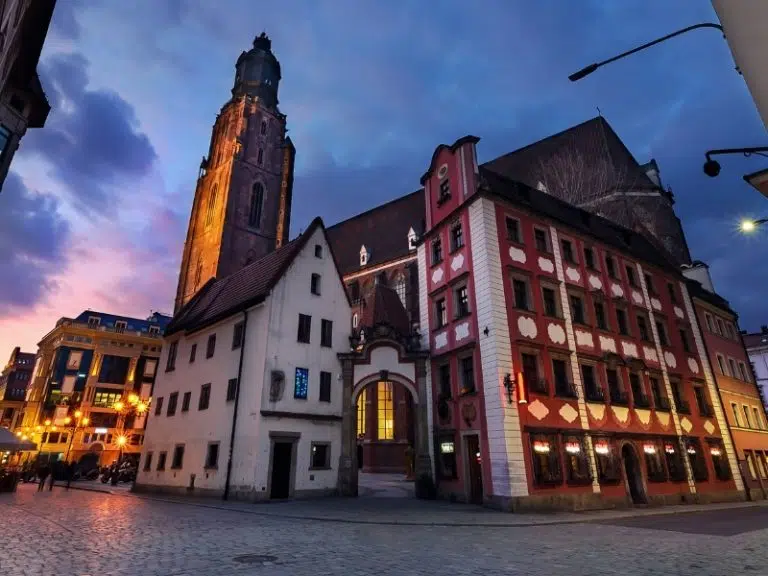
St Elizabeth's is a Gothic brick church whose tower, more than 90 metres high, has a viewing gallery over the old town; its original spire was even taller until it collapsed in 1529. At its foot, two small houses joined by a baroque arch are known as Jaś i Małgosia, Hansel and Gretel.
6University of Wrocław
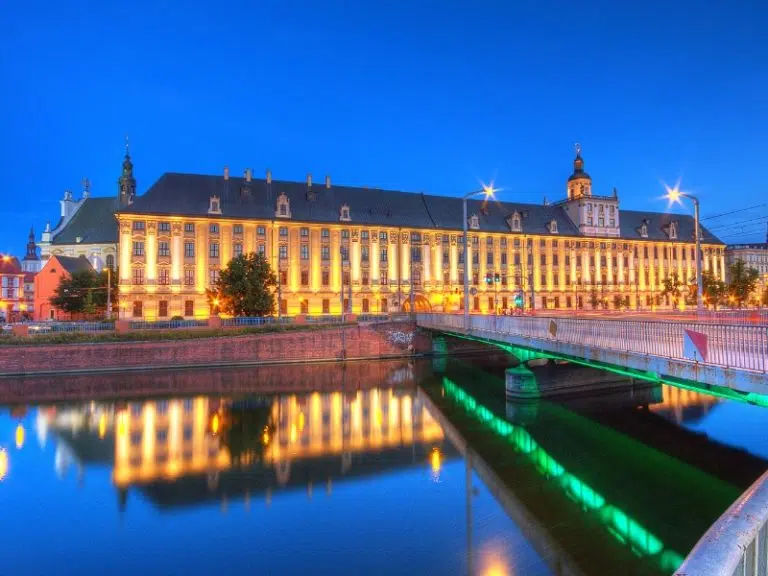
The baroque main building of the University of Wrocław goes back to the Jesuit academy founded by Emperor Leopold I in 1702. Its ceremonial hall, the Aula Leopoldina, is one of the most important baroque interiors in Poland, and on the square in front stands the Fencer Fountain of 1904.
7Tumski Bridge
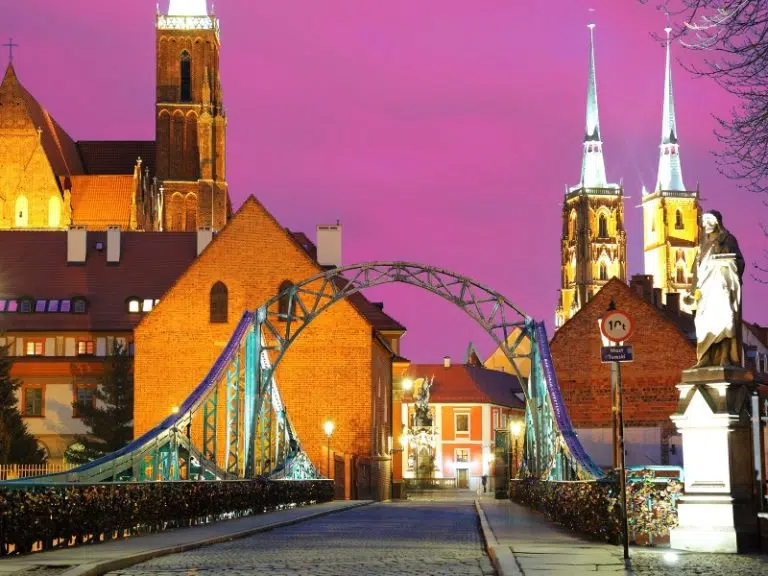
This green-painted bridge of 1889 links Sand Island with Ostrów Tumski, the cathedral island where Wrocław began. Couples hang padlocks on its railings, and on the island beyond, a lamplighter still lights the gas lamps by hand every evening.
Read the full story →
8Cathedral of St John the Baptist
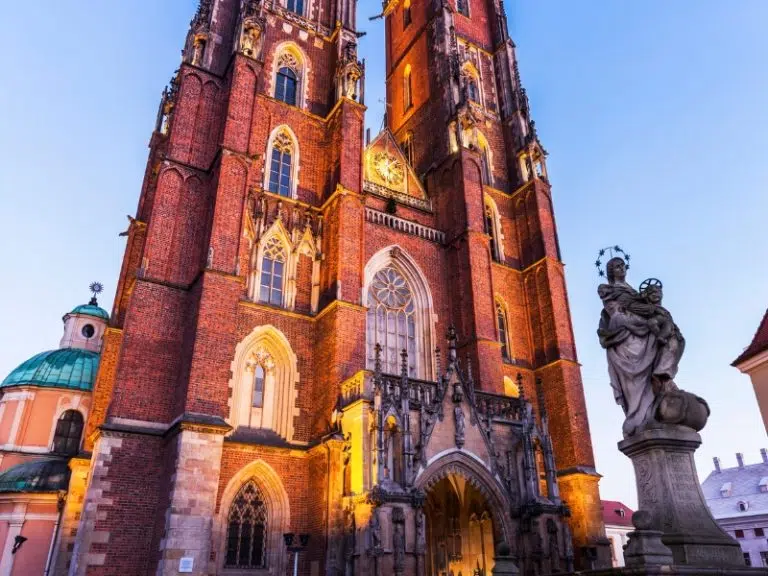
Wrocław Cathedral on Ostrów Tumski was begun in the 13th century and is one of the earliest Gothic brick churches in the region. It was badly damaged in 1945 and rebuilt after the war, and its twin towers, almost 100 metres high, regained their pointed spires in 1991.
Read the full story →
9National Museum in Wrocław
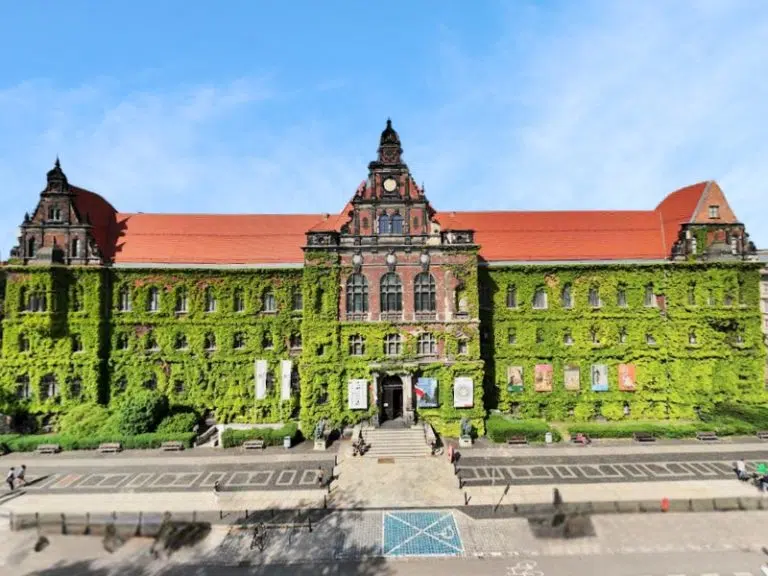
The National Museum occupies a large neo-Renaissance building from the 1880s, originally built for the Silesian provincial administration. In autumn the creeper covering its façade turns bright red, and its collections range from medieval Silesian sculpture to contemporary Polish art.
10Juliusz Słowacki ParkFinish
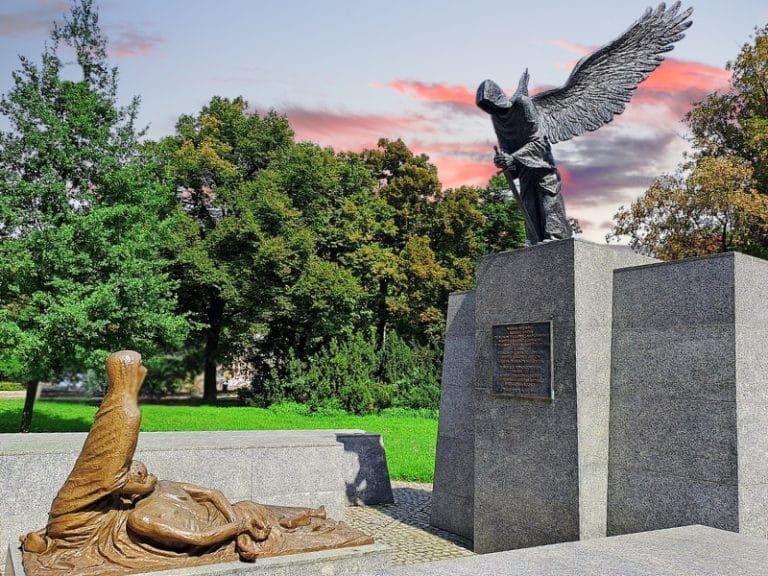
This park on the edge of the old town is named after Juliusz Słowacki, one of the great poets of Polish Romanticism. At its edge stands the round building of the Racławice Panorama, a painting about 114 metres long of the 1794 Battle of Racławice by Jan Styka and Wojciech Kossak, brought to Wrocław from Lviv after the Second World War.
Only logged in customers who have purchased this product may leave a review.



Austria –
Collected on GetYourGuide
Perfekt, um Stadt kennenzulernen. Nicht nur für Gruppen mit Kindern geeignet
Vanessa– Germany –
Collected on GetYourGuide
Die Tour ist interessant und man bekommt viele Infos über die Stadt und die Geschichte. Allerdings ist die Zeitangabe wirklich knapp , wenn man sich wirklich Zeit nimmt um alles zu bestaunen ,auch unterwegs, dann kann man, wie wir locker 4h unterwegs sein, was ich toll fand.