What is the Wrocław self-guided walking tour?
The Wrocław self-guided walking tour is an audio walk that runs entirely on your phone: the World City Trail app leads you from stop to stop, and at each one a narrator tells you what you are looking at and why it matters. The whole thing takes about 3 hours, yet only 58 minutes of that is walking, spread over 4.2 km and 10 stops. The route crosses the Oder to Ostrów Tumski, where Wrocław began, so the stories reach from the medieval market town to the 20th century.
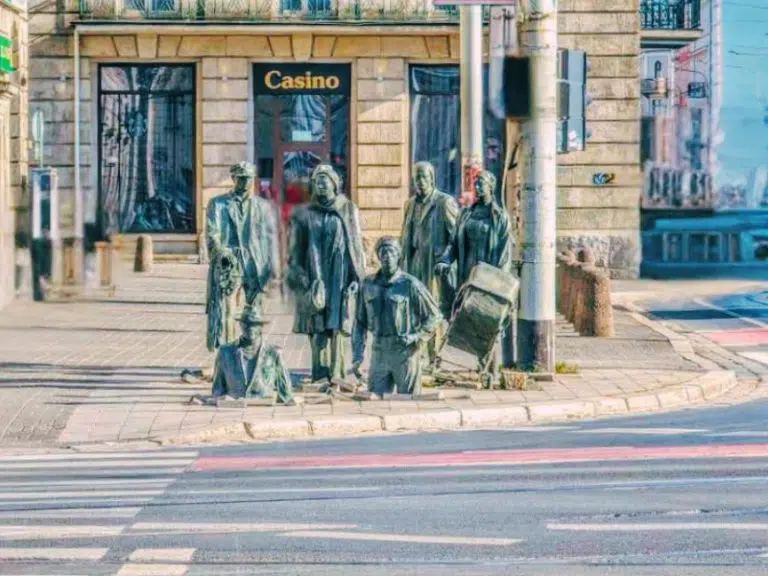
At the Passage the narration explains why Jerzy Kalina's bronze pedestrians sink into the pavement on one side of the street and rise again on the other, a memorial unveiled in 2005 to the martial law of December 1981. On the Market Square you hear how the Old Town Hall grew between the 13th and 16th centuries, and why a monument to Aleksander Fredro came here from Lviv after the Second World War. St Elizabeth's brings the spire that collapsed in 1529 and the two little houses called Hansel and Gretel at its foot. On Tumski Bridge the story turns to the lamplighter who still lights the gas lamps of the cathedral island by hand every evening.
- Durationabout 3 hours
- Walkingabout 58 min · 4.2 km
- Stops10
- LanguagesEnglish, German, French, Italian, Spanish, Dutch, Polish
What happens along the route
At each stop
The narration opens with the facts and moves on to the people, the local legends and the odd details that turn a building into a story. Every chapter can also be read as text on screen.
Between stops
Google Maps guides you along the 4.2 km of the route, about 58 minutes on foot in total, and you set the speed.
Whenever you need a break
Stop for lunch, a coffee or a museum visit, and the narration waits where you left it, for later the same day or another day.
Your route, your order
The app points you to local food and shops along the way, and if another starting point is more convenient, you can switch to it or reorder the stops.
See the route and attractions →
How it works
- Book online Choose the number of people. Your booking reference arrives by email straight away.
- Get the app Download the World City Trail app from the App Store or Google Play and enter your booking reference.
- Walk when you like Start whenever you are ready, walk at your own pace and pause any time. No guide, no fixed schedule.
Who the audio walk suits
A few days in Wrocław
The walk ties the main sights together and gives each one its background, so even a short visit feels complete.
People who like their own pace
No group to wait for and no fixed start: you linger where something catches your eye and walk on when you feel like it.
Families and couples
Legends for the children, history for the adults and a pause button for everyone.
Good to know
- Bring a charged smartphone with mobile data; a power bank helps.
- No entry tickets needed: everything happens outside the buildings. Going inside is optional and paid separately.
- Family friendly; children must be accompanied by an adult.
- Not suitable for wheelchair users and difficult with strollers.
- Groups of up to 5 work best; larger groups split up, one ticket per person.
- Every purchase helps support stray cats and dogs in Greece.
Across the Oder and back: the route in order
10 stops · about 58 min walking · start: The Passage · finish: Juliusz Słowacki Park
The walk opens at the Passage and cuts through Nicolaus Copernicus Park into the old town, where the Old Town Hall with its Museum of Bourgeois Art stands among the colourful houses of the Market Square. St Elizabeth's Church rises at a corner of the square, and from there the route reaches the baroque University of Wrocław by the Oder. Tumski Bridge takes you over to Ostrów Tumski and the Cathedral of St John the Baptist, and after the National Museum the walk ends in Juliusz Słowacki Park, beside the round building of the Racławice Panorama. Every stop is outdoors and free, and the app lets you begin anywhere.
Open the route map ↗
1The PassageStart
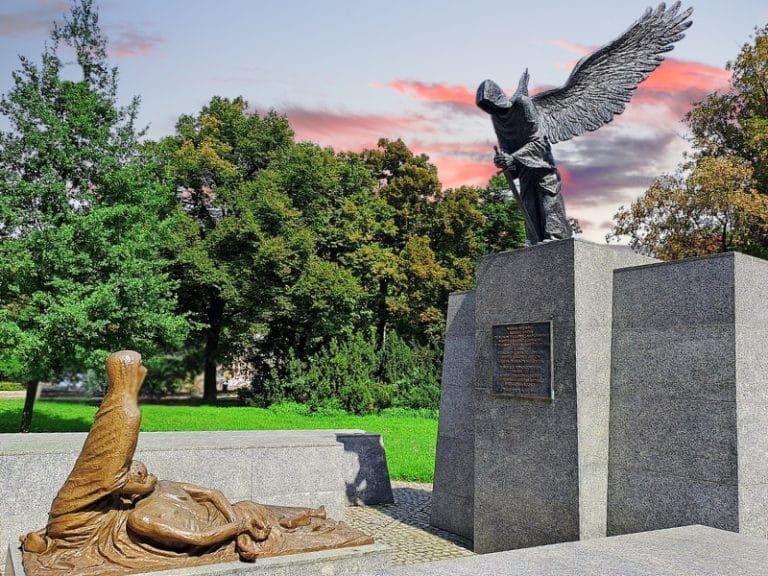
The Passage, Przejście in Polish, is a group of life-size bronze pedestrians by the artist Jerzy Kalina: on one side of the street they sink into the pavement, on the other they rise out of it again. Unveiled in 2005, it recalls the martial law imposed in Poland in December 1981.
Read the full story →
2Nicolaus Copernicus Park
This green park on the way from the Passage into the old town is named after Nicolaus Copernicus, the astronomer who placed the Sun rather than the Earth at the centre of the universe. Its trees and paths offer a short break from the busy streets before the route turns towards the Market Square.
3Museum of Bourgeois Art
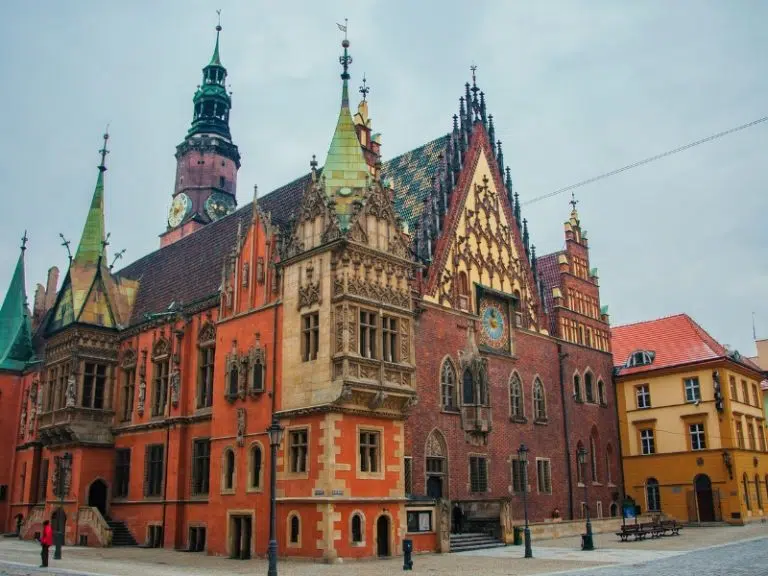
The Museum of Bourgeois Art is housed in the Old Town Hall, a Gothic building that grew between the 13th and 16th centuries and is one of the best-known town halls in Poland. Look for the astronomical clock on its east façade, while inside the museum shows the art and everyday culture of Wrocław's burghers.
4Market Square
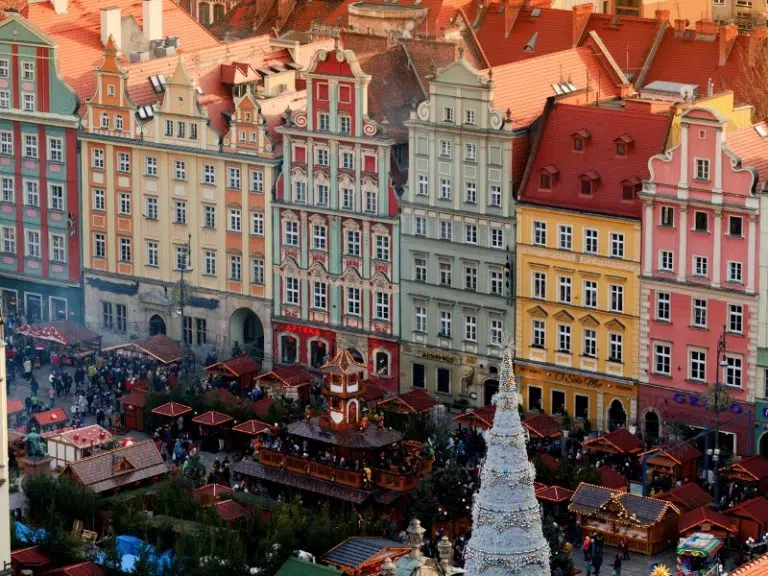
Wrocław's Rynek was laid out in the 13th century and is one of the largest market squares in Europe. Colourful merchant houses line its sides, and on the square stand a reconstructed pillory and a monument to the comedy writer Aleksander Fredro, brought from Lviv after the Second World War.
Read the full story →
5St Elizabeth's Church
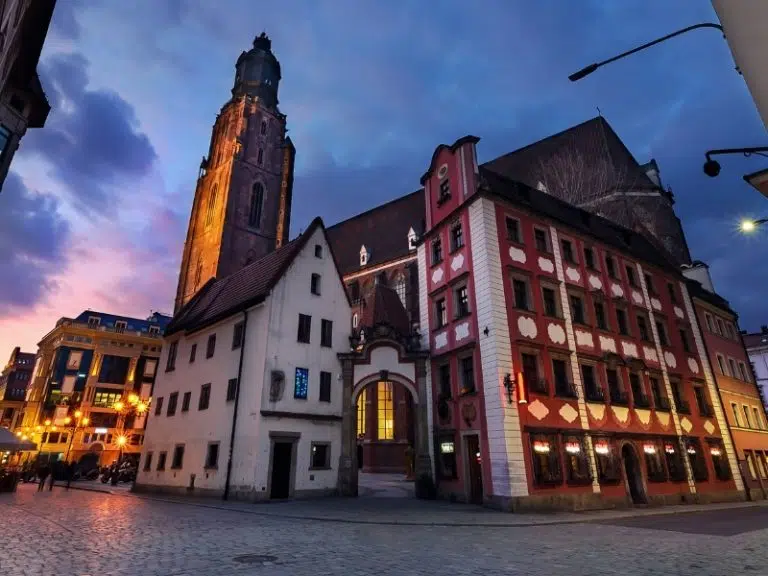
St Elizabeth's is a Gothic brick church whose tower, more than 90 metres high, has a viewing gallery over the old town; its original spire was even taller until it collapsed in 1529. At its foot, two small houses joined by a baroque arch are known as Jaś i Małgosia, Hansel and Gretel.
6University of Wrocław
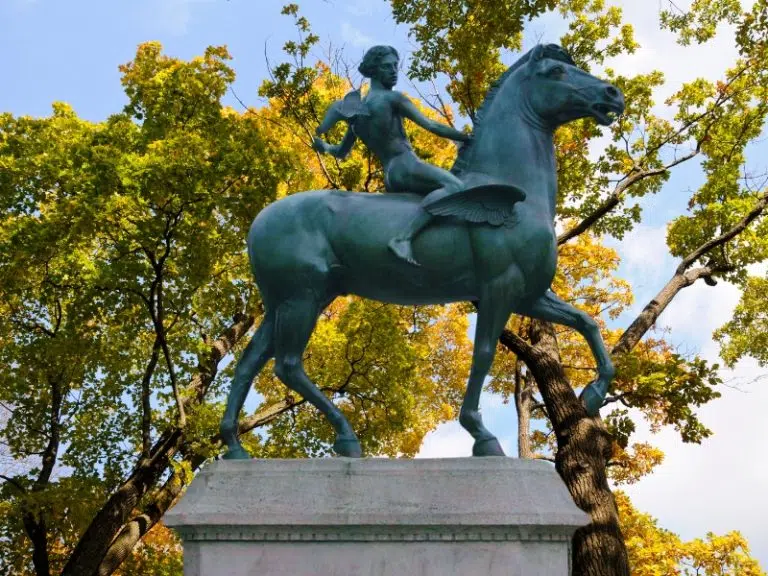
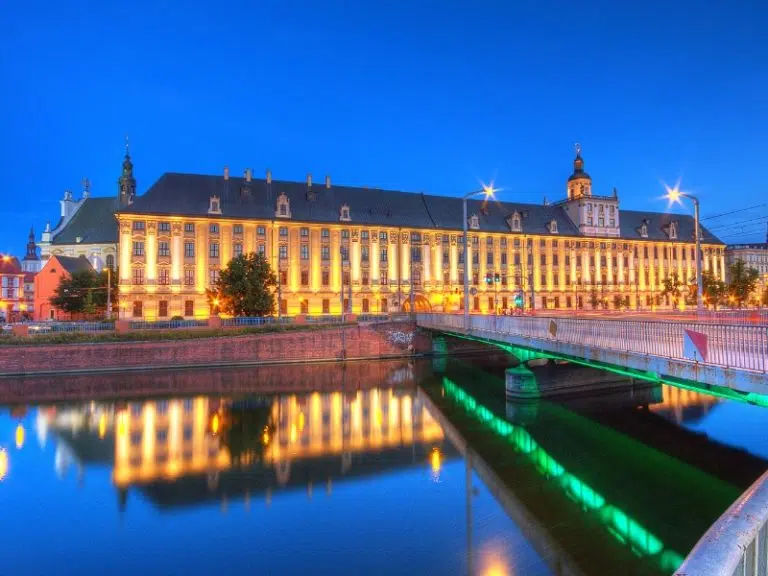
The baroque main building of the University of Wrocław goes back to the Jesuit academy founded by Emperor Leopold I in 1702. Its ceremonial hall, the Aula Leopoldina, is one of the most important baroque interiors in Poland, and on the square in front stands the Fencer Fountain of 1904.
7Tumski Bridge
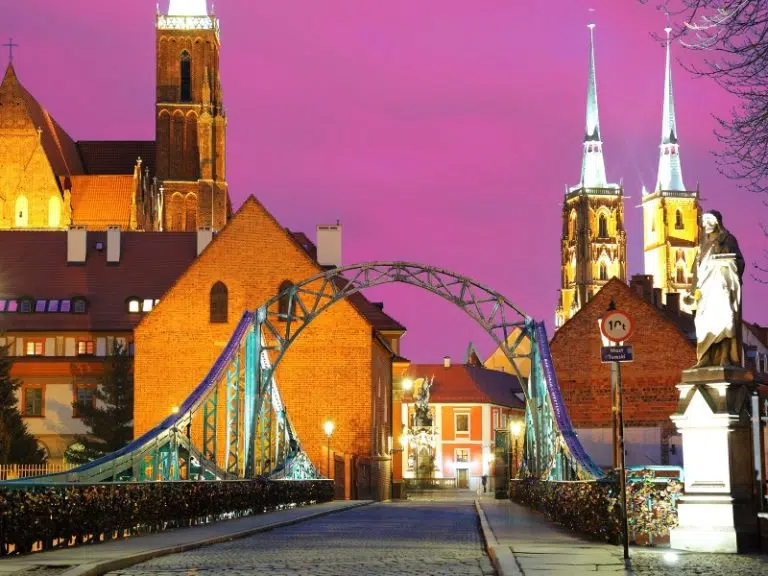
This green-painted bridge of 1889 links Sand Island with Ostrów Tumski, the cathedral island where Wrocław began. Couples hang padlocks on its railings, and on the island beyond, a lamplighter still lights the gas lamps by hand every evening.
Read the full story →
8Cathedral of St John the Baptist
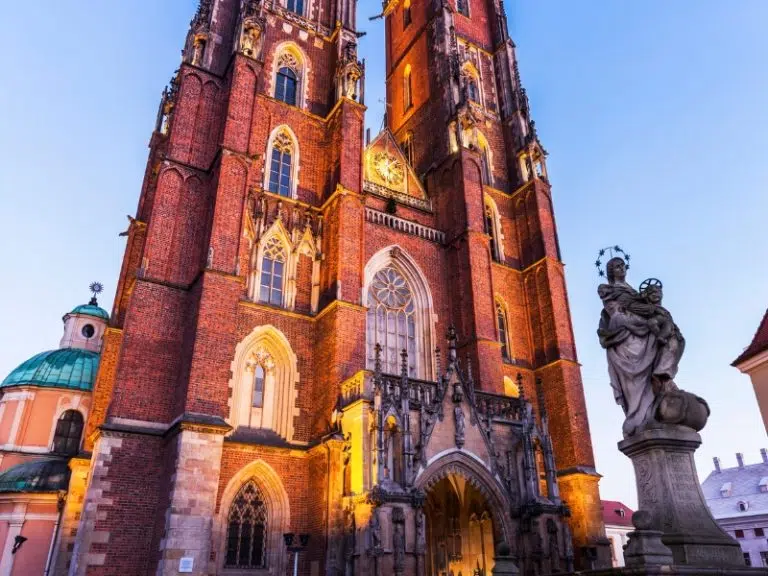
Wrocław Cathedral on Ostrów Tumski was begun in the 13th century and is one of the earliest Gothic brick churches in the region. It was badly damaged in 1945 and rebuilt after the war, and its twin towers, almost 100 metres high, regained their pointed spires in 1991.
Read the full story →
9National Museum in Wrocław
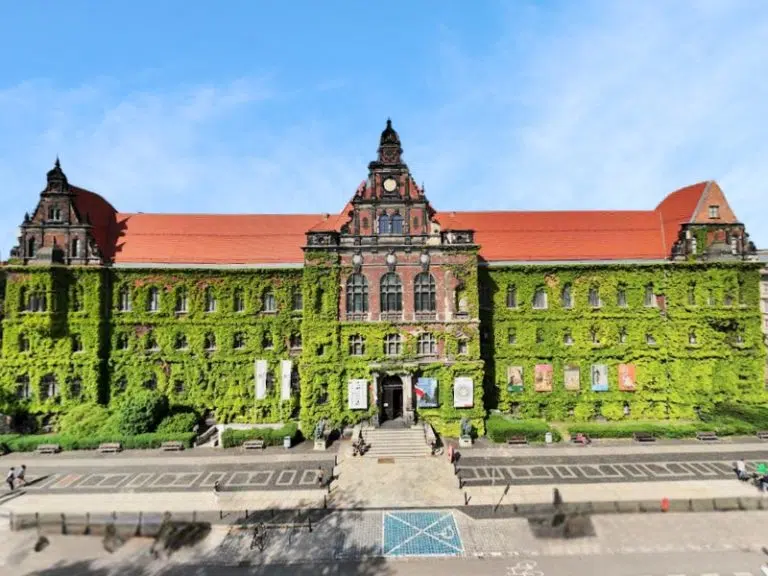
The National Museum occupies a large neo-Renaissance building from the 1880s, originally built for the Silesian provincial administration. In autumn the creeper covering its façade turns bright red, and its collections range from medieval Silesian sculpture to contemporary Polish art.
10Juliusz Słowacki ParkFinish
This park on the edge of the old town is named after Juliusz Słowacki, one of the great poets of Polish Romanticism. At its edge stands the round building of the Racławice Panorama, a painting about 114 metres long of the 1794 Battle of Racławice by Jan Styka and Wojciech Kossak, brought to Wrocław from Lviv after the Second World War.
Only logged in customers who have purchased this product may leave a review.



Greece –
Collected on GetYourGuide
United States –
Collected on GetYourGuide
Egle– Italy –
Collected on GetYourGuide
questa attività è stato un ottimo mezzo per avere una prima idea generale dei punti più importanti della città. Non conoscendo la città ho trovato molto comodo avere un itinerario precostituito anzichè girare a caso o a vuoto e altrettanto comodo poter gestire in autonomia le proprie fermate in ogni singolo posto in funzione del proprio tempo o desiderio, poter sospendere a proprio desiderio e poter proseguire quando si vuole senza dover rispettare i tempi prefissati.
Stephanie –
Collected on GetYourGuide
Sehr schön
Italy –
Collected on GetYourGuide
Molto interessante la guida, posti insoliti che nemmeno le guide vere ti dicono! Ben fatta ed economica!!