

Table of Contents
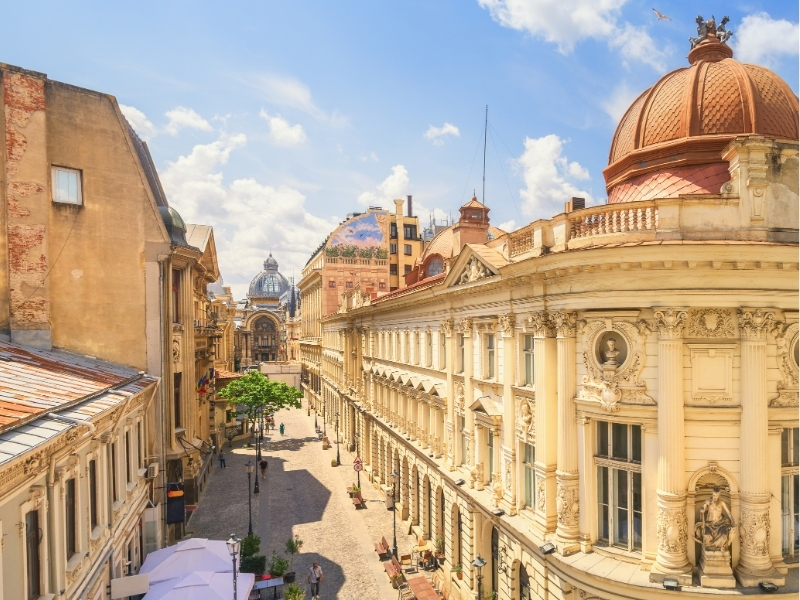
Bucharest, the capital of Romania, is a vibrant city that blends history, culture, and modernity. Known for its wide boulevards, grand architecture, and eclectic mix of old and new, it’s often referred to as “Little Paris” due to its French-inspired architecture.
Highlights include the monumental Palace of the Parliament, the second-largest administrative building in the world, and the charming Old Town (Lipscani) with its cobblestone streets, cafes, and lively atmosphere.
The city also offers tranquil green spaces like Herastrau Park and cultural gems such as the National Museum of Art of Romania. With its dynamic arts scene, bustling nightlife, and rich historical landmarks, Bucharest offers something for every traveler.
Key features about Bucharest
- Palace of the Parliament: One of the largest administrative buildings in the world, it’s an iconic symbol of the city. Built during the Communist era under Nicolae Ceaușescu, it’s an architectural marvel and a major tourist attraction.
- Old Town (Lipscani District): A charming and historic area filled with cobblestone streets, restored buildings, cafes, bars, restaurants, and shops. It’s a lively place to explore, with a mix of medieval, neoclassical, and modern influences.
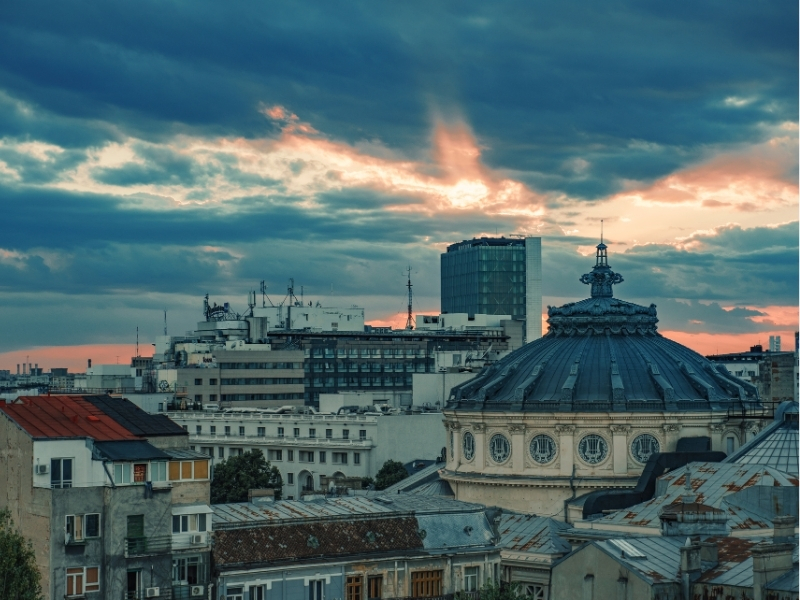
- Romanian Athenaeum: A stunning concert hall and a symbol of the city’s cultural life. It hosts the George Enescu Festival, Romania’s most prestigious classical music event.
- Herăstrău Park: One of Bucharest’s largest parks, offering lakes, walking paths, boating, and green spaces, as well as the Village Museum (Muzeul Satului), an open-air museum showcasing traditional Romanian rural life.
- Cultural and Historical Landmarks: Bucharest is home to several historic sites such as the Stavropoleos Monastery, Curtea Veche (the old princely court), and Revolution Square, where significant events in Romania’s history unfolded.
- Broad Boulevards and Architecture: Inspired by Paris, Bucharest features wide, tree-lined boulevards like Calea Victoriei, which are flanked by grand 19th-century buildings, neoclassical monuments, and Soviet-era structures.
- Dynamic Nightlife: Bucharest is famous for its vibrant nightlife, especially in the Old Town, with a mix of trendy bars, nightclubs, and traditional Romanian taverns (called “taclale”).
- Diverse Museums: The city boasts a range of museums, including the National Museum of Art of Romania, the Museum of Romanian History, and the National Museum of Contemporary Art, housed in the Palace of the Parliament.
- Cost of Living: Bucharest has a relatively affordable cost of living compared to other European capitals, making it a popular destination for expats and digital nomads.
- Public Transportation: Bucharest has an extensive public transportation system, including buses, trams, trolleybuses, and a metro system, which makes getting around the city convenient.
Interesting fun facts about Bucharest
- “Little Paris” Nickname: Bucharest was once known as “Little Paris” in the early 20th century due to its elegant architecture, wide boulevards, and cultural scene, which was heavily inspired by French influence.
- The Palace of the Parliament: The Palace of the Parliament in Bucharest is the second-largest administrative building in the world, after the Pentagon in the U.S. It has over 1,000 rooms and weighs more than 4 million tons!
- Bucharest’s Old Town is a Hidden Gem: Despite being a bustling metropolis, Bucharest’s Old Town (Lipscani) was largely forgotten until the 1990s. Now, it’s a vibrant hub of restaurants, bars, and cultural landmarks, preserving the city’s medieval charm.
- The World’s Heaviest Building: The Palace of the Parliament is also one of the heaviest buildings in the world, constructed with nearly 1.5 million cubic meters of marble and steel.
- Cărturești Carusel: Known as the “Carousel of Light,” this beautiful bookstore in the heart of Bucharest is housed in a historic 19th-century building. It’s often ranked as one of the most beautiful bookstores in the world.
- Bucharest’s “Arcul de Triumf”: Similar to Paris’s Arc de Triomphe, Bucharest has its own triumphal arch, built in 1935 to commemorate Romania’s victories in World War I. It’s located at one of the busiest intersections in the city.
- Largest Open-Air Village Museum: Bucharest is home to the Village Museum (Muzeul Satului), one of Europe’s largest open-air museums. It showcases traditional Romanian rural life with over 300 authentic wooden houses, churches, and windmills from all over the country.
- Bucharest’s “Balkan” Influence: The city is often considered the cultural crossroads of Eastern and Western Europe, with influences from the Ottoman Empire, Greek, Slavic, and even French culture, creating a rich and diverse atmosphere.
- The “Bucharest Underground”: The city’s Bucharest Metro was one of the fastest-built metro systems in the world. The construction began in the late 1970s and was completed in less than a decade, compared to other cities where metro systems took much longer to complete.
- Romania’s Largest Beer Festival: Bucharest hosts the Romanian Beer Festival every summer, which draws thousands of locals and tourists to sample local and international craft beers, enjoy live music, and indulge in Romanian cuisine.
More fun facts about Bucharest!
- Vampire Lore: While Bucharest isn’t the home of Dracula (that’s Bran Castle in Transylvania), it is linked to the legend of Vlad the Impaler, the real-life figure who inspired Bram Stoker’s Dracula. Vlad the Impaler’s brutal reign as ruler of Wallachia is part of Romania’s fascinating history.
- Bucharest’s Free Wi-Fi: In a bid to encourage tourism, Bucharest has made free Wi-Fi available in key locations like parks, public squares, and some public transportation stations, making it a tech-savvy destination.
- Stray Dogs of Bucharest: Bucharest has a notorious reputation for its stray dog population, although the situation has improved in recent years with a mix of local and international efforts to control the numbers.
- Oldest Cinema in Romania: The Cinema Europa in Bucharest is one of the oldest cinemas in the country and has been showing films since 1929.
- Endless Cafés and Patios: Bucharest has more cafés per capita than many other cities in Europe, making it a great place for café culture. The locals love their coffee, and you’ll find a mix of traditional Romanian coffeehouses and modern, hipster spots all around the city.
Local legends about Bucharest
1. The Legend of the “Maidens’ Bridge” (Podul Măcelarilor)
One of Bucharest’s oldest and most enduring legends is tied to the Maidens’ Bridge (now known as Cărturești Bridge). According to the story, the bridge was haunted by the spirits of young girls who were tragically thrown into the river by their lovers, who were unwilling to marry them.
Legend says that if you walk across the bridge at night, you may hear faint whispers and cries from these lost souls. Some believe that the bridge has the power to bring bad luck to those who dare cross it alone at night.
2. The Legend of the “Dâmbovița River”
The Dâmbovița River, which flows through Bucharest, has its own folklore. One of the most popular legends tells of a beautiful young princess named Ileana who fell in love with a handsome shepherd. But the shepherd’s jealousy and the princess’s beauty made the river a dangerous place.
To stop their tragic love, the jealous shepherd’s father cursed the river, making it eternally stormy. Some locals believe that the river still carries the anger of the shepherd and princess, and their tragic love continues to haunt the waters.
3. **The Legend of *Mihai Viteazul* and the “Târgoviște Bell”**
Mihai Viteazul, the legendary ruler of Wallachia, is central to many Romanian tales. One legend involves the Târgoviște Bell, which is said to ring only when Bucharest is in great danger.
According to the story, Mihai Viteazul ordered the bell to be cast as a way of warning the people of Bucharest of impending danger. It’s said that the bell will ring only when the city’s fate is in grave peril. People often tell stories of hearing its chimes during times of political unrest or war.
4. The Legend of the “Dracula’s Curse”
While the legend of Vlad the Impaler, the inspiration for Bram Stoker’s Dracula, is most closely associated with Transylvania, there is a local legend in Bucharest that connects the infamous ruler to the city. It is said that Vlad cursed the people of Bucharest when he was betrayed by them during his reign.
Some claim that his curse made the city’s rulers corrupt and brought about years of political turmoil. There are whispers that the curse still haunts the city, and that Bucharest’s turbulent history is the result of his angered spirit.
5. The Legend of the “Stray Dogs”
Bucharest is known for its large population of stray dogs, and a local legend explains their mysterious presence. The story goes that the dogs were once loyal pets to the people of Bucharest, but after an unfortunate famine, they turned wild and began to roam the streets.
The locals believe that the spirit of the first stray dog that turned feral still roams the city, guiding and protecting its descendants. The legend also warns that the dogs should never be mistreated, as their loyalty and connection to the city’s history make them sacred.
6. The Legend of the “Stone of Bucur”
The name “Bucharest” is believed to derive from the name of a shepherd named Bucur, who is said to have founded the city. According to legend, Bucur was a simple shepherd who came across the area, and after seeing its natural beauty, he decided to settle there.
He built a small chapel, and it is said that a stone with mysterious markings was found on the site, which became known as the Stone of Bucur. Some say the stone had mystical powers, protecting the city from invaders and ensuring its prosperity. It is also said that anyone who touches the stone will be blessed with good fortune.
7. The Legend of the “Bucharest Ghost”
Another popular local legend is the tale of a ghostly figure that haunts the streets of Bucharest, particularly the area around Calea Victoriei. The ghost is said to be the spirit of a beautiful woman who was once a lady-in-waiting in the royal court during the 19th century.
She fell in love with a soldier, but when he was killed in battle, she wandered the streets, searching for him. It’s said that on certain foggy nights, her figure can be seen drifting through the streets, still in mourning for her lost love.
8. The Legend of “The Giant’s Chair”
In Tineretului Park (Youth Park), there is a large stone chair that some say was built by a giant who once lived in the area. According to the legend, the giant would sit on the chair to watch over the city. People say that anyone who sits in the chair will gain the giant’s strength and courage, and that the chair has magical properties. Some also believe that the giant still roams the area at night, protecting the city from harm.
9. The Haunted House of Bucharest
Another eerie tale involves a mysterious mansion in the city, often referred to as The Haunted House of Bucharest. The house was once owned by a wealthy aristocrat who mysteriously disappeared, and soon after, strange noises and sightings of shadows were reported by locals.
The house was abandoned for years, and it is rumored that the spirits of the aristocrat and his family still haunt the place. Though the mansion is no longer standing, it remains a favorite spot for ghost hunters and thrill-seekers.
10. The Legend of the “Bucharest Wolves”
This lesser-known legend revolves around the belief that Bucharest was once a place where wolves roamed freely. Some say the wolves were protectors of the city and that they would guard its gates, ensuring no invaders could enter.
Others tell of wolves that helped to guide lost travelers through the city’s winding streets, offering them safe passage. Locals sometimes speak of hearing wolves’ howls echoing through the city late at night, even though no wolves live in the area anymore.
What about the history of Bucharest?
The area where Bucharest is now located was likely settled by various ancient peoples, including the Thracians, Dacians, and Romans, though the exact origins of the city are somewhat unclear.
The name “Bucharest” is traditionally said to derive from the legend of a shepherd named Bucur, who is believed to have founded the settlement in the 14th century. Evidence suggests, however, that the area was inhabited well before this time, with archaeological findings from the Roman and Byzantine periods indicating early activity.
The 19th century marked a transformative era for Bucharest. In 1812, parts of Wallachia came under Russian influence after the Russo-Turkish War, and by 1859, the principalities of Moldavia and Wallachia unified under Prince Alexandru Ioan Cuza, setting the foundation for the modern Romanian state.
In 1862, Bucharest became the capital of the newly united Romanian Principalities. During this time, the city underwent rapid urbanization and modernization, heavily influenced by Western Europe, particularly France.
The Interwar period was marked by cultural and intellectual vibrancy, and Bucharest became a center for the arts, music, and literature. The city expanded further during this time, with the construction of new public buildings, residential areas, and an increased presence of modern European architecture.
Bucharest was the focal point of the Romanian Revolution of 1989, which was part of the wider wave of anti-Communist uprisings in Eastern Europe. Mass protests broke out in December 1989, and on December 22, Ceaușescu and his wife fled the city. The Communist regime collapsed, and Romania transitioned to democracy, marking the end of an era.
Must-Try Food in Bucharest
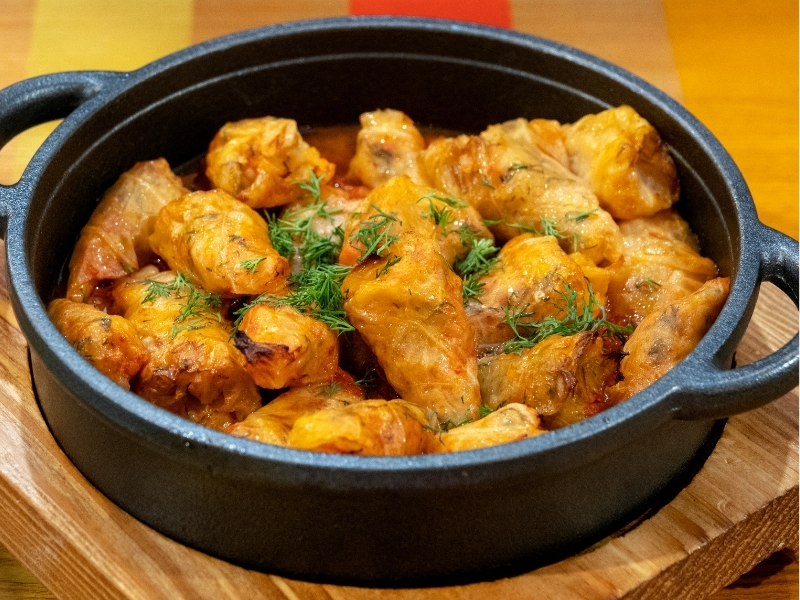
One of the most iconic dishes in Romanian cuisine is sarmale, cabbage rolls stuffed with minced pork (or beef), rice, and spices, then simmered in a savory tomato sauce. This hearty dish is often served with sour cream and a side of mămăligă (cornmeal porridge) or bread, making it a comforting, traditional meal.
Another staple side dish, mămăligă, is a versatile cornmeal creation, served with cheese, sour cream, or fried eggs. It pairs perfectly with rich stews and meats and is a central part of Romanian meals.
Another must-try dish is zacuscă, a vegetable spread made from roasted eggplants, peppers, tomatoes, onions, and spices, often served with bread or cheese. This savory spread is particularly popular in the fall and winter months. For a festive dish, salată de boeuf is a creamy, mayonnaise-based salad made with boiled beef, potatoes, carrots, pickles, and peas, often served cold on special occasions like Christmas or Easter.
If you’re craving a flavorful stew, papricaș de pui (chicken paprikash) is a great choice, featuring chicken simmered in a rich paprika-based sauce with sour cream, typically served with mămăligă. Similarly, tocăniță, a Romanian-style stew made with beef, pork, or lamb, is another classic, often enjoyed with bread or mămăligă.
For something uniquely Romanian, try bulz, a dish made from mămăligă stuffed with cheese, often brânză de burduf, a salty, creamy cheese, and served with sour cream or fried bacon. Clătite, thin pancakes similar to French crêpes, are another popular treat, often filled with jam, chocolate, cheese, or walnuts and rolled up as a delicious snack or dessert.
If you’re in the mood for something savory to start the meal, try jumări, crispy fried pieces of pork fat or belly, typically served with bread and pickles. And for a sweet finish, cozonac, a rich sweet bread filled with nuts, cocoa, or poppy seeds, is a favorite holiday treat, often enjoyed with a cup of coffee or tea.
Must Visit Attractions in Bucharest
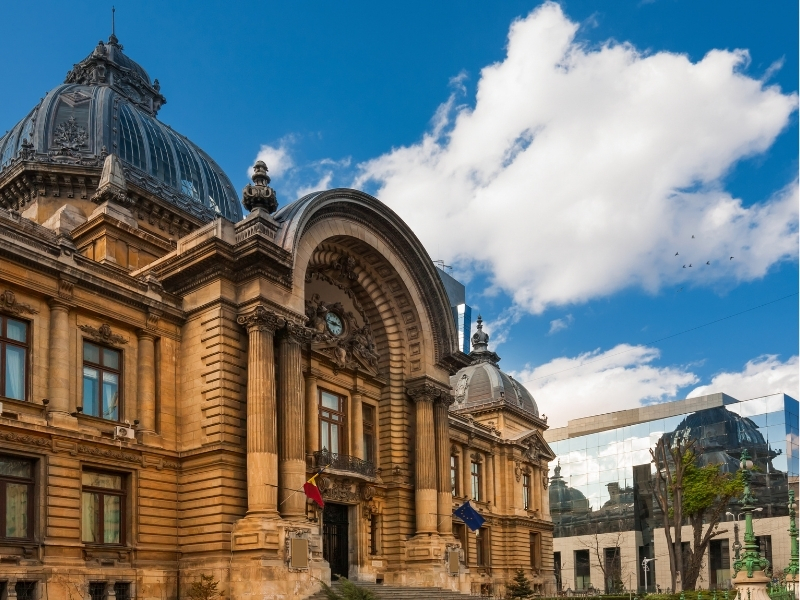
Bucharest is a city rich in history and culture, with many remarkable attractions that showcase its heritage and modern vibrancy. Among the must-visit sites are the National Museum of Romanian History, a vast repository of artifacts that traces Romania’s journey from ancient times through to the modern era, including the famous Romanian Treasury.
Nearby, the Church of the “Stavropoleos” Monastery is a stunning example of Brâncovenesc architecture, with intricate wood carvings and frescoes, offering a peaceful retreat in the heart of the city.
For those interested in literature and design, Cărturești Carusel is a beautifully restored 19th-century building that now houses a modern bookstore and cultural space, featuring an impressive selection of books and art.
Close by, the Macca – Vilacrosse Passage is a historic covered arcade, known for its elegant architecture and its central location between some of Bucharest’s busiest streets, perfect for a leisurely stroll.
The University’s Square, a central hub for students and intellectuals, is marked by its connection to the 1989 Revolution and is surrounded by important institutions like the University of Bucharest.
The Odeon Theatre, a cultural gem in the city, offers a diverse program of performances and is housed in a beautiful building that reflects Bucharest’s cultural vibrancy.
At Revolution Square, visitors can reflect on Romania’s tumultuous history, especially the events of December 1989, where the fall of the Ceausescu regime unfolded.
The National Museum of Art, housed in the Royal Palace, holds Romania’s most important collection of European and Romanian art, including works from the Middle Ages to the 20th century.
The Royal Palace of Bucharest itself is a remarkable piece of architecture, serving as a symbol of Romania’s monarchy and political history, now also hosting the National Museum of Art.
Lastly, the Romanian Athenaeum, an iconic landmark, is a stunning concert hall and a symbol of Romanian cultural identity, known for its exceptional acoustics and classical music performances.
This walking tour will take you through the heart of Bucharest, allowing you to experience the city’s rich history, stunning architecture, and cultural significance.

Explore Bucharest with World City Trail
Embark on an unforgettable journey through the enchanting city of Bucharest with World City Trail. Our interactive walking tour combines the thrill of exploration with the rich history and culture of this beatiful city.
Key Features:
Interactive gameplay: Solve engaging puzzles and challenges as you explore the city.
Iconic landmarks: Discover famous attractions like the Royal Palace of Bucharest or the Romanian Athenaeum.
Hidden gems: Uncover lesser-known spots, such as the Odeon Theatre and the University’s Square.
Cultural insights: Learn about Bucharest’s fascinating history.
Flexibility: Explore at your own pace and create your own itinerary.
Learn more fun facts about Bucharest!
Book your Bucharest adventure today and experience the magic of this beautiful city.
Further reading on Wikipedia: Stavropoleos Monastery