
Table of Contents
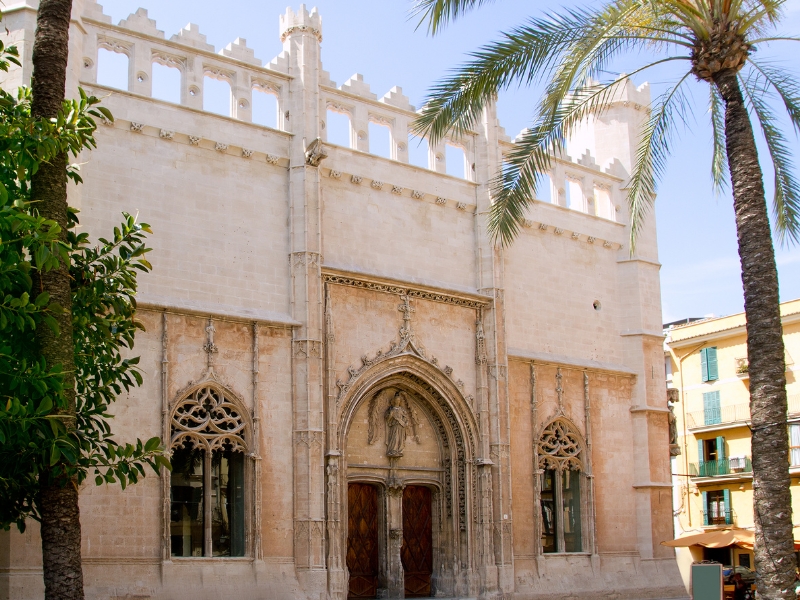
Located near the Palma waterfront, the Llotja de Palma is one of the finest examples of Gothic civil architecture in Spain. Originally built as a merchant exchange, this stunning 15th-century structure is a testament to Mallorca’s rich maritime and trading history. With its elegant stonework, towering columns, and breathtaking vaulted ceilings, the Llotja de Palma is not only an architectural gem but also a cultural hub, hosting exhibitions and events throughout the year.
A Symbol of Palma’s Maritime Power
The Llotja de Palma, also known as Sa Llotja, was constructed between 1420 and 1452 by the renowned architect Guillem Sagrera, who later contributed to the design of Mallorca Cathedral. It was built as the headquarters of the Col·legi de la Mercaderia (Merchants’ Guild), a powerful organization that played a key role in Mallorca’s economic prosperity during the Mediterranean trade boom. The building served as a meeting place for merchants to conduct business, negotiate trade agreements, and establish Mallorca as a major commercial hub.
Architectural Grandeur
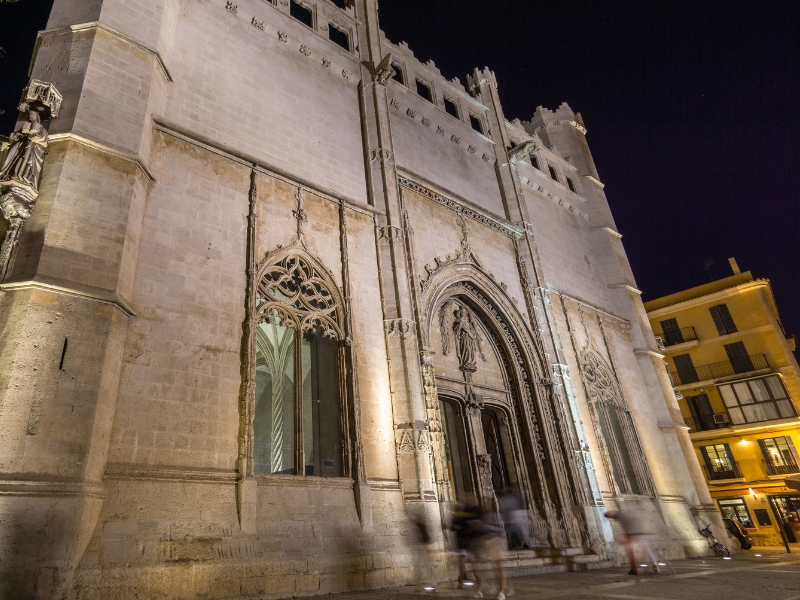
The Llotja de Palma is a masterpiece of Catalan Gothic architecture, notable for its symmetry, intricate stone details, and soaring interior space. The rectangular building features:
- Four octagonal towers at each corner, giving it a fortress-like appearance.
- A grand entrance adorned with delicate Gothic tracery and sculptures, including a depiction of the Archangel Gabriel.
- Majestic palm-tree-like columns in the interior, which rise and branch out to support the ribbed vaulting, creating a sense of height and openness.
- Large arched windows, allowing natural light to illuminate the spacious hall, enhancing its grandeur.
Despite its imposing medieval exterior, the interior lacks excessive ornamentation, emphasizing the grace and harmony of its structural elements.
A Cultural and Artistic Space
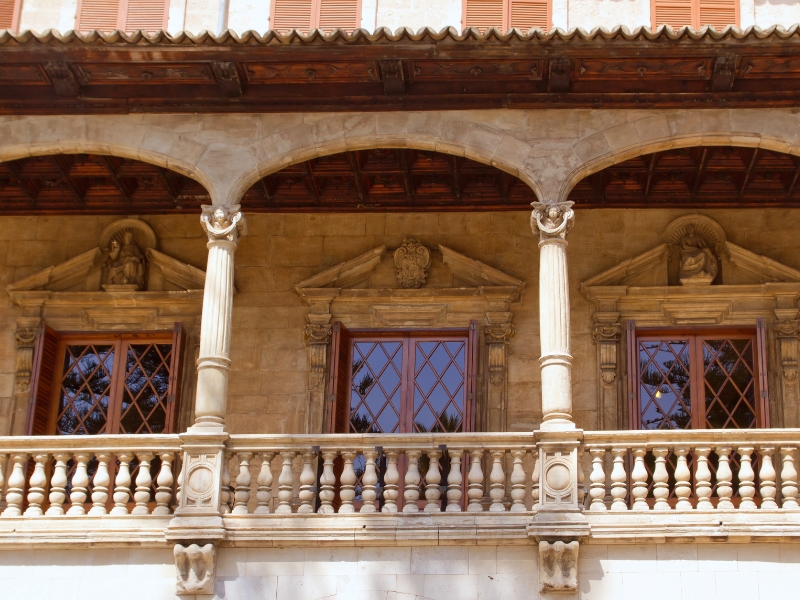
While it was originally built as a trading center, the Llotja de Palma has taken on different roles over the centuries. After Mallorca’s trade declined, the building was repurposed as a military storage facility and later as a museum. Today, it serves as a venue for art exhibitions, cultural events, and contemporary installations, attracting visitors interested in Mallorca’s artistic and historical heritage.
A Perfect Location for Exploring Palma
The Llotja de Palma is ideally situated in Palma’s Old Town, just steps away from the Passeig des Born, a lively boulevard lined with boutique shops, cafés, and restaurants. It’s also within walking distance of:
- Mallorca Cathedral (La Seu) – One of Spain’s most magnificent Gothic cathedrals, located just a short stroll away.
- Royal Palace of La Almudaina – A former Moorish fortress turned royal residence, offering stunning views of the Palma Bay.
- Es Baluard Museum of Modern and Contemporary Art – A must-visit for art lovers, housed within Palma’s historic city walls.
- The Marina and Palma’s Waterfront – Perfect for a scenic walk along the harbor, lined with luxury yachts and historic landmarks.
Whether you’re an architecture enthusiast, history lover, or art admirer, the Llotja de Palma is an unmissable stop in Palma. Its stunning Gothic design, historical significance, and cultural offerings make it one of the most captivating landmarks in Mallorca.
Llotja de Palma is part of Palma de Mallorca scavenger hunt and walking tour!
Embark on an unforgettable journey through the enchanting city of Palma de Mallorca with World City Trail. Our interactive walking tour combines the thrill of exploration with the rich history and culture of this beautiful city.
Key Features:
Interactive gameplay: Solve engaging puzzles and challenges as you explore the city.
Hidden gems: Uncover lesser-known spots.
Cultural insights: Learn about the city’s fascinating history.
Flexibility: Explore at your own pace and create your own itinerary.
Family friendly activity and a great way to explore the city!
Further reading on Wikipedia: Palma de Mallorca