

Table of Contents
Castel Sant’Angelo, a towering cylindrical structure on the banks of the Tiber River, stands as a testament to the enduring power and architectural ingenuity of ancient Rome. Originally conceived as a mausoleum for Emperor Hadrian and his family, this remarkable edifice has witnessed centuries of Roman history, evolving from a grand tomb to a formidable fortress, a papal residence, and ultimately, a captivating museum.
A Monument to Imperial Power
Commissioned by Emperor Hadrian in 123-139 AD, the Castel Sant’Angelo was designed to be a monumental symbol of imperial power and a lasting testament to his reign. Situated on the banks of the Tiber River, the circular structure, topped by a colossal statue of the emperor driving a chariot drawn by four horses, was intended to be a breathtaking spectacle, visible from across the city.
The construction of the mausoleum was a feat of Roman engineering, reflecting the advanced building techniques of the time. The massive cylindrical structure, built from travertine stone, was adorned with intricate sculptures and decorative elements, showcasing the grandeur and sophistication of Roman art and architecture. Upon Hadrian’s death, his ashes, along with those of his wife Sabina and adopted son Lucius Aelius, were interred within the mausoleum, ensuring his eternal presence within the heart of the city he ruled.
From Mausoleum to Fortress
The peaceful tranquility of the mausoleum was soon disrupted. With the decline of the Roman Empire, the mausoleum was adapted for defense, becoming a crucial part of Rome’s fortifications. The addition of ramparts, bastions, and a drawbridge transformed the elegant mausoleum into a formidable fortress, capable of withstanding sieges and protecting the city.
Over the centuries, Castel Sant’Angelo continued to play a significant role in Roman history. During the Middle Ages, it became a crucial stronghold for the Papacy, offering refuge for the popes during times of conflict. The construction of the Passetto di Borgo, a fortified corridor connecting the castle to the Vatican, provided a crucial escape route for the pontiffs, ensuring their safety during times of unrest.

A Journey Through Time
Today, Castel Sant’Angelo stands as a captivating testament to the architectural and historical significance of Rome. The castle has been meticulously restored and transformed into a museum, offering visitors a fascinating journey through time.
Exploring the castle allows visitors to delve into its rich history, from the grandeur of the ancient mausoleum to the fortifications of the medieval era, and the opulent apartments of the Renaissance popes. The museum houses a collection of artifacts, including sculptures, frescoes, and historical documents, providing valuable insights into the castle’s past and its role in the history of Rome.
A Timeless Icon of Rome
Castel Sant’Angelo, with its imposing presence and its rich history, remains an enduring symbol of Rome’s power, resilience, and enduring legacy. It stands as a testament to the ingenuity of Roman engineers and architects, a reminder of the city’s turbulent past, and a captivating destination for visitors from around the world.
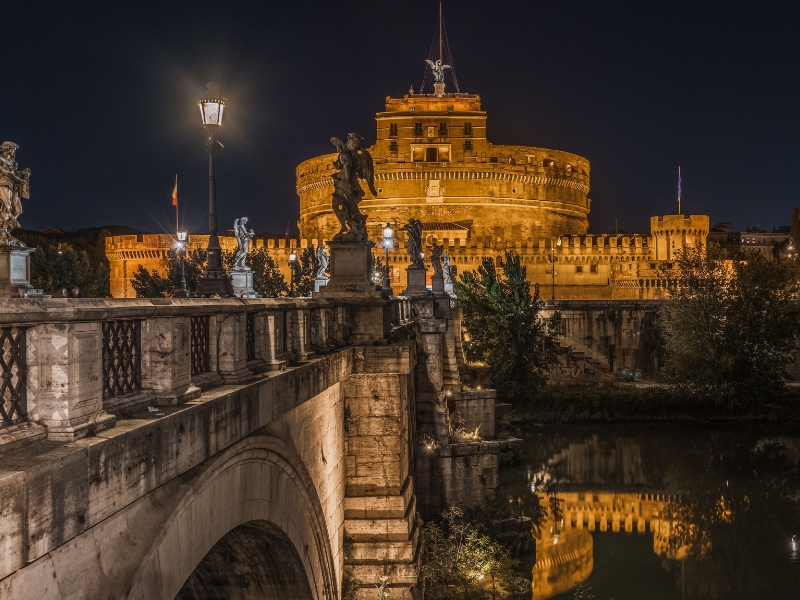
Castel Sant’Angelo is part of Rome scavenger hunt and walking tour!
Embark on an unforgettable journey through the enchanting city of Rome with World City Trail. Our interactive walking tour combines the thrill of exploration with the rich history and culture of this beautiful city.
Key Features:
Interactive gameplay: Solve engaging puzzles and challenges as you explore the city.
Hidden gems: Uncover lesser-known spots.
Cultural insights: Learn about the city’s fascinating history.
Flexibility: Explore at your own pace and create your own itinerary.
Family friendly activity and a great way to explore the city!
Further reading on Wikipedia: Rome