

Table of Contents
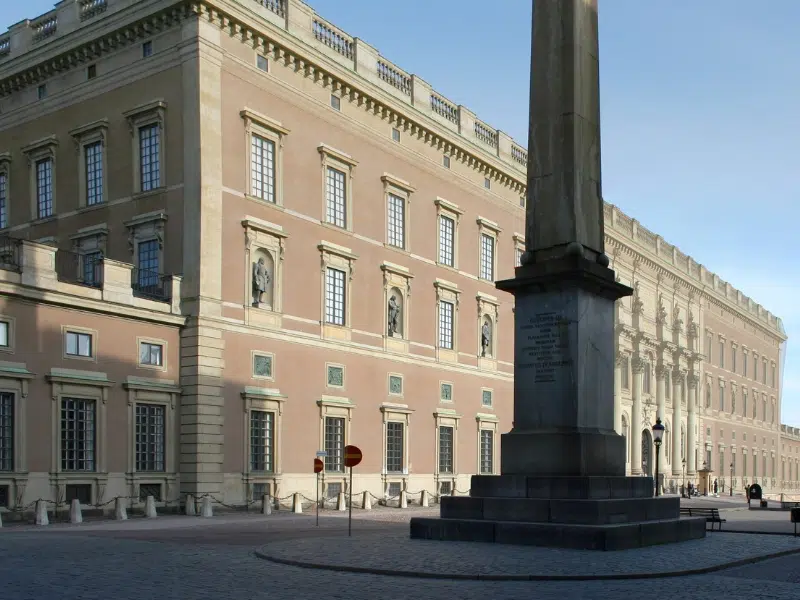
Standing proudly in Stockholm’s Slottsbacken, just outside the Royal Palace, Gustav III’s Obelisk is a powerful symbol of patriotism and national resilience. This grand monument was commissioned by King Gustav III to honor the courage and dedication of Stockholm’s citizens during the Russo-Swedish War (1788-1790). Though the war ended in a Swedish strategic victory, the capital faced the looming threat of invasion. In recognition of the unwavering support shown by its people, Gustav III decided to commemorate their bravery with a lasting tribute.
The Russo-Swedish War
The Russo-Swedish War (1788–1790) was a conflict between Sweden and Russia, fueled by King Gustav III’s ambition to restore Sweden’s status as a major power in the Baltic Sea. The war was part of a larger geopolitical struggle between Sweden and Catherine the Great’s Russian Empire, as both nations vied for dominance in northern Europe.
Despite facing internal opposition from Swedish nobility, Gustav III launched a military campaign against Russia. While Swedish forces achieved notable victories, particularly at the Battle of Svensksund in 1790, Stockholm was left vulnerable. The capital was on high alert, fearing a possible Russian invasion. The citizens of Stockholm rallied behind their king, offering unwavering support in terms of defense preparations, supplies, and morale.
Recognizing their dedication, Gustav III sought to commemorate their efforts with a lasting monument. The king envisioned an obelisk, a structure traditionally associated with power, endurance, and timeless remembrance, as a fitting tribute.
Architectural Majesty
Although Gustav III was assassinated in 1792, his plans for the obelisk were carried forward. The Gustav III’s Obelisk was designed in the neoclassical style, a movement inspired by the art and architecture of ancient Rome and Greece, which was highly popular in 18th-century Europe.
Constructed from Swedish granite, the obelisk stands 17 meters (56 feet) tall. The granite was carefully sourced to reflect strength and permanence, symbolizing the unbreakable spirit of the people it was meant to honor.
The monument features a Latin inscription, which acknowledges the efforts of Stockholm’s citizens during the war. The text immortalizes their loyalty and self-sacrifice, ensuring that future generations remember their role in safeguarding the kingdom. Although the Gustav III’s Obelisk was commissioned by Gustav III, it was completed under the reign of his son, King Gustav IV Adolf, and finally unveiled in the year 1800.
A Landmark of National Pride
Over two centuries later, Gustav III’s Obelisk remains one of Stockholm’s most significant monuments, serving as a reminder of the city’s strength in the face of adversity. Visitors to the Royal Palace and nearby Storkyrkan (Stockholm Cathedral) can admire the obelisk as part of their exploration of Gamla Stan, the city’s historic heart.
The monument is not just a relic of the past—it continues to symbolize Swedish patriotism and unity, values that define the nation’s identity. Whether seen as a historical marker or an artistic masterpiece, Gustav III’s Obelisk stands as a testament to the courage, resilience, and unwavering spirit of the people it was built to honor.
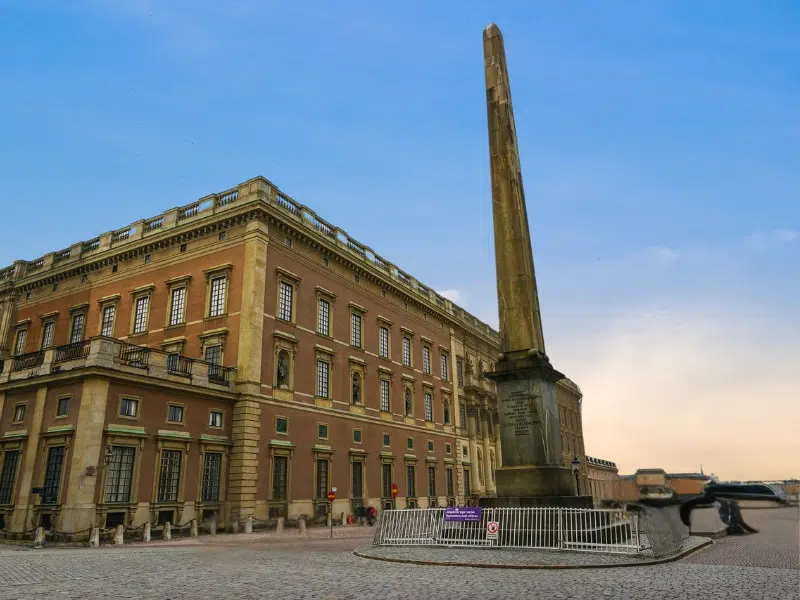
Gustav III’s Obelisk is part of Stockholm scavenger hunt and walking tour!
Embark on an unforgettable journey through the enchanting city of Stockholm with World City Trail. Our interactive walking tour combines the thrill of exploration with the rich history and culture of this beautiful city.
Key Features:
Interactive gameplay: Solve engaging puzzles and challenges as you explore the city.
Hidden gems: Uncover lesser-known spots.
Cultural insights: Learn about the city’s fascinating history.
Flexibility: Explore at your own pace and create your own itinerary.
Family friendly activity and a great way to explore the city!
Further reading on Wikipedia: Stockholm