
Table of Contents
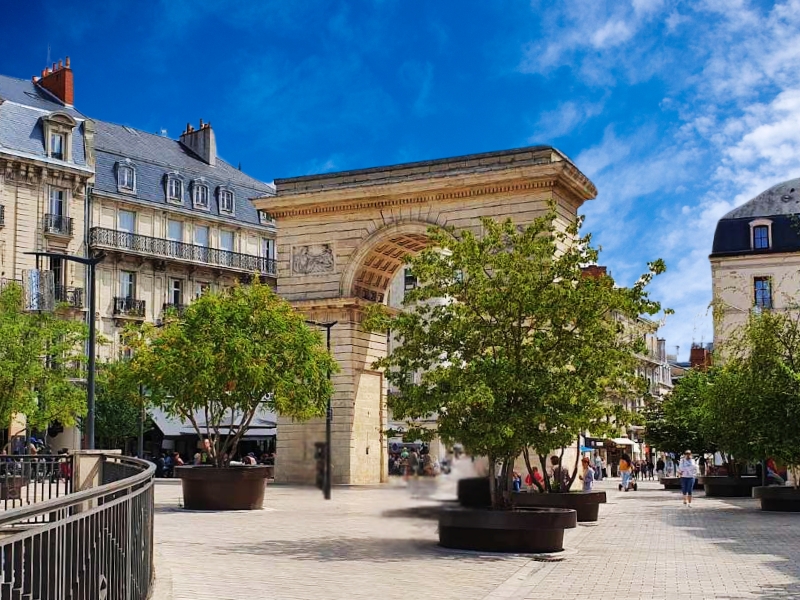
The William Gate, one of Dijon’s most emblematic landmarks, proudly stands at the entrance of the historic city center. Located in Place Darcy, this impressive neoclassical arch serves as both a monument to the city’s past and a welcoming gateway for visitors exploring Dijon’s cultural and architectural heritage. The origins of the William Gate date back to 1788, when it was constructed as part of Dijon’s grand urban expansion. Originally named Porte Condé, it was dedicated to Prince Louis V Joseph de Bourbon-Condé, a nobleman associated with the French monarchy.
A Fascinating History
During the tumultuous period of the French Revolution, the gate underwent a symbolic transformation, being renamed Porte de la Liberté to reflect the newfound ideals of freedom and democracy that reshaped France. Later, the structure was renamed William Gate in honor of Saint William of Volpiano, a Benedictine monk born in Dijon in 962 AD. William was a key figure in monastic reform across Europe, influencing religious communities in France, Italy, and beyond. His connection to Dijon made the renaming of the gate a meaningful tribute to the city’s rich spiritual and intellectual legacy.
Over the centuries, the William Gate has remained a steadfast emblem of Dijon’s endurance and cultural evolution. It has survived political upheavals, urban modernization, and the passage of time, standing as a silent witness to the city’s transformation from a medieval stronghold to a thriving cultural hub.
Neoclassical Elegance
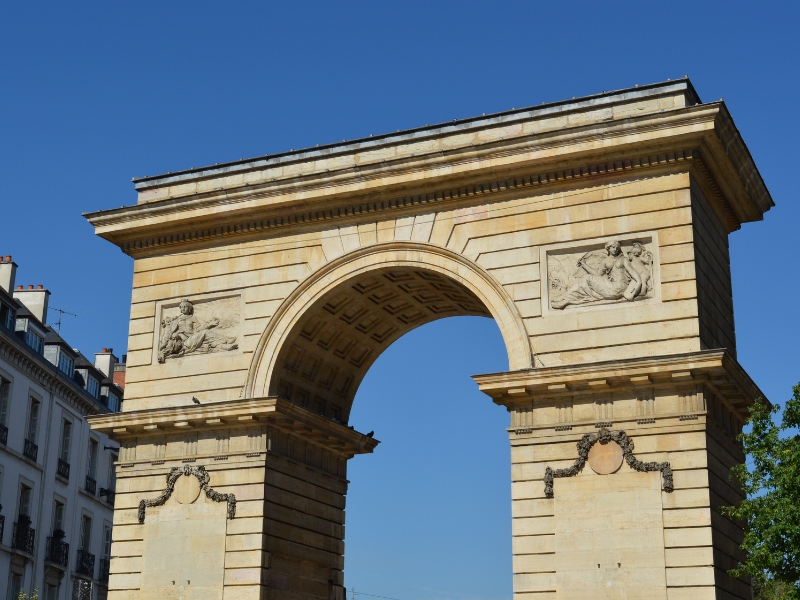
The William Gate is a striking example of neoclassical architecture, a style that was prominent in the late 18th century. It features a grand single arch, decorated with intricate relief carvings and framed by elegant sculptural details. The triglyph frieze, dentil cornice, and garlanded panels add to its refined aesthetic, making it a standout among the city’s historical structures.
One of the most notable artistic elements of the gate is the relief carvings of cherubic figures, known as putti, which symbolize different virtues and ideals. Over the years, the William Gate has been preserved and maintained as an important historical site. In 2009, a commemorative plaque was added in honor of Thomas Jefferson, celebrating 220 years of the French Revolution and highlighting the strong ties between France and the United States.
A Central Landmark
Strategically positioned at the entrance to Rue de la Liberté, Dijon’s famous pedestrian shopping street, the William Gate is the perfect starting point for exploring the city. This lively boulevard is lined with historic buildings, charming boutiques, artisanal cafés, and elegant patisseries, making it a delightful area for both locals and tourists.
Just beyond the gate, visitors will find Jardin Darcy, one of Dijon’s most picturesque parks. Named after the celebrated engineer Henry Darcy, this beautifully landscaped garden offers a peaceful retreat, complete with sculptures, fountains, and shaded pathways. The presence of Jardin Darcy adds to the majestic setting of the William Gate, creating a harmonious blend of history and nature.
A Must-See in Dijon
For anyone visiting Dijon, the William Gate is more than just a historical monument—it represents the city’s evolution and resilience over centuries. As a symbol of Dijon’s architectural and cultural identity, it offers a glimpse into the past while serving as a gateway to the dynamic life of the city today.
With its historical significance, stunning design, and prime location, the William Gate continues to be one of Dijon’s most cherished landmarks. Whether you’re a history enthusiast, an architecture lover, or a traveler eager to explore the beauty of Burgundy’s capital, passing through this majestic arch is an experience that encapsulates the essence of Dijon’s rich heritage.
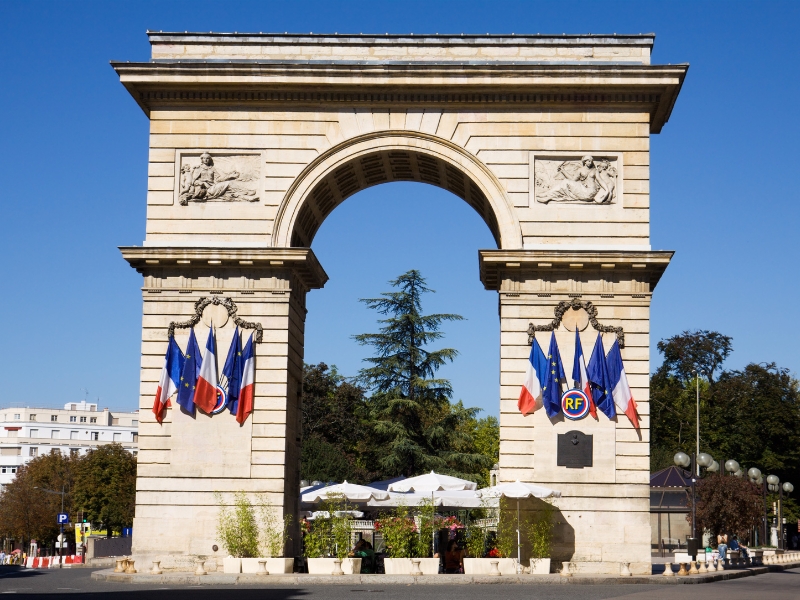
William Gate is part of Dijon scavenger hunt and walking tour!
Embark on an unforgettable journey through the enchanting city of Dijon with World City Trail. Our interactive walking tour combines the thrill of exploration with the rich history and culture of this beautiful city.
Key Features:
Interactive gameplay: Solve engaging puzzles and challenges as you explore the city.
Hidden gems: Uncover lesser-known spots.
Cultural insights: Learn about the city’s fascinating history.
Flexibility: Explore at your own pace and create your own itinerary.
Family friendly activity and a great way to explore the city!
Further reading on Wikipedia: Dijon