
Nestled directly beneath the majestic Acropolis, Plaka in Athens is not merely a neighborhood; it is a living museum, the oldest continuously inhabited district of the city. With its labyrinthine cobblestone streets, neoclassical architecture, vibrant bougainvillea, and a charming array of shops, tavernas, and ancient monuments, Plaka offers visitors a captivating journey through Athens’ layered history, a direct connection to its ancient past and its enduring soul.
Ancient Roots and Ottoman Flourish
The history of Plaka in Athens is as old as the city. Archaeological evidence suggests continuous habitation in this area since antiquity, making it arguably the oldest neighborhood in the world with an uninterrupted human presence. Its strategic location on the slopes of the Acropolis meant it was always at the heart of Athenian life, even when the city’s power waned.
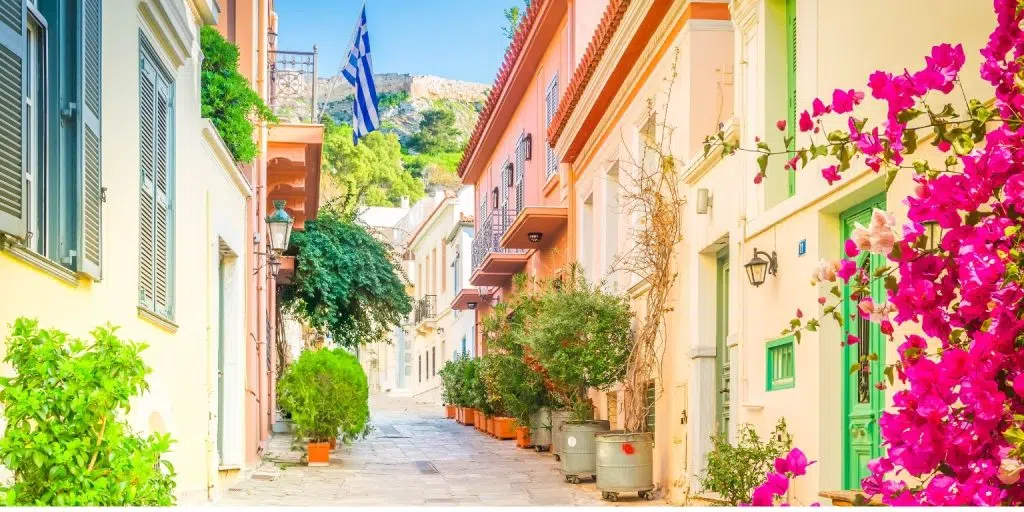
During the Ottoman period (15th to 19th centuries), when Athens was a relatively small provincial town, Plaka became its administrative and commercial center. The narrow, winding streets, many of which still exist today, formed organically around the contours of the Acropolis and the existing ancient structures. The architecture of the houses in Plaka largely reflects the Ottoman and post-Ottoman periods, with neoclassical influences becoming prominent after Greek independence. Many of the buildings seen today, particularly the charming two-story houses with their characteristic red-tiled roofs and wooden balconies, were constructed in the 18th and 19th centuries.
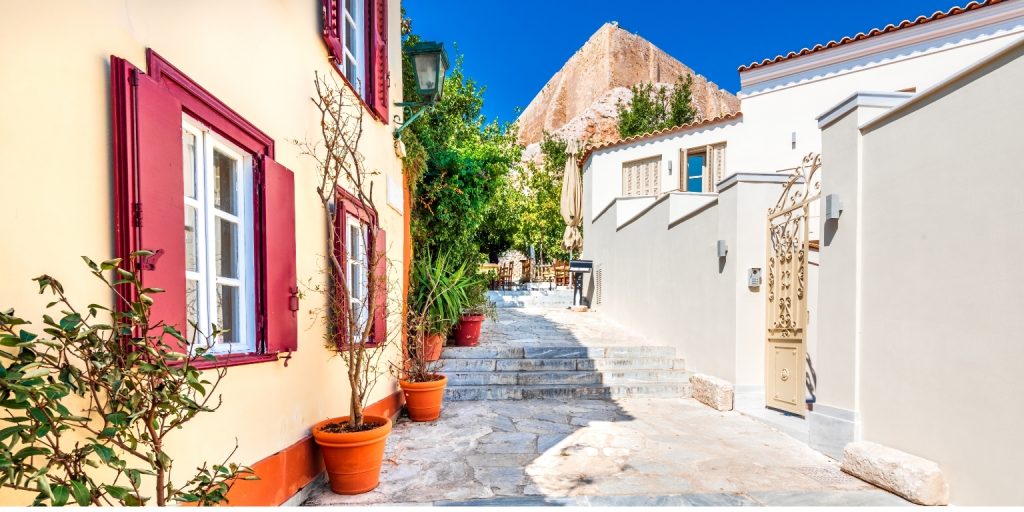
A unique enclave within Plaka is Anafiotika, a tiny, picturesque village built on the very slopes of the Acropolis. Its whitewashed, cubic houses with blue shutters are reminiscent of the Cycladic islands. This area was reportedly built in the mid-19th century (specifically after the major fire of 1884 that devastated parts of Plaka) by builders who came from the island of Anafi to work on the reconstruction of Athens. They built their homes in the style of their homeland, creating a striking contrast to the more neoclassical architecture of the wider Plaka area.
A Neighborhood of Resilience and Revival
Through centuries of foreign rule, wars, and urban development, Plaka remained a resilient residential area. In the mid-20th century, particularly during the 1950s and 60s, parts of Plaka experienced decline and even became associated with nightlife.
Recognizing its invaluable historical and architectural heritage, the Greek government implemented strict regulations to protect Plaka. Many buildings underwent meticulous restoration, and regulations were put in place to prevent unsightly modern constructions. This concerted effort ensured that Plaka retained its unique character and charm, preventing it from being swallowed by modern urban sprawl. The district officially became a protected historical settlement in 1979.

Plaka Today: A Lively Historical Enclave
Today, Plaka in Athens is a vibrant and enchanting district that masterfully blends its ancient past with a bustling present. It’s a pedestrian-friendly zone, inviting visitors to wander leisurely and discover its many treasures:
- Shopping: The streets are lined with souvenir shops, traditional craft stores selling ceramics, jewelry, and leather goods, as well as art galleries.
- Dining: Numerous traditional tavernas and restaurants offer authentic Greek cuisine, often with live music, creating a lively atmosphere, especially in the evenings.
- Museums and Ancient Sites: Plaka is home to several smaller museums, including the Museum of Greek Folk Art, the Jewish Museum of Greece, and the Frissiras Museum. It also contains significant archaeological sites like the Roman Agora with the Tower of the Winds, and Hadrian’s Library.
- Architectural Charm: Simply strolling through Plaka’s narrow alleyways, admiring the neoclassical facades, vibrant bougainvillea, and the occasional glimpse of the Acropolis towering above, is an experience in itself.
- Anafiotika: Don’t miss a detour into Anafiotika for a truly unique, island-like atmosphere within the city.
The Plaka in Athens, with its origins stretching back to antiquity and many of its charming buildings constructed in the 18th and 19th centuries, is more than just a tourist destination. It is the living, breathing heart of old Athens, offering an unparalleled opportunity to immerse oneself in the city’s continuous history, experience its traditional charm, and feel the pulse of its ancient soul. It remains an indispensable part of the Athenian experience.