
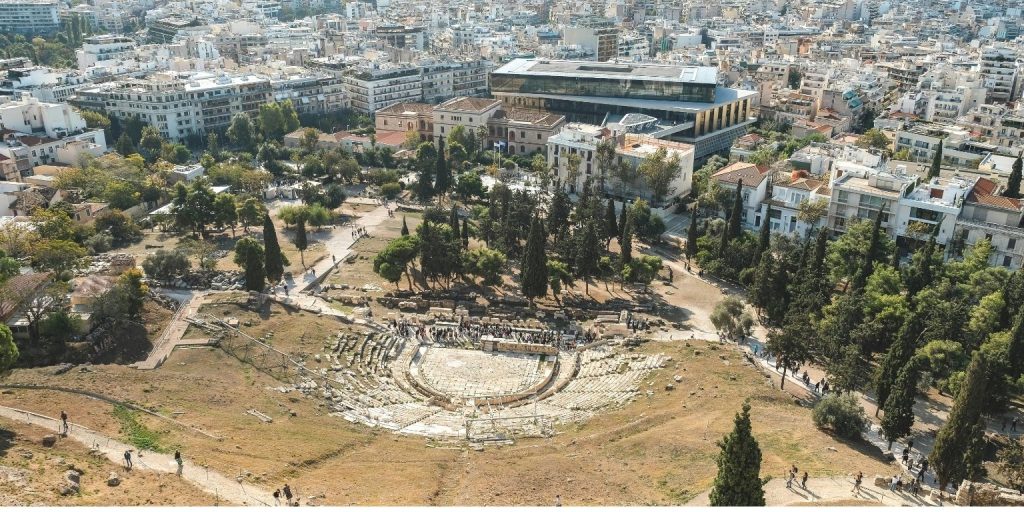
Nestled on the southeastern slope of the Acropolis, the Theatre of Dionysus in Athens is not merely a ruin; it is hallowed ground, the very cradle of Western theatre. It was here, in the shadow of the Parthenon, that ancient Greek tragedy and comedy were born, flourished, and forever shaped the dramatic arts. Visiting this ancient site offers a profound connection to the origins of storytelling and performance as we know them.

A Sanctuary and a Stage: Early Beginnings
The history of the Theatre of Dionysus is intrinsically linked to the worship of Dionysus Eleuthereus, the Greek god of wine, revelry, fertility, and, crucially, drama. Initially, a simple sanctuary dedicated to the god existed here. Early dramatic performances, evolving from choral odes and rituals in honor of Dionysus, would have taken place on a flat, earthen performance space known as the orchestra, with spectators likely standing or sitting on temporary wooden bleachers.
The first more permanent structure for theatrical performances at this site is believed to have emerged in the late 6th century BC, particularly around 500 BC. This rudimentary theatre would have consisted of a circular orchestra and wooden seating (ikria). It was during this archaic period that legendary playwrights like Thespis, considered the first actor, began to perform.
The Golden Age: Pericles and Lycurgus
The theatre underwent its most significant transformation during the classical period, particularly under the statesman Pericles in the mid-5th century BC. Around 440-430 BC, a more substantial theatre was constructed, likely with stone foundations for the seating and a permanent stone stage building (skene). This was the theatre where the masterpieces of the great tragedians – Aeschylus, Sophocles, and Euripides – and the biting comedies of Aristophanes were first performed. These annual dramatic festivals, especially the City Dionysia, were not just entertainment but profound civic and religious events.
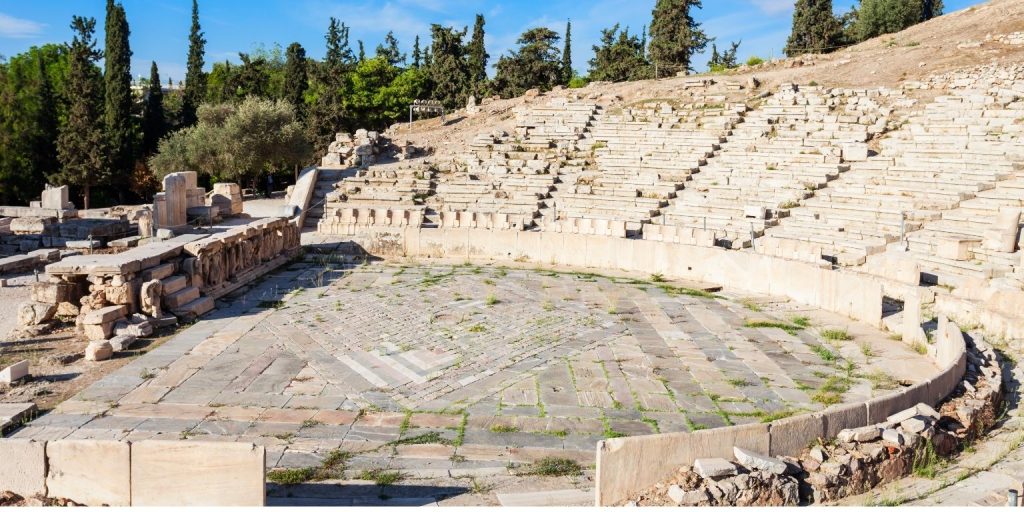
However, the theatre as we largely see it today, with its impressive stone seating, was the result of a major rebuilding project initiated by the Athenian statesman Lycurgus in the late 4th century BC, specifically between 338 and 326 BC. This extensive renovation involved replacing the wooden seats with marble, creating the grand tiered seating that could accommodate an estimated 17,000 spectators. The orchestra was also paved with marble, and a more elaborate skene (stage building) with permanent architectural elements was constructed. The intricate relief sculptures on the stage front, depicting scenes from the life of Dionysus, also date from this period or later Roman additions.
Roman Modifications and Later Decline
The Theatre of Dionysus continued to be used throughout the Hellenistic and Roman periods, albeit with further modifications. In the 1st century AD, under the Roman Emperor Nero, the theatre underwent a substantial renovation to accommodate Roman spectacles, including gladiator contests and beast hunts. The orchestra was paved, and the front row of seats (the “throne seats”) was reserved for dignitaries and featured elaborately carved marble chairs. These renovations, particularly those commissioned by Phaedrus in the 4th century AD, reflect the changing tastes and uses of the venue.
With the decline of the Roman Empire and the rise of Christianity, the classical forms of drama waned, and the theatre eventually fell into disuse and ruin. Over centuries, it became buried by debris and vegetation, its former glory largely forgotten until archaeological excavations began in the 19th century.
The Theatre Today: A Site of Revelation
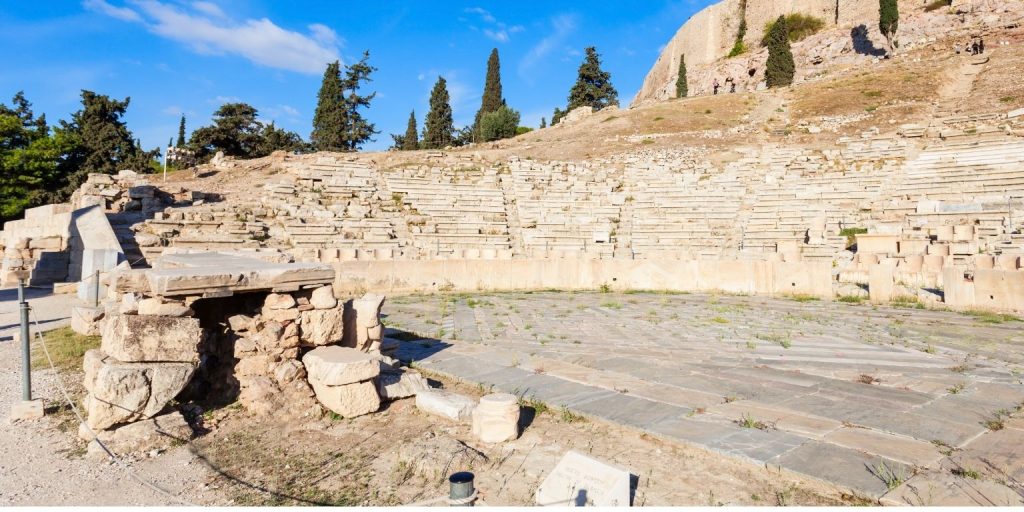
Today, the Theatre of Dionysus in Athens is a remarkably preserved archaeological site, offering visitors a tangible connection to its illustrious past. While much of the skene and upper seating are gone, the lower tiers of marble seating, including the ornate front-row thrones, remain largely intact.
Exploring the site allows one to imagine the powerful performances that once captivated ancient Athenians. One can walk across the orchestra where choruses sang and danced, sit on the very seats where citizens debated and celebrated, and marvel at the acoustics that allowed voices to carry throughout the vast amphitheater. The ongoing conservation efforts continue to reveal more of its secrets and protect its fragile remains.
From its humble beginnings as a ritual space in the late 6th century BC, through its grand classical rebuild under Lycurgus in the late 4th century BC, the Theatre of Dionysus in Athens stands as an unparalleled testament to human creativity and the enduring power of dramatic storytelling. It is a mandatory pilgrimage for anyone seeking to understand the deep roots of Western civilization and the profound legacy of ancient Greek theatre.