
The enduring legend of Count Dracula, popularized by Bram Stoker’s gothic novel, conjures images of a foreboding, ancient castle nestled deep in the Carpathian Mountains of Transylvania. This vivid imagery often leads visitors to search for “Dracula’s Castle” in Bucharest, Romania’s capital. However, it’s crucial to clarify a common misconception: there is no single “Dracula’s Castle” located directly in Bucharest. The famous castle universally marketed as “Dracula’s Castle” is Bran Castle, situated over 180 kilometers (approximately 112 miles) north of Bucharest, in Transylvania, near Brașov.
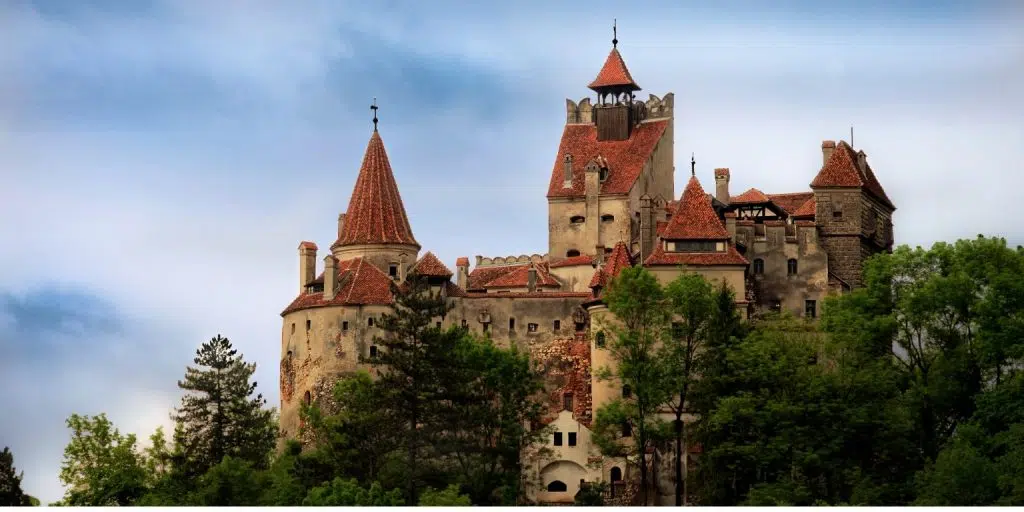
The Myth and Its Main Inspiration: Bran Castle
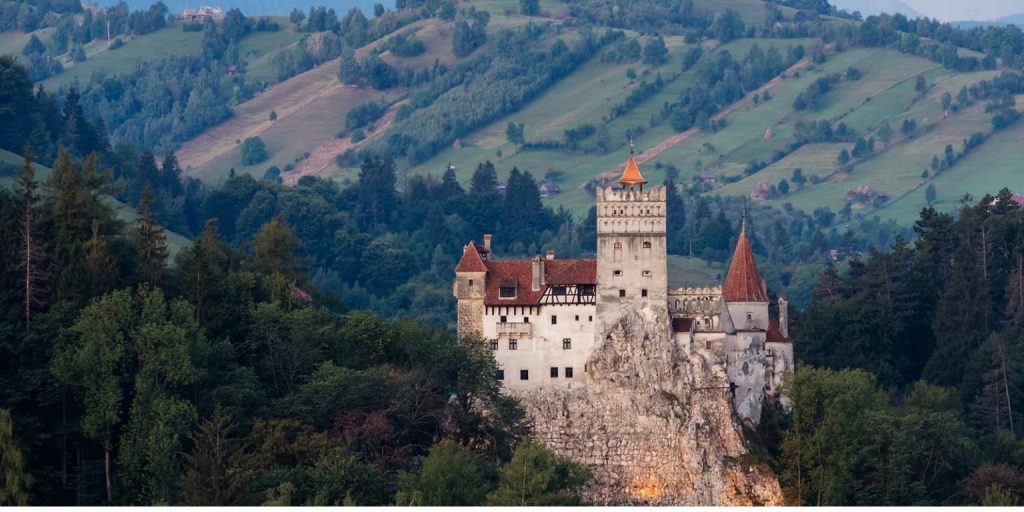
Bran Castle is undeniably the fortress most widely associated with the Dracula legend. Built by the Saxons of Brașov between 1377 and 1388 as a customs post and defensive stronghold against the Ottoman Empire, its dramatic silhouette, perched on a rocky outcrop, perfectly fits Bram Stoker’s description of Count Dracula’s fictional abode. However, historical evidence strongly suggests that Stoker, an Irish writer, never visited Romania or Bran Castle. His inspiration likely came from descriptions and illustrations available to him in 19th-century Britain. Despite the tenuous historical link, Bran Castle’s striking appearance and the powerful marketing efforts of Romanian tourism have solidified its global identity as “Dracula’s Castle.”
While Bran Castle is undeniably the most popular “Dracula” destination, it’s not actually in Bucharest. Tourists often undertake day trips from Bucharest to visit Bran Castle, often combined with a visit to the more historically significant and beautiful Peleș Castle in Sinaia and the medieval city of Brașov.

Vlad the Impaler: The Historical Figure and His Bucharest Connection
The real historical figure behind the Dracula legend is Vlad III Dracula, more commonly known as Vlad the Impaler (Vlad Țepeș), who was a 15th-century Prince (Voivode) of Wallachia, the historical region where Bucharest is located. While his infamous cruelty and impalement methods inspired Bram Stoker to adopt the name “Dracula” (meaning “son of the dragon/devil,” derived from his father’s affiliation with the Order of the Dragon), Vlad the Impaler was a historical ruler and a national hero to many Romanians for his fierce resistance against the Ottoman Empire.
Vlad the Impaler did have a significant connection to Bucharest. In 1459, Vlad III issued a document from his “princely residence” in Bucharest, officially recognizing the city and effectively making it his princely capital. He ordered the construction and fortification of a Princely Court (Curtea Veche), which served as his administrative and residential center. The remains of this court, located in the heart of what is now Bucharest’s Old Town (Lipscani district), are the closest thing Bucharest has to a “Dracula’s Castle.”
The Old Princely Court in Bucharest: Vlad’s Actual Home
The Old Princely Court (Curtea Veche), while largely in ruins today, represents the true historical link between Vlad the Impaler and Bucharest. Archaeological excavations in the mid-20th century unearthed the foundations of Vlad’s palace, along with various artifacts from his era. Visitors to the Old Court Museum (Muzeul Curtea Veche și Hanul lui Manuc) can explore these remnants, including thick defensive walls, parts of what might have been dungeons, and the adjacent Old Court Church, one of Bucharest’s oldest surviving buildings, consecrated during Vlad’s reign.
This site offers a far more authentic, albeit less visually imposing, connection to the historical figure of Vlad the Impaler than Bran Castle. It was here, in Bucharest, that Vlad held court, made decisions, and likely orchestrated some of the brutal acts for which he became notorious.
So, while the gothic allure of Bran Castle in Transylvania satisfies the fictional imagery of “Dracula’s Castle,” those seeking to connect with the historical Vlad the Impaler in Bucharest should direct their attention to the modest but historically rich ruins of the Old Princely Court (Curtea Veche). Established by Vlad III Dracula as his princely residence in 1459, this site in Bucharest’s Old Town provides a tangible, if less dramatic, link to the formidable ruler who inspired one of literature’s most enduring figures.