
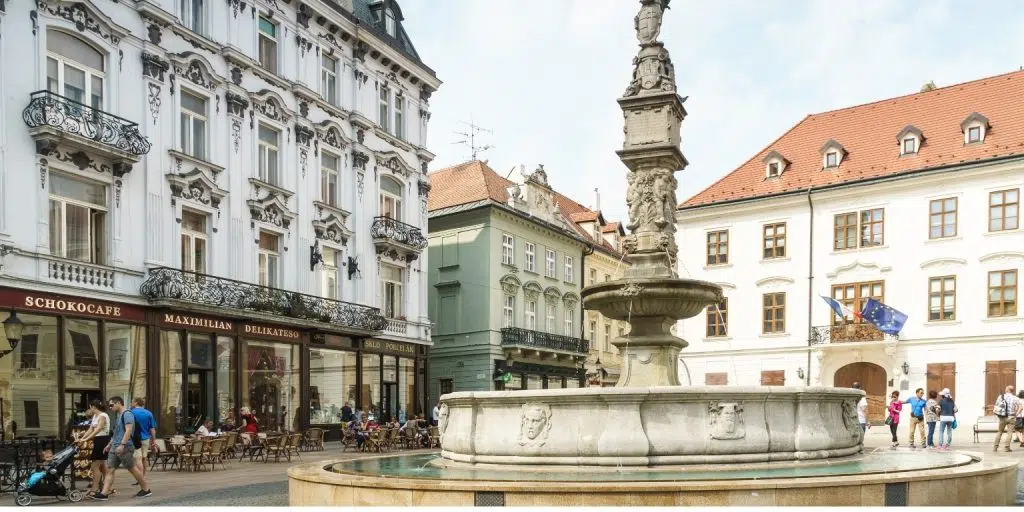
In the very heart of Bratislava’s charming Old Town, presiding over Hlavné námestie (Main Square), stands the city’s oldest and arguably most iconic fountain: the Maximilian Fountain. Often interchangeably known as the Roland Fountain, this grand Renaissance masterpiece is a focal point for locals and tourists alike, a popular meeting spot, and a silent witness to centuries of the city’s tumultuous and glorious history. The Maximilian Fountain in Bratislava is more than just a source of water; it’s a symbol of civic pride, royal power, and enduring urban legends.
A Royal Commission in the 16th Century
The construction of the Maximilian Fountain was commissioned by King Maximilian II (who was also the Holy Roman Emperor) in 1572. Its primary purpose was practical: to provide a reliable public water supply to the city of Pressburg (as Bratislava was then known), particularly after a devastating fire in 1563. This functional necessity was combined with a desire for a monumental civic embellishment befitting a city that served as the coronation site for Hungarian kings.
The fountain was sculpted by the Austrian master Andreas Lutringer, a stonemason from Deutsch Altenburg. His work reflects the artistic trends of the late Renaissance, blending classical influences with a burgeoning sense of naturalism. The fountain’s design features a large, circular basin, from which rises a central column topped by a statue of a knight in full armor.
Roland or Maximilian? A Tale of Two Names
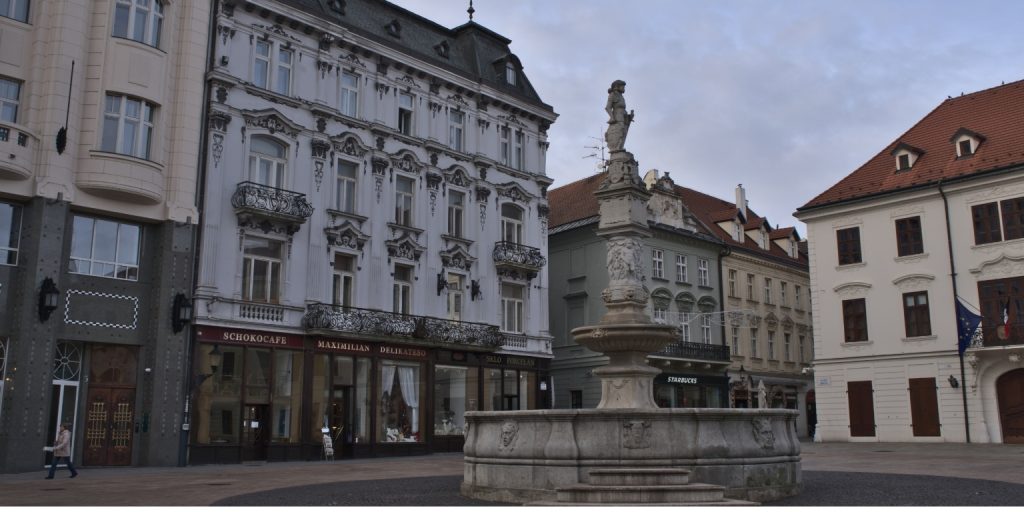
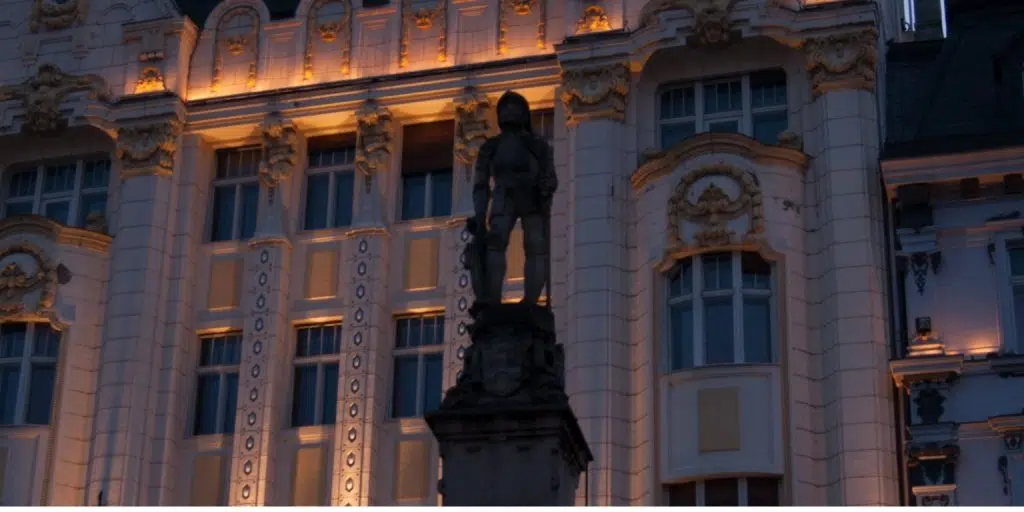
The identity of the knight atop the column has been the subject of fascinating local debate and legend, leading to the fountain’s dual name. Officially, the statue is believed to represent King Maximilian II himself, depicted as a Christian knight or a guardian of the city. He is shown leaning against a shield adorned with the Hungarian emblem, underscoring his royal connection to the Kingdom of Hungary.
However, over time, the fountain became popularly known as the Roland Fountain. Roland was a legendary knight from the court of Charlemagne, revered across Europe as a symbol of justice, bravery, and the defender of civic rights and freedoms. In many Central European towns, Roland statues were erected in main squares to symbolize the autonomy and self-governance of the burghers. The people of Bratislava embraced this interpretation, preferring to see their protector as the mythical knight Roland rather than the Habsburg monarch. This dual identity adds a unique layer of historical and cultural richness to the monument.
Legends of Life and Loyalty
The Maximilian Fountain in Bratislava is steeped in a multitude of charming legends that have been passed down through generations, further enhancing its mystique:
- The Midnight Bow: The most famous legend claims that at the stroke of midnight on New Year’s Eve, the statue of the knight turns and bows towards the Old Town Hall, honoring the twelve city councillors who bravely sacrificed their lives to save the city in the past. It is said that only a true, pure-hearted native of Bratislava can witness this annual miracle.
- The Good Friday Movement: Another tale suggests that on Good Friday, the knight comes to life in broad daylight, stepping down from his pedestal and waving his legendary sword, Durandal, in all four directions, to assure the city of his continued protection. Again, only a born-and-bred citizen with a pure heart can perceive this event.
These legends underscore the deep affection and sense of guardianship the people of Bratislava feel towards their oldest fountain, imbuing it with a living spirit that transcends its stone and bronze.
An Enduring Icon in Main Square
The Maximilian Fountain, or Roland Fountain, is undoubtedly one of Bratislava’s most important landmarks. It stands prominently in the heart of the Main Square, surrounded by historic buildings such as the Old Town Hall and various Baroque palaces, all contributing to the square’s vibrant atmosphere. It serves as a natural gathering point, a picturesque backdrop for photographs, and a serene spot to sit and observe the ceaseless flow of life in the Old Town.
Over its centuries of existence, the fountain has undergone several reconstructions and modifications, but its essence and iconic status have remained unchanged. It is a testament to the city’s resilience, its royal heritage, and its rich tapestry of folklore. The Maximilian Fountain in Bratislava, built in 1572 and sculpted by Andreas Lutringer, continues to stand tall as a silent guardian, a storyteller in stone, and a cherished symbol of Bratislava’s enduring legacy.