
Nestled in the idyllic southern reaches of Düsseldorf, Schloss Benrath stands as a breathtaking testament to Rococo architecture and garden design. Far more than just a stately home, this magnificent palace complex, with its expansive parks, reflective ponds, and charming outbuildings, offers a serene escape and a deep dive into 18th-century courtly life and natural history. A visit to Schloss Benrath in Düsseldorf is an immersive experience, combining architectural grandeur with fascinating insights into art, nature, and historical living.
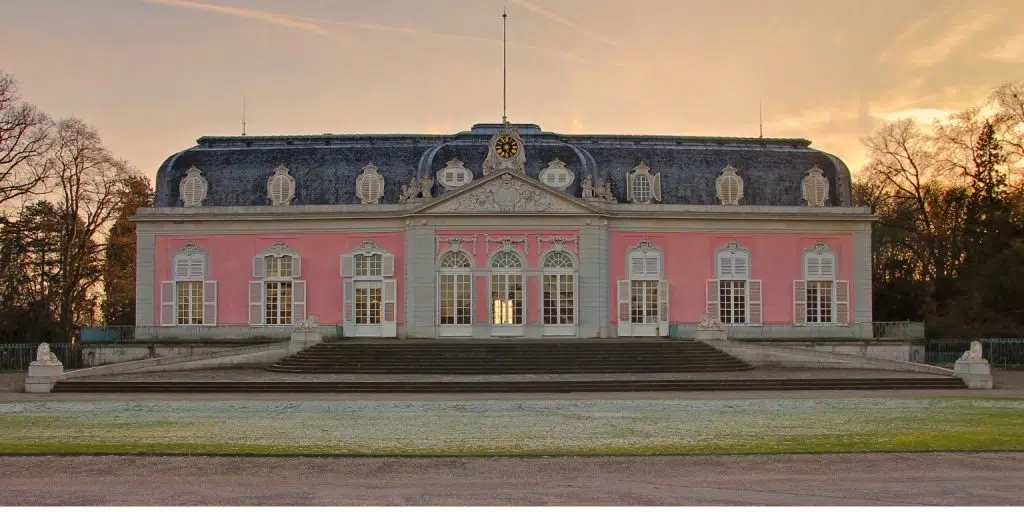
A Summer Residence of Rococo Splendor
The construction of Schloss Benrath took place between 1755 and 1770, commissioned by Elector Palatine Carl Theodor (1724–1799) and his wife, Electress Elisabeth Auguste. They sought a summer residence and hunting lodge that would reflect the refined tastes of the late Rococo period, offering a more intimate and light-filled alternative to grand Baroque palaces. The design was entrusted to the renowned French architect Nicolas de Pigage (1723–1796), who had previously worked on other significant European projects.
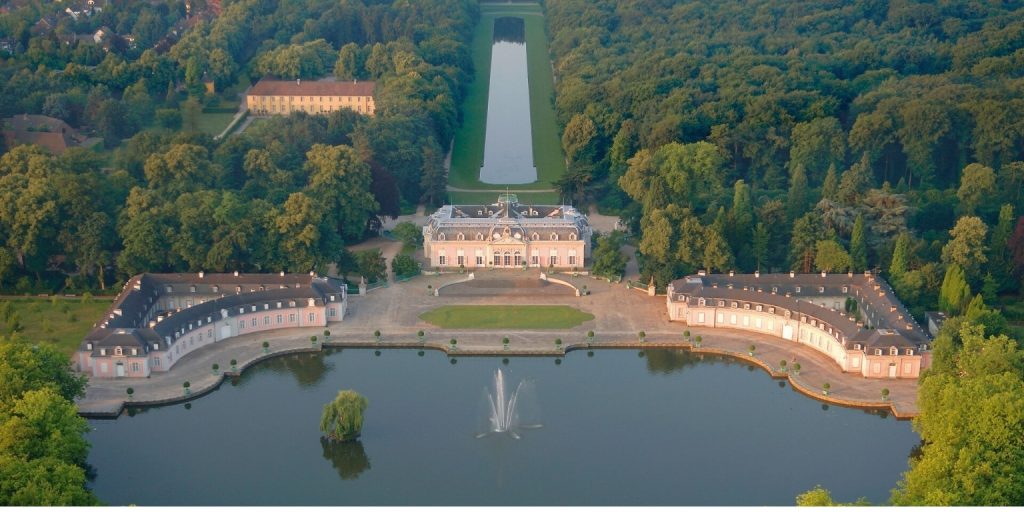
Pigage’s genius is evident in the palace’s unique and highly influential design. Unlike traditional palaces with numerous separate buildings, Schloss Benrath features a central corps de logis (main building) flanked by two symmetrical wings – the Kavaliersflügel (Cavaliers’ Wing) and the Wirtschaftsflügel (Economy Wing) – all interconnected by arcades and courtyards. This innovative layout creates a harmonious ensemble, with the main building specifically designed to provide stunning views of both the formal gardens and the informal English landscape park.
The primary purpose of the main building, often referred to as the Corps de Logis, was not for daily living, but for grand receptions, festivities, and as a backdrop for the court’s summer social calendar. Its interior reflects the elegance of the Rococo style, characterized by delicate pastels, intricate stucco work, and a sense of lightness.
A Harmonious Blend of Architecture and Nature
One of the most remarkable aspects of Schloss Benrath in Düsseldorf is the seamless integration of its architecture with its surrounding 60-hectare parkland. Pigage’s design intentionally blurs the lines between indoor and outdoor spaces, with the palace appearing to float between water features and meticulously designed garden sections.
The park itself is a masterwork of landscape architecture, incorporating various styles:
- French Formal Garden: Immediately adjacent to the main palace, featuring geometric precision, trimmed hedges, fountains, and sculptures, reflecting the classical ideals of order and control over nature.
- English Landscape Park: Further afield, designed with more naturalistic principles, including winding paths, groves of trees, artificial ruins, and serene ponds, creating picturesque vistas.
- Forest and Water Features: The entire park is interlaced with canals, ponds, and wooded areas, enhancing the sense of tranquility and offering diverse ecological habitats.
This intelligent landscaping ensured that every window of the palace offered a carefully composed view, making nature an integral part of the living space.

A Trio of Museums: History, Gardens, and Nature
Today, Schloss Benrath functions as a multi-faceted museum complex, managed by the Stiftung Schloss und Park Benrath (Foundation Schloss and Park Benrath). It houses three distinct museums, offering varied insights for visitors:
- Museum Corps de Logis: Located in the main palace building, this museum allows visitors to experience the meticulously restored state rooms as they appeared in the 18th century. It showcases the opulent furnishings, artworks, and daily routines of the Electoral court, providing a vivid glimpse into Rococo courtly life. Access is often by guided tour to preserve the delicate interiors.
- Museum for European Garden Art (Museum für Europäische Gartenkunst): Housed in the eastern Kavaliersflügel, this unique museum is dedicated to the history and development of garden art across Europe. It features plans, models, and artworks related to famous gardens, illustrating the evolution of landscape design from antiquity to the present.
- Museum for Natural History (Naturkundemuseum): Located in the western Wirtschaftsflügel, this museum focuses on the local flora and fauna of the Benrath park and the Rhine region. It connects the natural environment of the palace grounds to broader ecological themes, appealing to nature enthusiasts and families.
Schloss Benrath in Düsseldorf, constructed between 1755 and 1770 by Nicolas de Pigage for Elector Carl Theodor, is an exceptional example of Rococo elegance. Its harmonious blend of exquisite architecture and diverse parklands, coupled with its three engaging museums, makes it a cultural gem and a vital piece of Düsseldorf’s historical and artistic heritage. It offers a tranquil escape and a captivating journey into the opulent world of 18th-century nobility.