
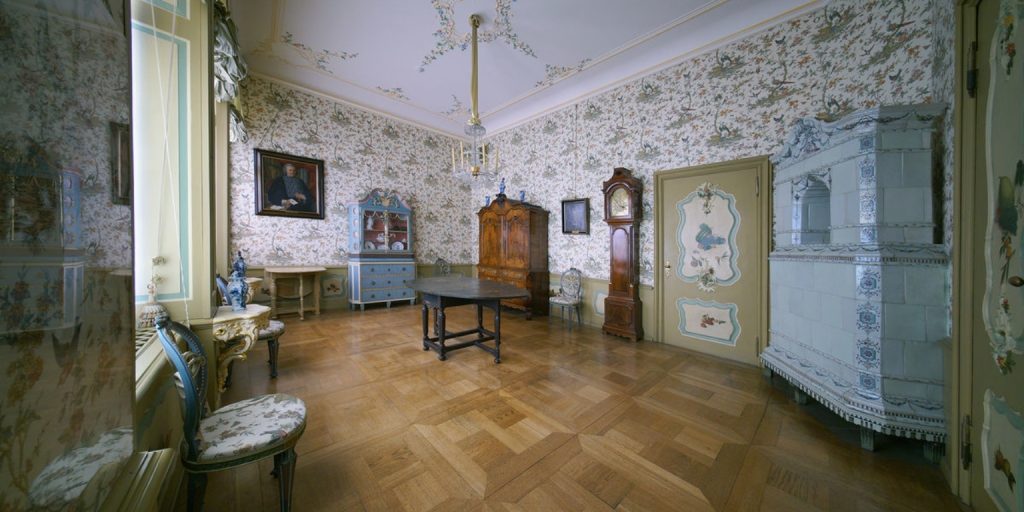
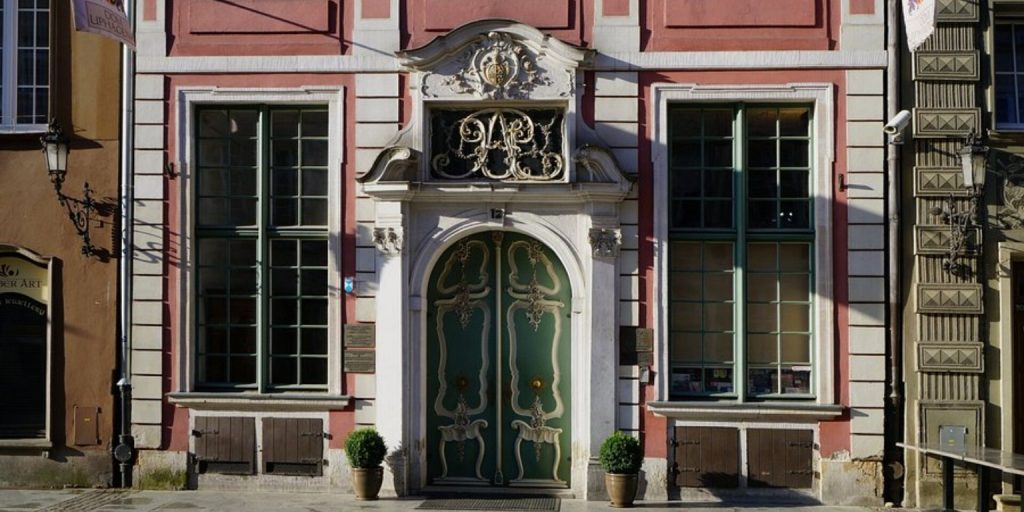
Nestled among the vibrant, meticulously reconstructed facades of Długa Street on Gdańsk’s famed Royal Route, the Uphagen House (Dom Uphagena) stands as a unique and invaluable historical treasure. Unlike its neighboring buildings, which largely house shops, restaurants, or apartments today, the Uphagen House in Gdańsk offers a rare, authentic glimpse into the lavish domestic life of a wealthy 18th-century patrician family. It is one of the very few burgher houses in Europe to be preserved, or rather, meticulously restored, in its original layout and furnishings, providing a tangible link to the city’s opulent golden age.
A Merchant’s Vision: The House’s Genesis
The story of the Uphagen House begins with Johann Uphagen (1731–1802), a prominent Gdańsk merchant, shipowner, scholar, and a passionate collector and patron of the arts. Uphagen purchased the property at Długa Street 12 in 1775 and immediately embarked on an ambitious renovation project to transform it into a sophisticated and comfortable home befitting his status. His vision was to create a modern and elegant dwelling that reflected the refined tastes of the late Baroque and early Neoclassical periods.
The reconstruction, completed by 1779, was carried out with meticulous attention to detail. Uphagen employed the finest craftsmen and artists of his time to design and furnish the interiors, ensuring that every room, from the grand salon to the intimate studies, exuded an atmosphere of cultivated elegance and comfort. What makes the Uphagen House truly exceptional is that Uphagen, with foresight, stipulated in his will that the house should be preserved in its original form and furnishings, a wish that remarkably guided its fate for centuries.
A Time Capsule of 18th-Century Domesticity
Stepping inside the Uphagen House in Gdańsk is akin to walking into a time capsule. Each room is a testament to the lifestyle, tastes, and social customs of a wealthy burgher family in the late 18th century. The museum’s careful restoration ensures that visitors experience the house as Johann Uphagen himself would have known it. Key features include:
- Original Layout: The house retains its authentic room arrangement, including formal reception rooms on the ground floor, private living quarters on the upper floors, and service areas.
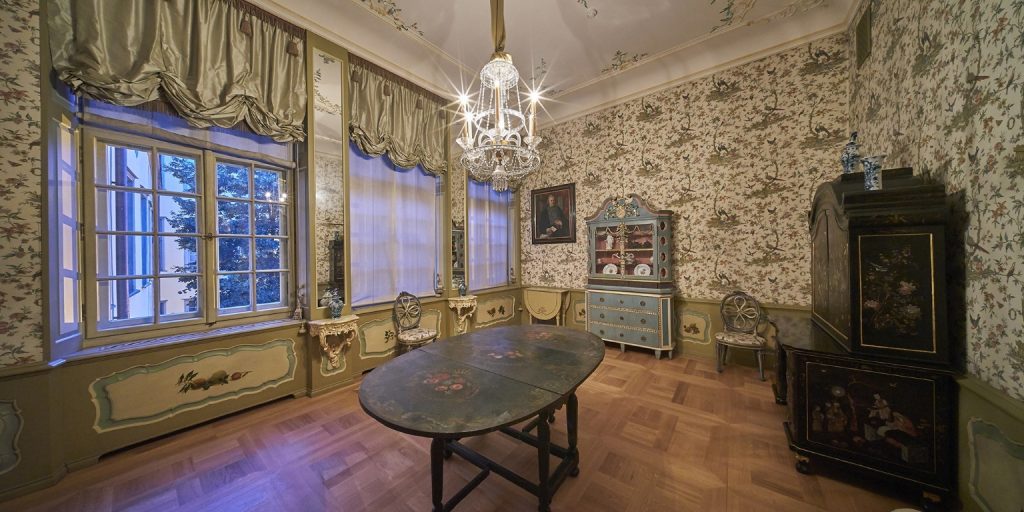
- Period Furnishings: The rooms are meticulously furnished with authentic 18th-century furniture, porcelain, glassware, paintings, and decorative arts, many of which are original to the Uphagen family or are precise reproductions.
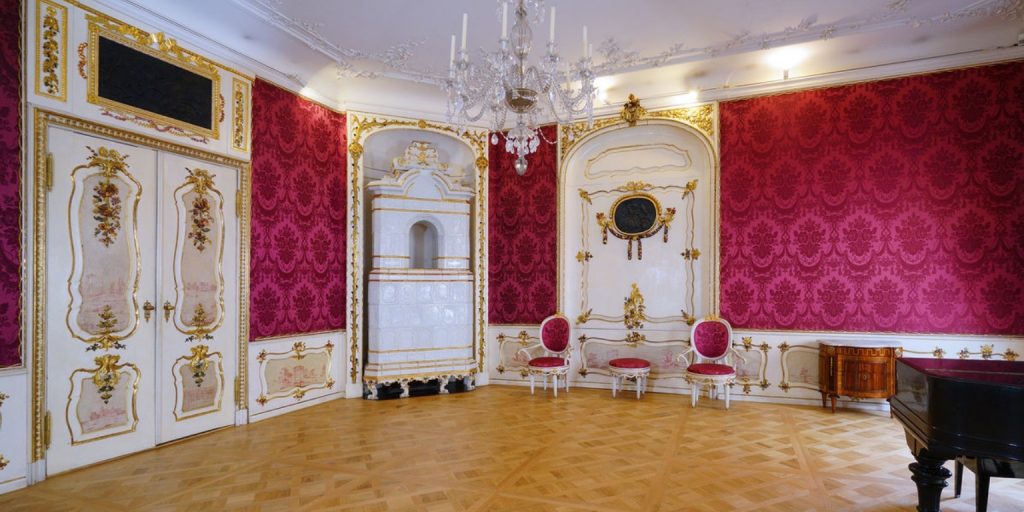
- Elaborate Interiors: Visitors can admire the intricate stucco work on the ceilings, the exquisite wall coverings (including painted fabrics and wallpapers), and the detailed woodwork that adorns the doors and paneling.
- The “Great Hall”: A central, two-story hall often used for grand receptions and concerts, featuring impressive architectural details and lighting.
- Private Chambers: The more intimate studies, bedrooms, and dining areas offer insights into daily life, personal interests, and intellectual pursuits of the family. Uphagen himself was known for his extensive library.
Resilience Through War and Restoration
Like almost all of Gdańsk’s historic center, the Uphagen House suffered catastrophic damage during the Soviet offensive in 1945, which reduced much of the city to rubble. Miraculously, however, much of the interior decoration, including valuable wooden elements and parts of the furniture, had been carefully dismantled and stored outside the city before the war. This foresight proved invaluable.
Following the war, the painstaking process of reconstruction began. The exterior of the Uphagen House was rebuilt according to historical plans, and its interiors were meticulously restored using the salvaged original elements and precise reproductions where necessary. This remarkable effort brought the house back to its former splendor, fulfilling, albeit under dramatically different circumstances, Johann Uphagen’s wish for its preservation. The house officially opened as a museum in 11th November 1998, after extensive restoration works.
A Living Museum and Cultural Landmark
Today, the Uphagen House in Gdańsk, located at Długa Street 12, functions as a branch of the Museum of Gdańsk. It offers guided tours and self-guided exploration, allowing visitors to immerse themselves in the elegance and intricacies of 18th-century patrician life. It stands as a powerful symbol of Gdańsk’s historical wealth, its intellectual heritage, and its remarkable commitment to cultural preservation in the face of profound adversity.
For anyone walking the Royal Route, the Uphagen House is an indispensable stop, providing a tangible and beautiful link to the human stories behind the grand facades of this iconic Polish city.