
Perched majestically behind the iconic Centre Block on Parliament Hill, the Library of Parliament in Ottawa stands as a magnificent testament to Canadian history, heritage, and architectural brilliance. As one of the most recognizable buildings in Canada, its soaring, Gothic-style dome and intricate stonework captivate millions of visitors each year. More than just a repository of books, this stunning structure is a symbol of endurance, having been the only part of the original Parliament Buildings to survive the devastating fire of 1916. It is a living masterpiece that continues to serve its original purpose, providing knowledge and insight to the country’s parliamentarians.

A Victorian Gothic Gem
The story of the Library of Parliament in Ottawa is one of both architectural ambition and survival. Its construction, designed by architects Thomas Fuller and Chilion Jones, began in 1859 and was completed in 1876. The building is a prime example of High Victorian Gothic Revival, a highly romantic and eclectic style popular in the late 19th century. Its distinctive octagonal shape, with its radiating buttresses and a steep copper roof topped by an ornate iron cresting, makes it an architectural marvel.
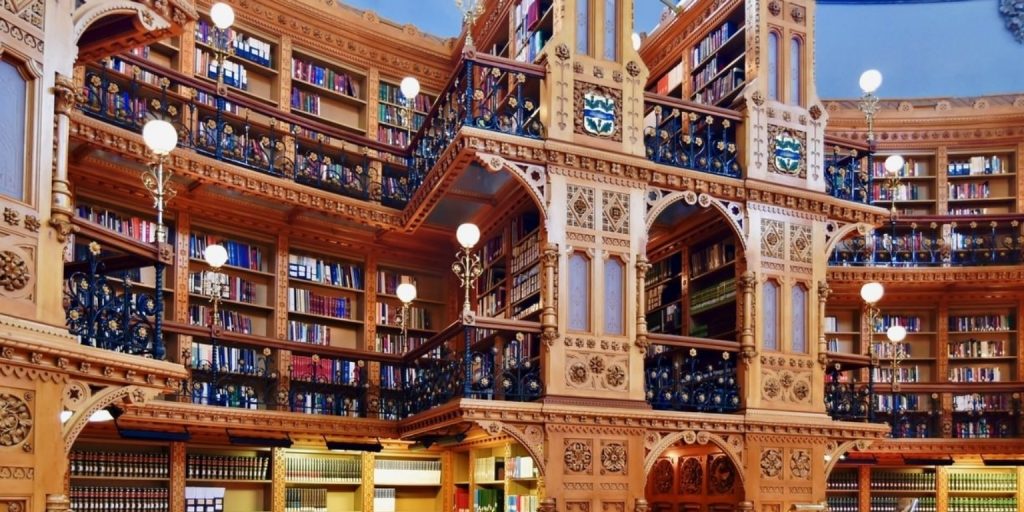
The interior is equally breathtaking. Visitors who enter the library are immediately struck by the domed reading room, which soars over 40 meters above the floor. Light streams in from large pointed-arch windows, illuminating the intricate woodwork, finely carved pillars, and a stunning parquet floor made of various native woods. At the center of the room, a magnificent white marble statue of a young Queen Victoria stands as a dignified centerpiece, a powerful reminder of Canada’s historical ties to the British Crown.
The Fire and a Librarian’s Foresight
The most dramatic chapter in the library’s history unfolded on the night of February 3, 1916. A massive fire, started in the Commons Reading Room, quickly consumed the entire Centre Block of the Parliament Buildings. Flames raged and smoke billowed, destroying the seat of government. However, the Library of Parliament, located at the back of the building, was miraculously spared. Its survival is often attributed to a combination of architectural foresight and quick thinking.
Decades earlier, the first Parliamentary Librarian, Alpheus Todd, insisted that the library be separated from the rest of the Centre Block by a narrow corridor and a set of heavy, fireproof iron doors. On that fateful night, as the fire spread, a brave clerk named Michael MacCormac, without hesitation, ordered those iron doors to be slammed shut. This heroic act, combined with the efforts of firefighters who managed to douse the library’s roof with water, saved the building and its priceless collection of over 600,000 volumes. The library’s survival provided a crucial symbol of continuity and hope, allowing the work of Parliament to continue, albeit in a temporary location.

A Symbol of Canadian Heritage and Knowledge
Today, the Library of Parliament in Ottawa is more than just a historical relic; it is the vital knowledge center for Canada’s parliamentary democracy. It continues to provide parliamentarians and their staff with confidential and impartial research, analysis, and information services. Its extensive collection covers a wide range of topics, from constitutional law to parliamentary procedure, making it an indispensable resource for the country’s legislative process.
While the library’s primary function is to serve the government, it remains an iconic landmark that connects the public to its national heritage. Visitors to Parliament Hill can take a free guided tour, where they can learn about the library’s history and its role in Canadian governance. Although the library itself is currently undergoing extensive rehabilitation as part of the broader restoration of Centre Block, its enduring beauty and incredible story continue to make it one of the most cherished and significant buildings in the country.
Further reading on Wikipedia: Thomas Fuller (architect)