
In the fairy-tale town of Rothenburg ob der Tauber, where every cobblestone and half-timbered house seems to tell a story of medieval charm, lies a landmark with a more somber tale. The Gate of the Gallows, or Galgentor in German, stands as a formidable sentinel on the northern edge of the city. While visitors might wonder if its name relates to a gallows market, its true history is even more poignant: it was the final passage for those facing medieval justice, a silent witness to a darker side of the town’s past.

A Gate to the Gallows
The Gate of the Gallows in Rothenburg was built in the 14th century as a crucial component of the town’s outer fortifications. Its original purpose was purely military, designed to control access and protect the city from outside threats. However, its name is a powerful and chilling reminder of a different kind of control. The Galgentor was so named because it was the gate leading out to the city’s place of public execution, where the gallows were located.
In a time when public punishment was a common and visible aspect of life, the gate served as the definitive boundary between the safety and order of the town and the final, grim walk of the condemned. The gate’s presence, at the highest point of the town’s walls, was a constant, visual symbol of Rothenburg’s authority and its right to exercise “Blutgerichtsbarkeit” (blood justice). This historical detail adds a powerful layer of meaning to an already magnificent structure, making a walk through it an immersive step back in time.
An Architectural and Historical Masterpiece
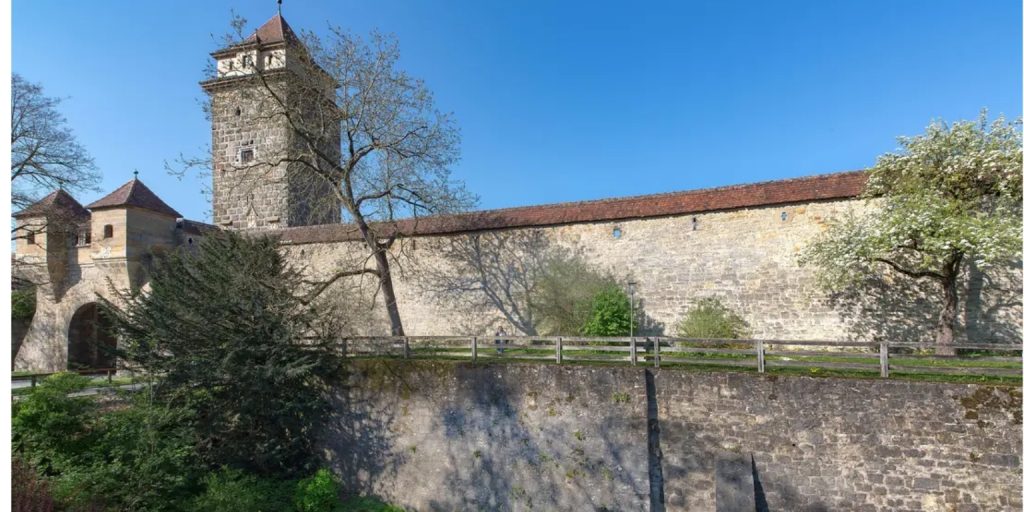
The Galgentor is a stunning example of medieval military architecture. Its sturdy stone walls and towering structure showcase the craftsmanship and strategic thinking of the era. The gate is not a single passage but a complex defensive system, featuring a main square-plan tower and a foregate that was once equipped with a drawbridge. As you walk through the gate, you can still see the narrow slits for archers and the crenellated battlements, all designed to repel a potential attack.
Today, the gate is a key access point to the world-famous walkable city walls. Visitors can ascend the wall near the gate and continue a scenic stroll around a significant portion of the town, enjoying panoramic views of Rothenburg’s famous red rooftops, its intricate maze of streets, and the surrounding countryside. This unique experience allows for a direct, physical connection to the town’s history, a privilege that few other walled cities can offer.
A Symbol of the Past and a Beacon for the Present
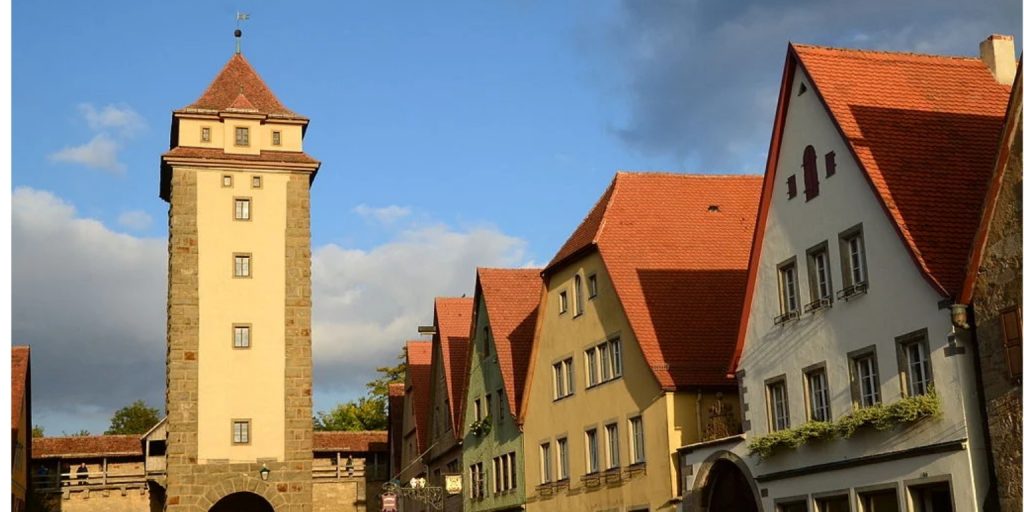
While the Gate of the Gallows evokes a solemn past, its modern-day role is one of immense cultural and historical importance. It serves as a reminder of a bygone era’s brutal realities, but also of the city’s enduring spirit and its commitment to preserving its heritage. The gate stands as a testament to the ingenuity of its builders and the resilience of the community that has protected it for centuries.
For any visitor to Rothenburg, the Galgentor is a must-see. It’s not just a point on a map; it’s a living monument. Its striking appearance, coupled with its fascinating and dark history, makes it a compelling landmark to explore. Whether you are beginning a walk on the city walls, arriving from the outskirts, or simply passing by, the Gate of the Gallows invites you to contemplate the stories it holds and to appreciate the intricate layers of history that make Rothenburg ob der Tauber a truly timeless destination.