
Nestled at the western edge of the enchanting medieval town of Rothenburg ob der Tauber, a tranquil green space offers a journey through history, a moment of serenity, and one of the most breathtaking views in all of Germany. Known as the Castle Garden, or Burggarten in German, this site is not just a beautifully landscaped park; it is the very birthplace of Rothenburg and a powerful symbol of the city’s resilience. A visit here is an essential part of any trip, revealing a hidden layer of the town’s storied past.
From Imperial Fortress to Public Paradise
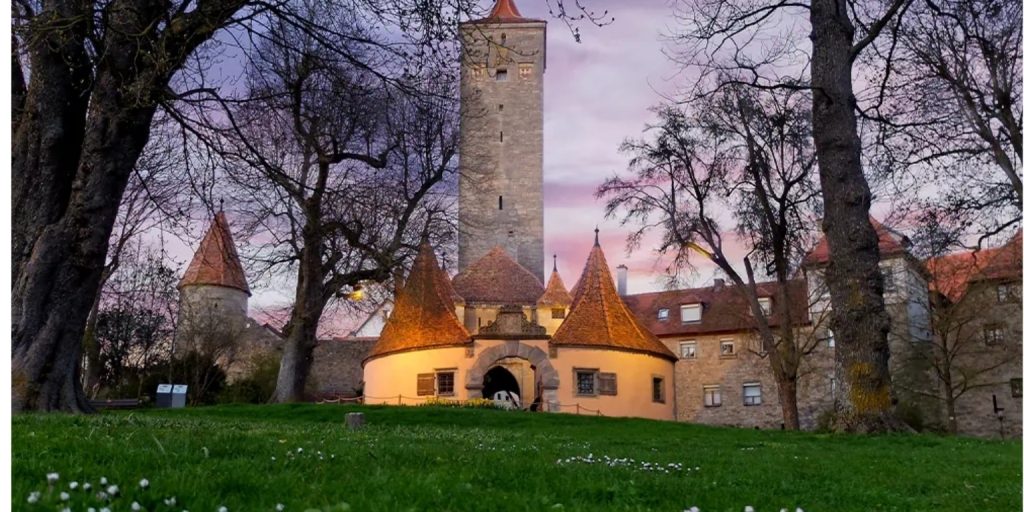
The history of the Castle Garden in Rothenburg begins long before the town took its current shape. The high plateau overlooking the Tauber Valley was the perfect strategic location for a powerful fortress. In 1142, the Hohenstaufen Imperial Castle was built on this site, and it served as the center of power for a succession of German kings. The castle was the nucleus from which the town of Rothenburg grew, with a settlement slowly developing around its protective walls.
However, the fate of this mighty castle was sealed in 1356 when a massive earthquake, likely centered in Switzerland, sent tremors throughout the region, destroying the fortress. The castle was never rebuilt. Instead, its stones were used to fortify the city walls, giving Rothenburg the impressive medieval defenses it is famous for today. For centuries, the site remained largely open until the 19th century, when it was finally transformed into the picturesque garden we see today—a decision heavily influenced by the Romantic movement that sought to create beautiful public spaces.
A Garden of History and Harmony
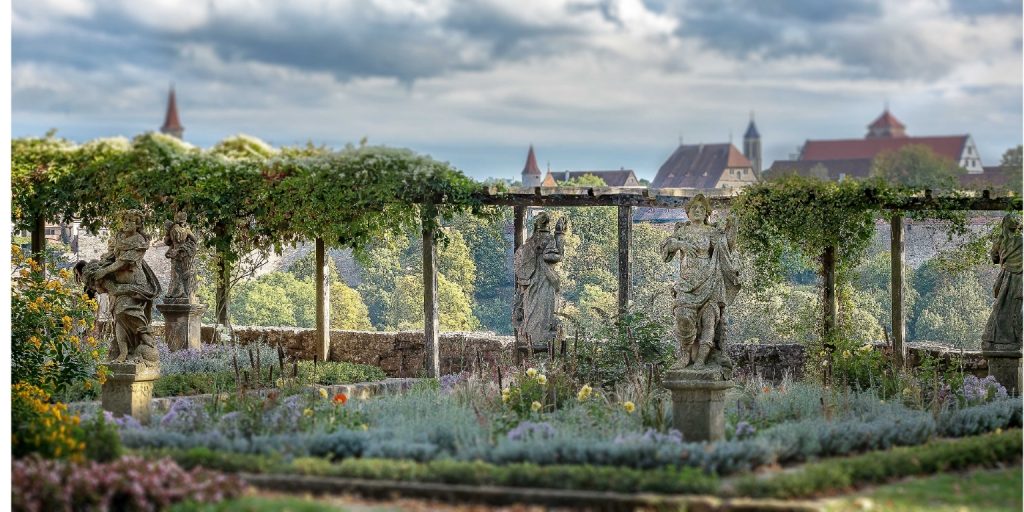
As visitors pass through the majestic Castle Gate, a relic of the original fortifications, they are greeted by a landscape that is both harmonious and historically rich. The garden’s layout is a charming mix of formal design and natural beauty. Symmetrical lawns are bordered by perfectly trimmed hedges and vibrant flowerbeds, while shady paths wind past ancient trees, inviting a leisurely stroll. The silence, broken only by birdsong, is a welcome contrast to the bustling crowds of the town’s market square.
The garden’s most compelling features are its remnants of the past. The foundations of the old castle, including a section of a tower and the former moat, are visible, offering a tangible connection to the site’s royal origins. The Blasius Chapel, the only remaining building from the original complex, stands as a solemn memorial. Additionally, the park is home to a “Staufer Stele,” one of many monuments throughout Germany dedicated to the Hohenstaufen dynasty.
A View that Tells a Story
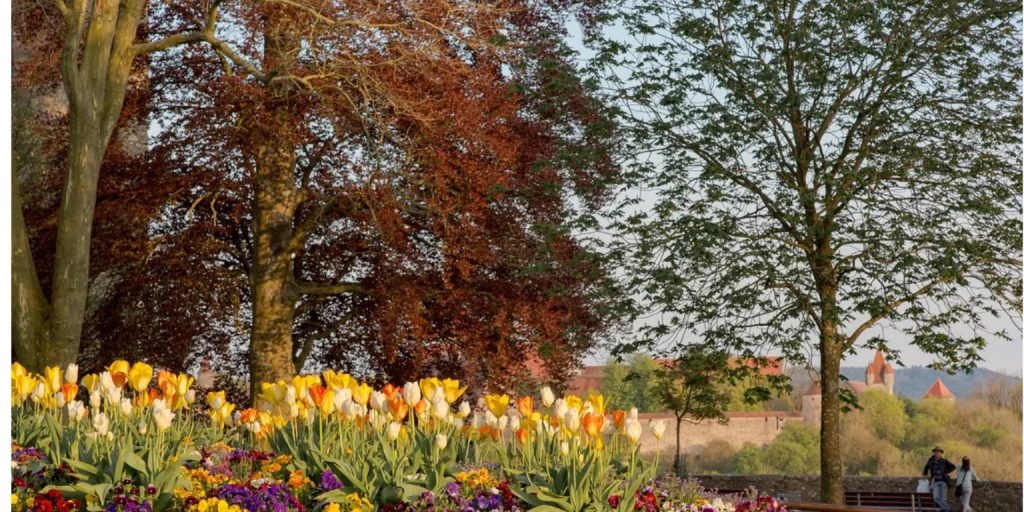
From the Castle Garden’s elevated position, the views are simply breathtaking. Lookout points offer a panoramic vista of the Tauber Valley, a postcard-perfect landscape of rolling hills, vineyards, and the meandering Tauber River. The iconic, double-arched Stone Bridge is clearly visible below, as are the charming houses of the Kobolzeller district. This view encapsulates the timeless charm of the region and provides a sense of perspective on the town’s history.
For both locals and tourists, the Castle Garden is a beloved sanctuary. It is a place for a quiet picnic, a moment of rest after exploring the town’s many attractions, and a premier spot for photography. Its role as a living monument, a tranquil space that has risen from the ruins of a mighty castle, makes it a powerful symbol of rebirth. It is a place where history is not just remembered but felt, and where the past and present coexist in beautiful, serene harmony.