
The Copenhagen Opera House was a generous donation from the A.P. Møller and Chastine Mc-Kinney Møller Foundation to the Danish state. The project was conceived in the late 1990s, with construction beginning in 2001 and the grand opening in January 2005. At a cost exceeding US$500 million, it is one of the most expensive and technologically advanced opera houses in the world. The donation and the subsequent construction were not without controversy, as the head of the foundation, shipping magnate Mærsk Mc-Kinney Møller, had strong opinions on the design, leading to a strained relationship with the building’s celebrated architect, Henning Larsen.
Larsen’s original design featured a large glass facade to reveal the auditorium’s shell, but Møller insisted on a metal grid and smaller glass panels, arguing that large glass surfaces don’t age well. This dispute, among others, led Larsen to publicly denounce the building as a “mausoleum” for Møller’s ambitions. Despite this, the final product is a striking example of contemporary architecture that has become a beloved part of the city’s skyline.
Architectural and Engineering Excellence
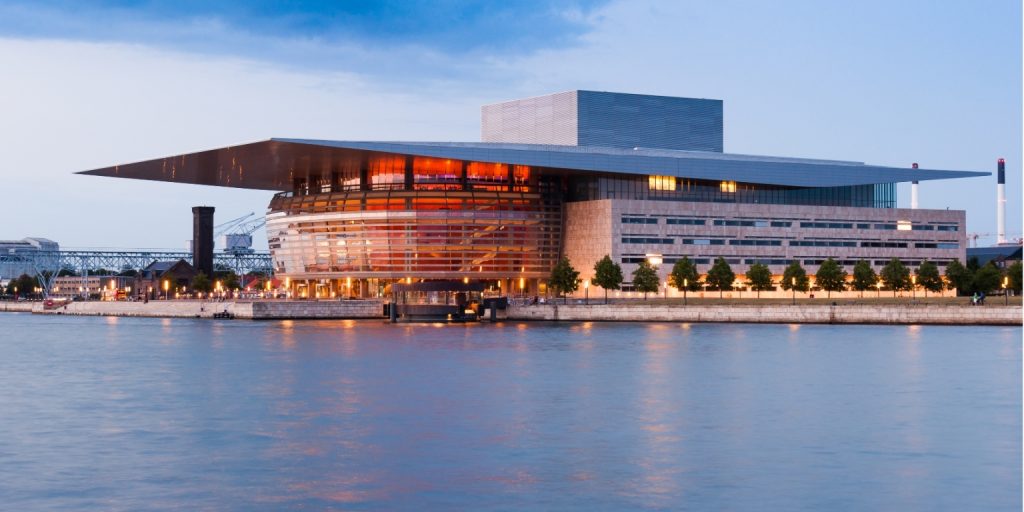
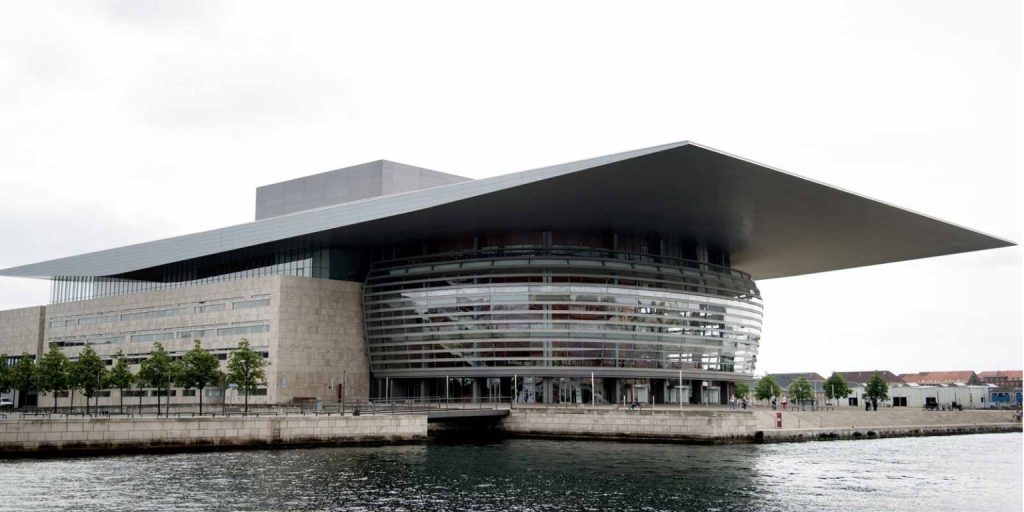
The Opera House is a colossal structure, totaling 41,000 m² across 14 floors, five of which are underground. Its exterior is clad in a beautiful, beige limestone from Germany, and the building appears to float on the water due to the surrounding canals. The most impressive architectural feature is the massive, cantilevered roof that soars out over the entrance plaza, offering a covered space with panoramic views of the harbor and the historic city.
The roof’s innovative design, based on that of an aircraft wing, was a feat of engineering, achieved through close collaboration between the architects and engineering firms. The bridges leading to the opera house were even made from oak trees originally planted in the 19th century to replenish the Danish naval fleet, a thoughtful nod to the site’s maritime history.
Inside, the building is a showcase of luxurious materials and intricate design. The foyer floor is paved with Sicilian Perlatino marble, and the rear wall of the foyer and balcony fronts are adorned with maple wood, which was intended to resemble the wood of an old violin. The main auditorium’s ceiling is a breathtaking sight, covered with 105,000 sheets of 24-carat gold leaf. The acoustics, designed by Arup Acoustics, are world-class, with every element from the seat upholstery to the wall carvings carefully tuned for an optimal sound experience.
Art and Functionality
The Copenhagen Opera House is also a gallery for contemporary Danish art. The foyer features three large, spherical light sculptures by the Danish-Icelandic artist Olafur Eliasson. These glittering domes reflect light and create a unique visual experience. Additionally, four bronze reliefs by renowned Danish sculptor Per Kirkeby adorn the walls of the auditorium’s entrance, and artist Per Arnoldi designed the opera’s logo and the main stage curtain.
Beyond its public spaces, the opera house is a highly functional and technically advanced facility. It has a main stage with five other stages directly connected, allowing for quick and seamless set changes. The orchestral pit is one of the largest in the world, and there are over 100 rooms with excellent soundproofing for the musicians. The Takkelloftet, a smaller “black box” theater with a capacity for 200 people, provides a flexible space for experimental performances.
The Royal Danish Opera, which manages the house, stages a variety of opera and ballet performances, solidifying the building’s place as a cultural powerhouse. The Copenhagen Opera House is not just a place for performances; it is a monument to art, engineering, and the enduring spirit of philanthropy.