What is the Bologna outdoor escape game?
The Bologna outdoor escape game is an escape room spread across the medieval centre: a puzzle sits at each of the 10 landmarks on the route and you open them one by one on your smartphone. Reckon with about 2 hours, of which only 32 minutes are walking, because the whole loop covers just 2.5 km under the city's porticoes.
The puzzles are built on what Bologna shows in brick and terracotta: the leaning Garisenda beside the far taller Asinelli, the excavation layers under the glass floor of the Salaborsa, the row of terracotta heads watching from Palazzo Bolognini Amorini Salina, the medieval tombs on columns outside San Domenico and the medallions of saints on the Oratory of the Holy Spirit. Each puzzle stands by itself, with up to three levels of hints behind it.
- Durationabout 2 hours
- Walkingabout 32 min · 2.5 km
- Stops10
- LanguagesEnglish, German, French, Italian, Spanish, Dutch
What you do on the escape game
Puzzle it out
One puzzle per landmark, solved from what you can see standing there. No prior knowledge, just logic and attention.
Study the brickwork
Answers hide in terracotta faces, inscriptions, tomb columns and a floor you can look straight through.
Short walks
Google Maps takes you on: 32 minutes of walking in total, 2.5 km, much of it in the shade of the arcades.
No timer
The clock never works against you. Take a hint, stop under a portico for a coffee and continue later or another day.
See the route and attractions →
How it works
- Book online Choose the number of players. Your booking reference arrives by email straight away.
- Get the app Download the World City Trail app from the App Store or Google Play and enter your booking reference.
- Play when you like Start whenever you are ready, walk at your own pace and pause any time. No guide, no fixed schedule.
Who it suits
Friends
Short hops between landmarks mean the discussion about the last answer is still going when the next puzzle appears.
Couples
Little walking and plenty to look at, so the game stays a conversation rather than a march.
Team building
Teams of up to 5 play on their own phones, and the compact route keeps colleagues within a few streets of each other.
Good to know
- Bring a charged smartphone with mobile data; a power bank helps.
- Best started in daylight, so you can see the details the puzzles ask about.
- No entry tickets needed: everything happens outside the buildings. Going inside is optional and paid separately.
- Family friendly; children must be accompanied by an adult.
- Not suitable for wheelchair users and difficult with strollers.
- Teams of up to 5 work best; bigger groups split into several teams, one ticket per player.
- Every purchase helps support stray cats and dogs in Greece.
Puzzle route: from the Two Towers to the Santissimo Salvatore
10 stops · about 32 min walking · start: Two Towers · finish: Church of the Santissimo Salvatore
The opening puzzle is at the Two Towers on Piazza di Porta Ravegnana, and the last at the Church of the Santissimo Salvatore on Via Cesare Battisti. On the way you work through the Salaborsa library and Palazzo d'Accursio on Piazza Maggiore, Santa Maria della Vita, then Piazza Santo Stefano with Palazzo Bolognini Amorini Salina and the church of Saints Vitale and Agricola, followed by Piazza Minghetti, the Basilica of San Domenico and the Oratory of the Holy Spirit. Daylight is best, since the puzzles are read off the buildings. The order can be changed in the app, and no entry tickets are needed.
Open the route map ↗
1Two TowersStart
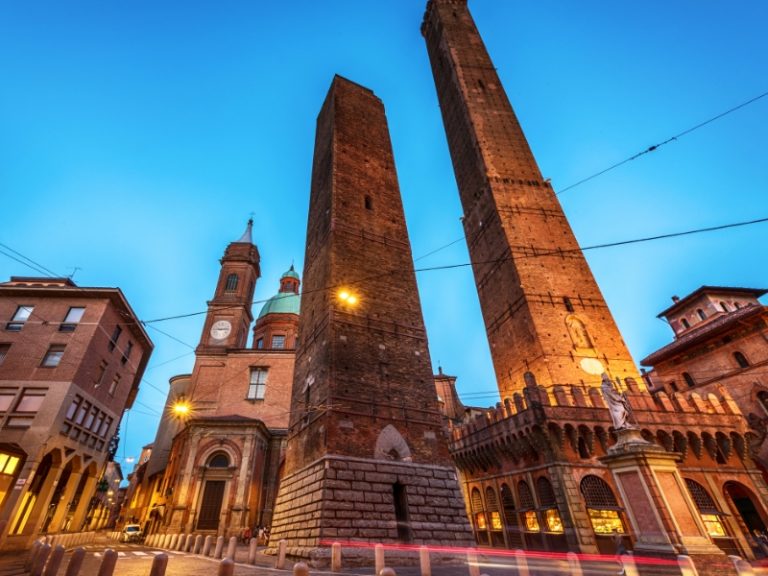
The Two Towers, Asinelli and Garisenda, stand side by side on Piazza di Porta Ravegnana and are among the best-known symbols of Bologna. The Asinelli Tower, traditionally dated to 1109–1119, rises about 97 metres, while the Garisenda is only about 48 metres high and leans visibly because the ground beneath it gave way. Dante mentions the Garisenda in his Inferno.
Read the full story →
2Salaborsa Library
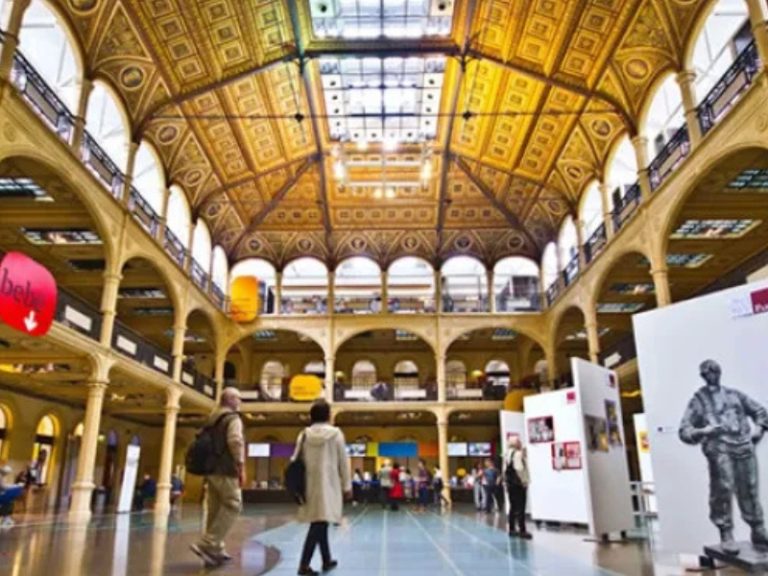
Salaborsa is Bologna's main public library, opened in 2001 inside Palazzo d'Accursio, the historic seat of the city government next to Piazza Maggiore. Through the glass floor of its covered square you look down on excavations with layers from the Villanovan and Etruscan periods to Roman Bononia.
Read the full story →
3Palazzo d'Accursio
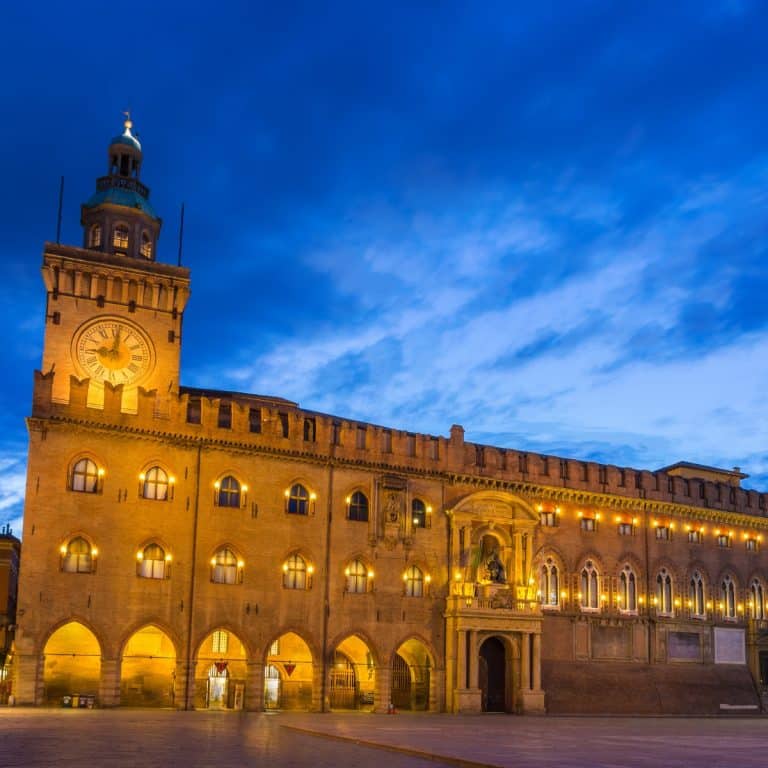
Palazzo d'Accursio on Piazza Maggiore has been the seat of Bologna's city government since the 14th century and takes its name from the medieval jurist Accursius, whose house forms its oldest part. Above the main portal stands a bronze statue of Pope Gregory XIII, a native of Bologna who gave his name to the Gregorian calendar, and higher on the façade is a terracotta Madonna by Niccolò dell'Arca.
Read the full story →
4Santa Maria della Vita
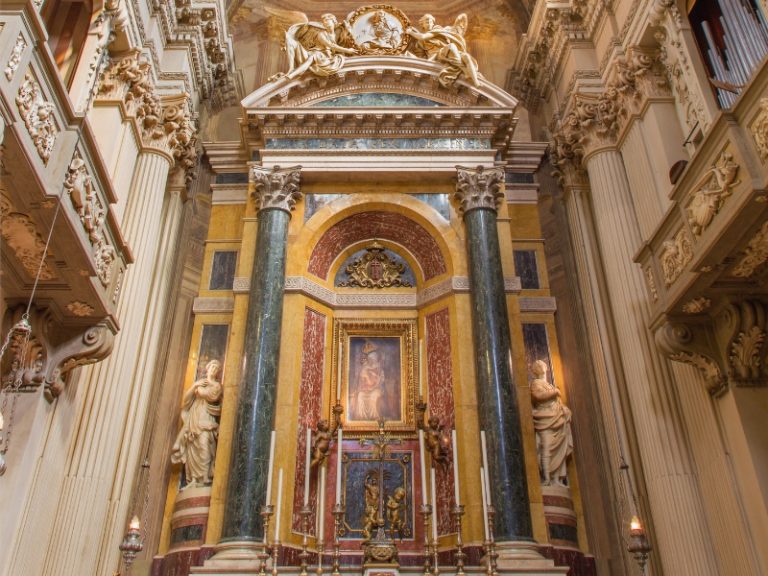
Santa Maria della Vita grew out of a hospital run by a confraternity of flagellants founded in 1275, and the present Baroque church was begun in 1687 to designs by Giovanni Battista Bergonzoni. Inside is Niccolò dell'Arca's Lamentation over the Dead Christ, seven life-size terracotta figures frozen in grief around the body of Christ.
Read the full story →
5Palazzo Bolognini Amorini Salina
This Renaissance palace on Piazza Santo Stefano was begun in 1517 to designs by Andrea da Formigine but was only completed in 1884. Look up at its façade: a row of terracotta heads by Alfonso Lombardi and Nicolò da Volterra looks down from the arches, with 19th-century heads on the right-hand side.
6Saints Vitale and Agricola (Santo Stefano)
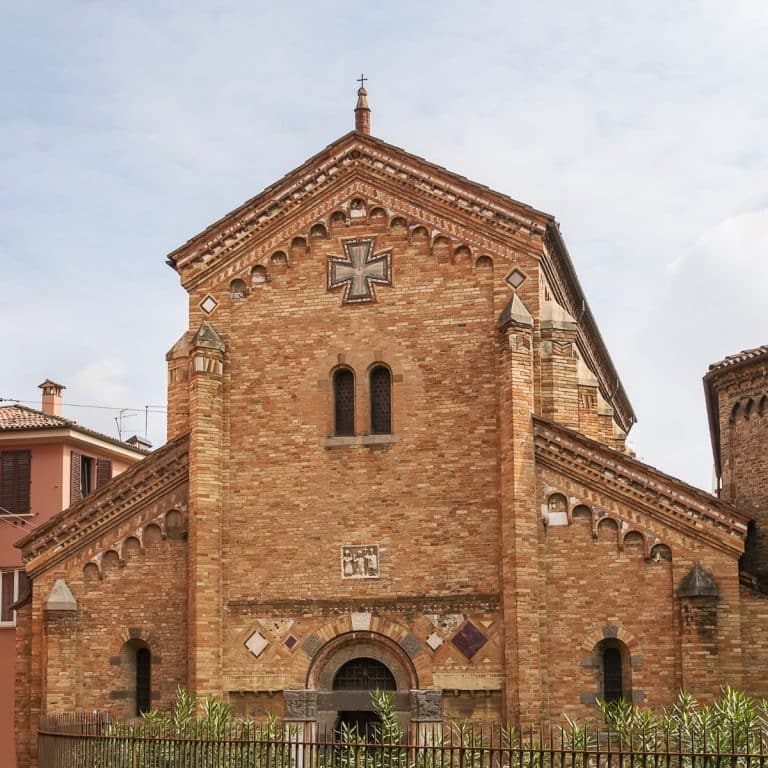
The church of Saints Vitale and Agricola is the oldest part of the Santo Stefano complex, known in Bologna as the Seven Churches. It is dedicated to the city's first martyrs, a servant and his master killed around 305 under Emperor Diocletian, and goes back to a 4th-century basilica rebuilt in the 12th century.
7Piazza Minghetti
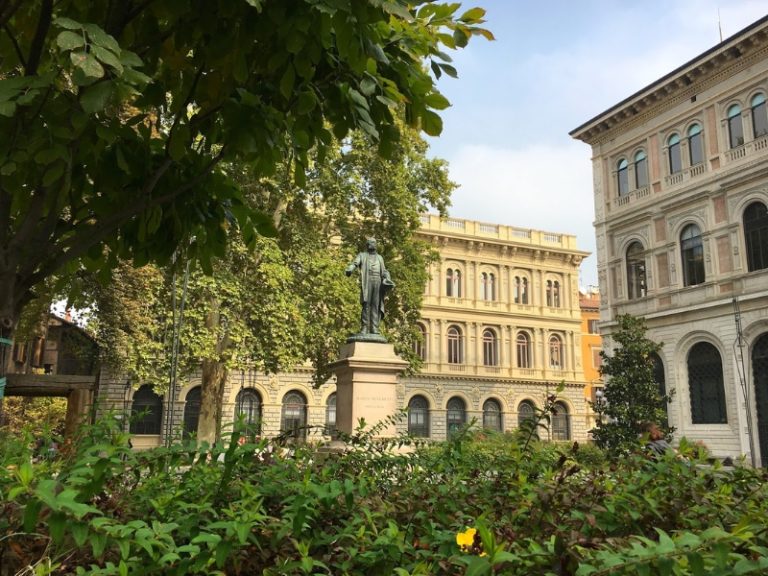
Piazza Minghetti was laid out in the 1890s as part of the modernisation of the city centre, with a shady garden in the middle. Among the trees stands a statue of Marco Minghetti, the Bologna-born statesman who was twice prime minister of Italy, framed by the main post office of 1911 and the savings bank palace by Giuseppe Mengoni.
8Basilica of San Domenico
Saint Dominic, founder of the Dominican order, died in Bologna in 1221, and the church built over his grave was consecrated in 1251. His marble tomb, the Arca di San Domenico, was designed by Nicola Pisano and includes statues by the young Michelangelo, and the pebble-paved square outside holds medieval tombs raised on columns.
Read the full story →
9Oratory of the Holy Spirit
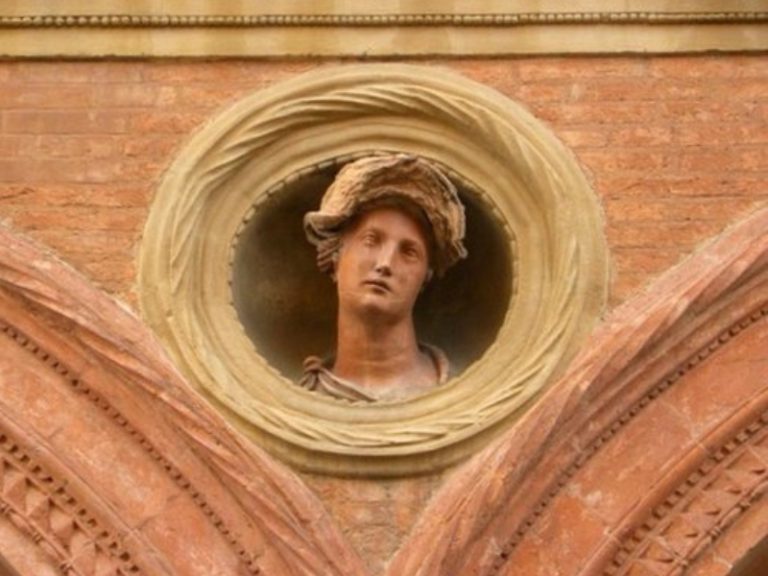
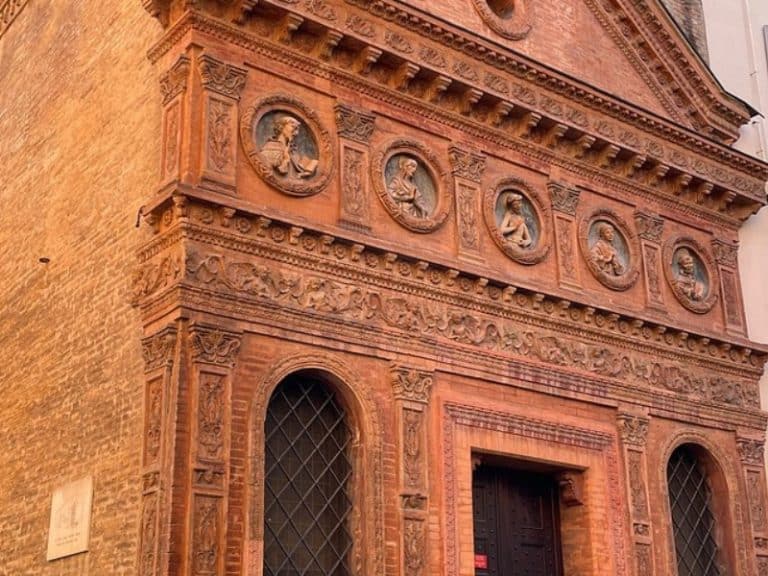
The Oratorio dello Spirito Santo was built in 1481 by Celestine monks to house an image of the Virgin Mary and later took its name from the Spirito Santo confraternity. Its pink façade is made entirely of brick and terracotta, with round medallions of saints, and was restored in the 1890s by Alfonso Rubbiani.
10Church of the Santissimo SalvatoreFinish
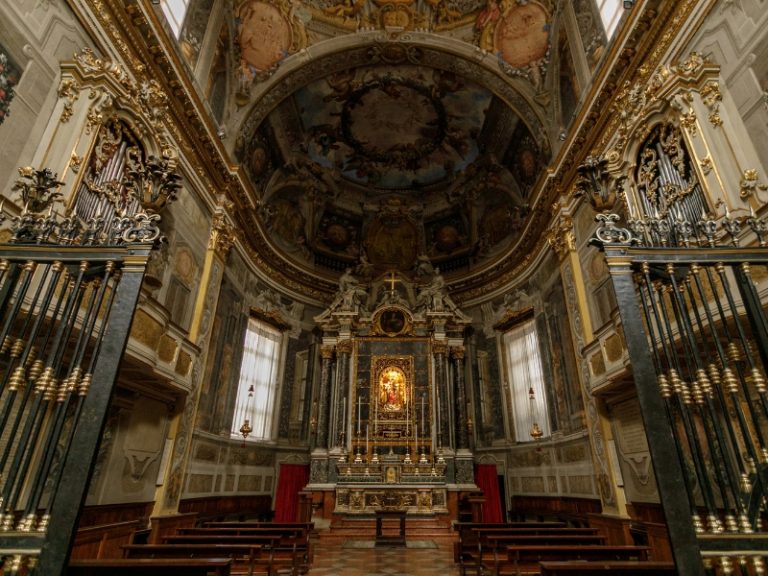
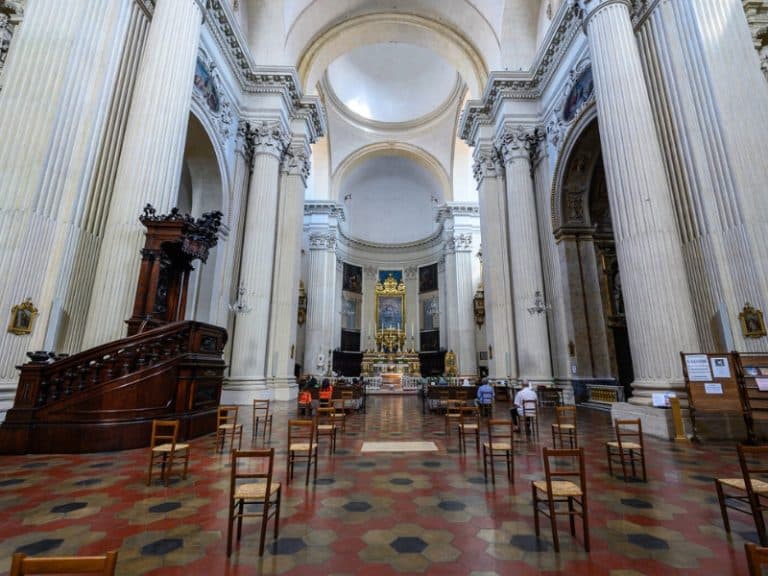
The Church of the Most Holy Saviour is one of Bologna's Baroque churches, rebuilt in the early 17th century on the site of an older church and monastery. Its broad façade faces Via Cesare Battisti, a few minutes from Piazza Maggiore, and the interior holds altarpieces by painters from Bologna and Emilia.
Only logged in customers who have purchased this product may leave a review.



Eline– Netherlands –
Collected on GetYourGuide
Dit spel was een leuke manier om de stad te verkennen. Alle bezienswaardigheden waar we langs liepen en puzzels op moesten lossen waren beloopbaar. De puzzels varieerde qua moeilijkheidsgraad en er was altijd de mogelijk om meerdere tips te vragen. Je kan zelf bepalen Hoelang je over het spel doet, zo hebben wij er alles bij elkaar wel een hele dag over gedaan omdat we bij sommige bezienswaardigheden meteen binnen gingen kijken en tussendoor ook ergens wat gingen eten enzo. Het was dus mogelijk om elk moment wanneer je door wilde gaan het spel voort te zetten. Om het spel te spelen heb je wel data nodig op je telefoon dus daar moet je rekening mee houden.
Daniele– Germany –
Collected on GetYourGuide
Favolosa ? stata la pi? bella attivit? su un app mai fatta prima. Abbiamo visitata tutta la citt? nel migliore dei modi e senza perdere nessun luogo di interesse . E ci siamo divertiti tantissimo a leggere tutte le informazioni dei luoghi che andavamo a visitare e soprattutto a risolvere gli enigmi e’ stato davvero divertente con un ragazzo di 12 anni. La consiglio vivamente alle famiglie si pu? giocare anche in squadre…