What is the Bologna self-guided walking tour?
The Bologna self-guided walking tour is a walk under the porticoes at a pace you set, with audio narration on your phone where a guide would otherwise stand. Allow about 3 hours: 32 minutes of that is time on your feet, the route measures 2.6 km, and at 10 stops you stand still and listen. Nothing is timed, and nobody is counting heads.
Under the Two Towers the narration measures the Asinelli against the leaning Garisenda, the one Dante put into his Inferno. At Palazzo d'Accursio it turns to Gregory XIII, the Bolognese pope who gave his name to the calendar. Later come the seven terracotta figures Niccolò dell'Arca left in grief at Santa Maria della Vita, and the tomb in San Domenico that the young Michelangelo helped to carve.
- Durationabout 3 hours
- Walkingabout 32 min · 2.6 km
- Stops10
- LanguagesEnglish, German, French, Italian, Spanish, Dutch
What the walk consists of
Listen
At every stop the narration gives you the history, the legends and the detail above head height. The same text waits on screen for anyone who would rather read.
Walk on
Google Maps handles the walking between stops: 32 minutes in all, 2.6 km, and the porticoes keep most of it out of the sun and the rain.
Break off
Stop for a plate of tagliatelle or an hour in a church, then take the walk up again, the same day or another one.
Eat and browse
Tips for food and shops near the route arrive with the stops. The opening stop and the order are yours to change in the app.
See the route and attractions →
How it works
- Book online Choose the number of people. Your booking reference arrives by email straight away.
- Get the app Download the World City Trail app from the App Store or Google Play and enter your booking reference.
- Walk when you like Start whenever you are ready, walk at your own pace and pause any time. No guide, no fixed schedule.
Who the walk suits
A first visit to Bologna
One walk sorts out the towers, the porticoes and the squares of the old university city and explains what you are looking at.
Anyone who dislikes groups
Nobody to follow and no meeting point: you stay as long as something holds you and move on when you decide to.
A short city break
3 hours covers the centre, so the afternoon is free for a market, a museum or the long portico up to San Luca.
Good to know
- Bring a charged smartphone with mobile data; a power bank helps.
- No entry tickets needed: everything happens outside the buildings. Going inside is optional and paid separately.
- Family friendly; children must be accompanied by an adult.
- Not suitable for wheelchair users and difficult with strollers.
- Groups of up to 5 work best; larger groups split up, one ticket per person.
- Every purchase helps support stray cats and dogs in Greece.
The walk stop by stop: the Two Towers, Piazza Maggiore, Santo Stefano, San Domenico
10 stops · about 32 min walking · start: Two Towers · finish: Church of the Santissimo Salvatore
The walk begins under the Two Towers, where the old roads into the city met, then crosses to Piazza Maggiore for the Salaborsa Library and Palazzo d'Accursio. Santa Maria della Vita follows in the market lanes, after which the route reaches Piazza Santo Stefano for Palazzo Bolognini Amorini Salina and the church of Saints Vitale and Agricola. Piazza Minghetti and the Basilica of San Domenico come next, then the Oratory of the Holy Spirit, and the Church of the Santissimo Salvatore closes the walk. The app accepts another opening stop or order, and no stop asks for an entry ticket.
Open the route map ↗
1Two TowersStart
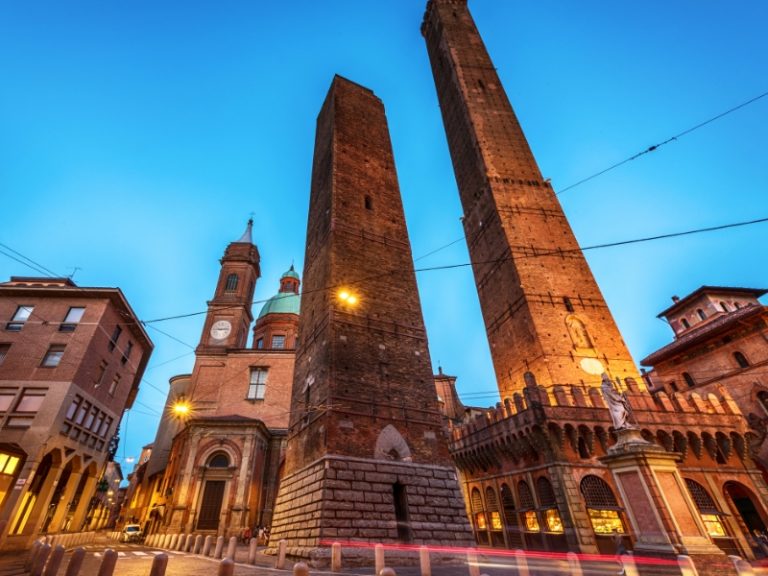
The Two Towers, Asinelli and Garisenda, stand side by side on Piazza di Porta Ravegnana and are among the best-known symbols of Bologna. The Asinelli Tower, traditionally dated to 1109–1119, rises about 97 metres, while the Garisenda is only about 48 metres high and leans visibly because the ground beneath it gave way. Dante mentions the Garisenda in his Inferno.
Read the full story →
2Salaborsa Library
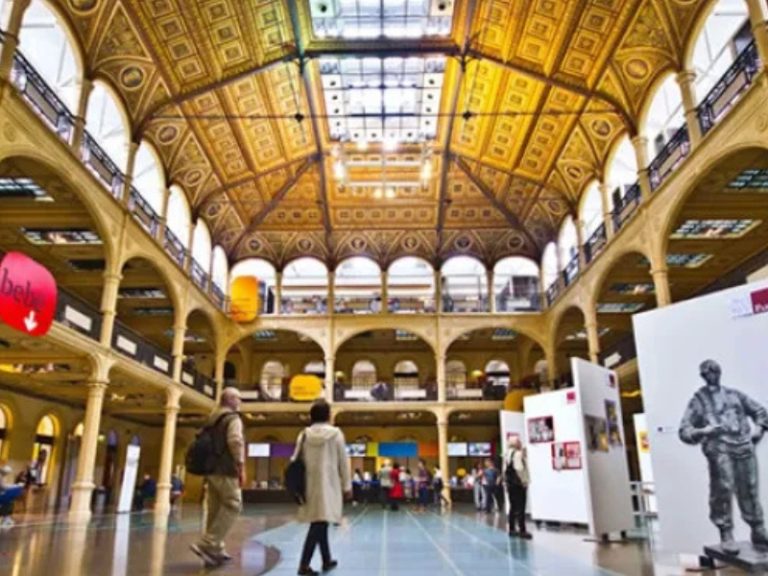
Salaborsa is Bologna's main public library, opened in 2001 inside Palazzo d'Accursio, the historic seat of the city government next to Piazza Maggiore. Through the glass floor of its covered square you look down on excavations with layers from the Villanovan and Etruscan periods to Roman Bononia.
Read the full story →
3Palazzo d'Accursio
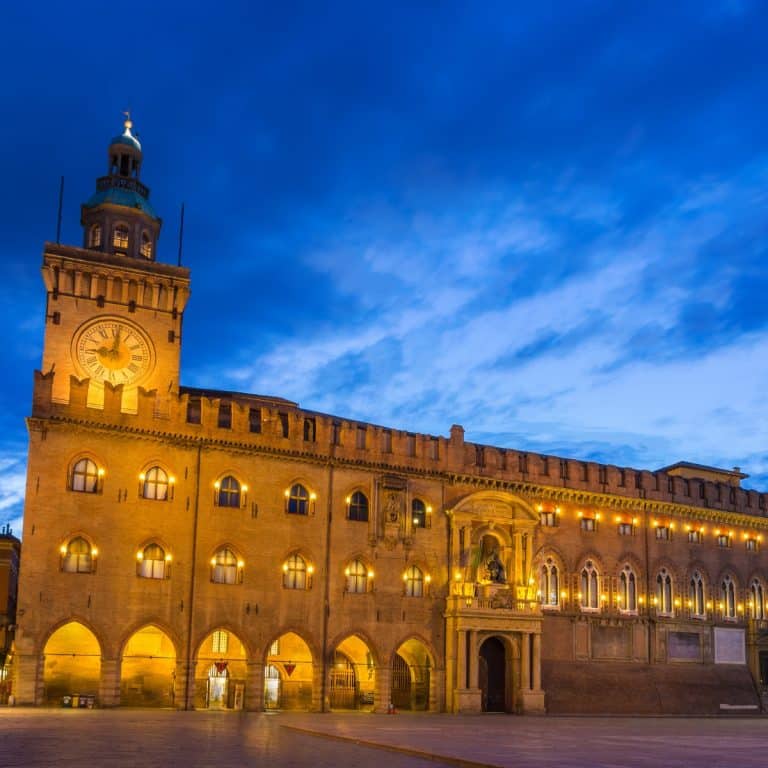
Palazzo d'Accursio on Piazza Maggiore has been the seat of Bologna's city government since the 14th century and takes its name from the medieval jurist Accursius, whose house forms its oldest part. Above the main portal stands a bronze statue of Pope Gregory XIII, a native of Bologna who gave his name to the Gregorian calendar, and higher on the façade is a terracotta Madonna by Niccolò dell'Arca.
Read the full story →
4Santa Maria della Vita
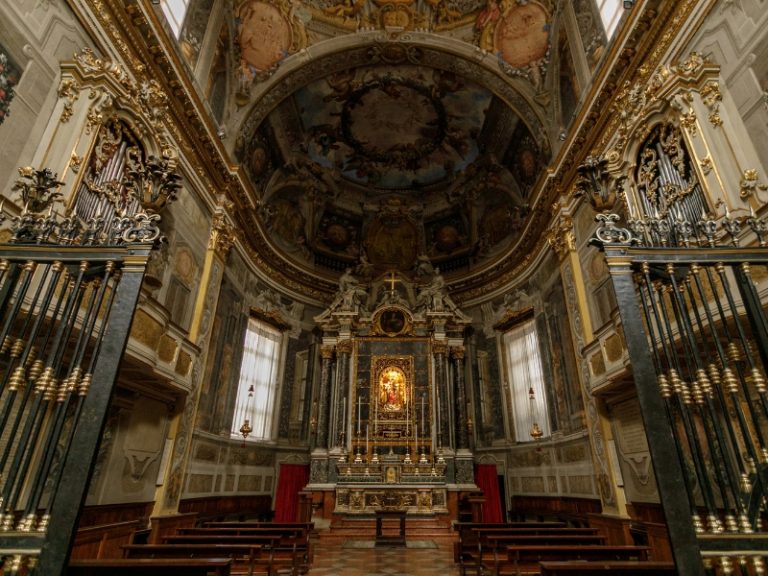
Santa Maria della Vita grew out of a hospital run by a confraternity of flagellants founded in 1275, and the present Baroque church was begun in 1687 to designs by Giovanni Battista Bergonzoni. Inside is Niccolò dell'Arca's Lamentation over the Dead Christ, seven life-size terracotta figures frozen in grief around the body of Christ.
Read the full story →
5Palazzo Bolognini Amorini Salina
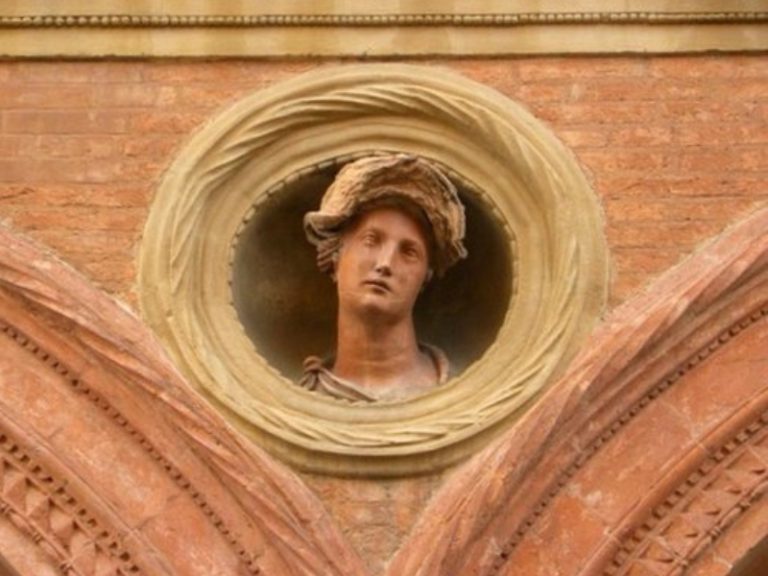
This Renaissance palace on Piazza Santo Stefano was begun in 1517 to designs by Andrea da Formigine but was only completed in 1884. Look up at its façade: a row of terracotta heads by Alfonso Lombardi and Nicolò da Volterra looks down from the arches, with 19th-century heads on the right-hand side.
6Saints Vitale and Agricola (Santo Stefano)
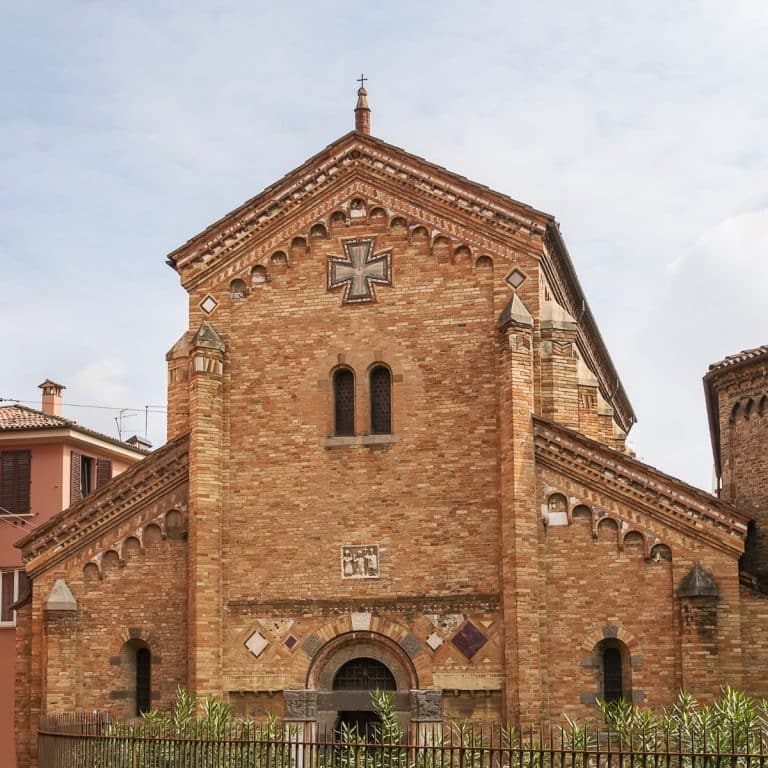
The church of Saints Vitale and Agricola is the oldest part of the Santo Stefano complex, known in Bologna as the Seven Churches. It is dedicated to the city's first martyrs, a servant and his master killed around 305 under Emperor Diocletian, and goes back to a 4th-century basilica rebuilt in the 12th century.
7Piazza Minghetti
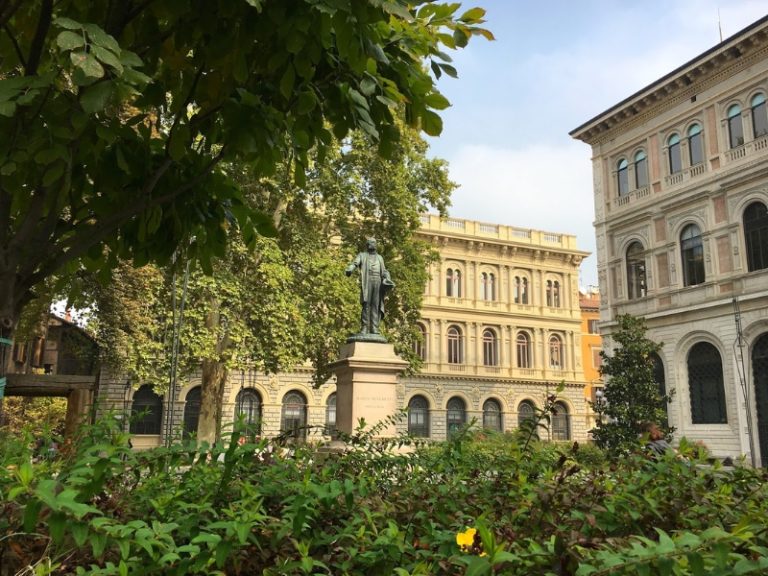
Piazza Minghetti was laid out in the 1890s as part of the modernisation of the city centre, with a shady garden in the middle. Among the trees stands a statue of Marco Minghetti, the Bologna-born statesman who was twice prime minister of Italy, framed by the main post office of 1911 and the savings bank palace by Giuseppe Mengoni.
8Basilica of San Domenico
Saint Dominic, founder of the Dominican order, died in Bologna in 1221, and the church built over his grave was consecrated in 1251. His marble tomb, the Arca di San Domenico, was designed by Nicola Pisano and includes statues by the young Michelangelo, and the pebble-paved square outside holds medieval tombs raised on columns.
Read the full story →
9Oratory of the Holy Spirit
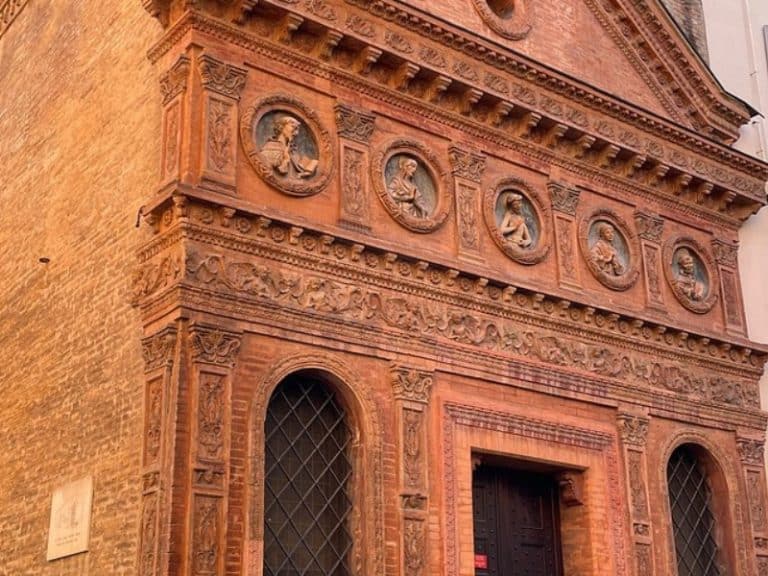
The Oratorio dello Spirito Santo was built in 1481 by Celestine monks to house an image of the Virgin Mary and later took its name from the Spirito Santo confraternity. Its pink façade is made entirely of brick and terracotta, with round medallions of saints, and was restored in the 1890s by Alfonso Rubbiani.
10Church of the Santissimo SalvatoreFinish
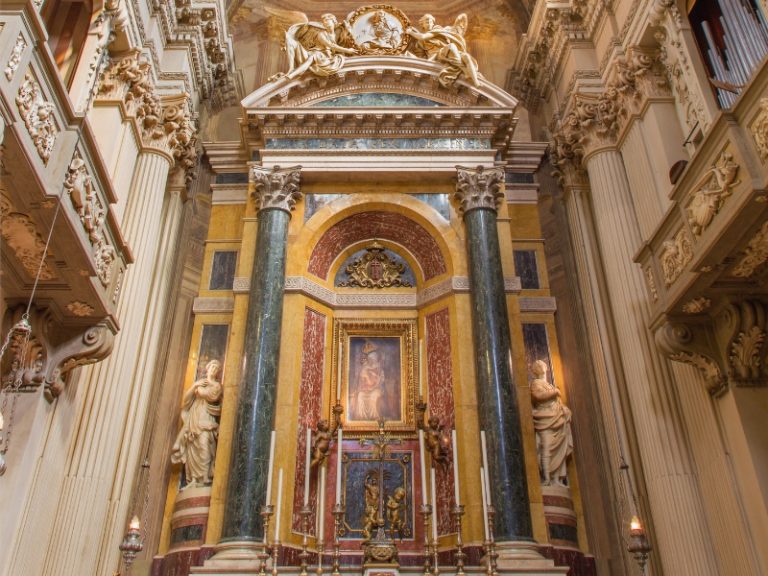
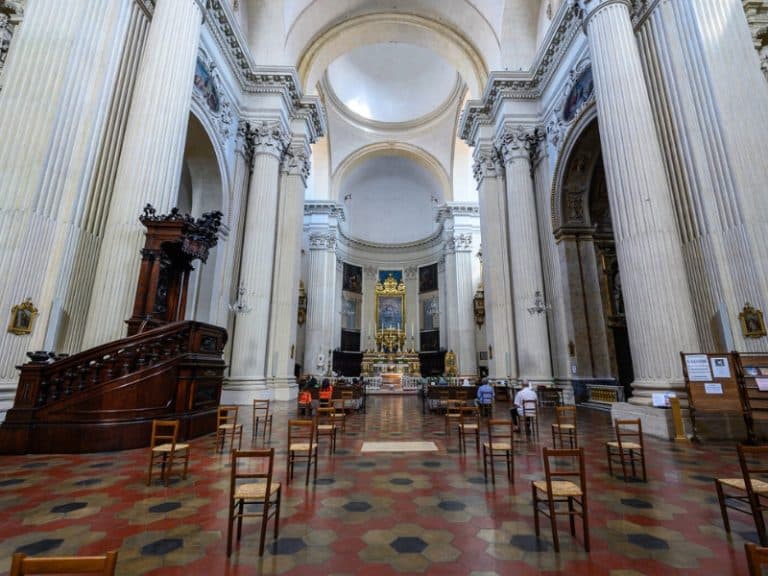
The Church of the Most Holy Saviour is one of Bologna's Baroque churches, rebuilt in the early 17th century on the site of an older church and monastery. Its broad façade faces Via Cesare Battisti, a few minutes from Piazza Maggiore, and the interior holds altarpieces by painters from Bologna and Emilia.
Only logged in customers who have purchased this product may leave a review.



Nigel– United Kingdom –
Collected on GetYourGuide
Great way to explore a city
Italy –
Collected on GetYourGuide
Family of 4
United Kingdom –
Collected on GetYourGuide
United States –
Collected on GetYourGuide
Great option to explore the Bologna sites independently and at your own speed.
Italy –
Collected on GetYourGuide
Took a little time to figure out how to download / use the app, but once we got it figured out it was perfect. Just the thing for a quick reconaissance around the old city if you only have a few hours and want to use your time as efficiently as possible.
Greece –
Collected on GetYourGuide
Very easy to use!