What is the Edinburgh self-guided walking tour?
The Edinburgh self-guided walking tour is a walk you take at your own pace, with audio narration on your phone instead of a guide at the front. Allow about 3 hours: 56 minutes of that is walking, the route covers 4.1 km, and there are 10 stops where you stand still and listen. Nobody sets off without you and no hour is fixed.
Under the Scott Monument the narration begins with George Meikle Kemp, who taught himself architecture and saw the spire finished in 1844. On the Castle Esplanade it turns to the Tattoo held every August since 1950 and to the small Witches' Well at the eastern end, and in the Grassmarket to the cattle market, the gallows and the pub called The Last Drop. Later you hear how the National Covenant was signed at Greyfriars in 1638, how Jenny Geddes is said to have thrown her stool at the preacher in St Giles' in 1637, and why the National Monument on Calton Hill has stood with only twelve columns since the money ran out.
- Durationabout 3 hours
- Walkingabout 56 min · 4.1 km
- Stops10
- LanguagesEnglish, German, French, Italian, Spanish, Dutch
What you do on the walking tour
Listen
At each stop the audio gives you the history of the place, its legends and the details you would otherwise walk past. The same text sits on the screen for anyone who would rather read.
Climb the ridge
Google Maps links the stops up and down the Old Town: 56 minutes of walking over 4.1 km, at whatever pace suits you.
Break off
Take a coffee or an hour in a museum, then pick the walk up again, the same afternoon or another day.
Eat and browse
Tips for food and shops near the route arrive along with the stops. The opening point and the order are yours to rearrange in the app.
See the route and attractions →
How it works
- Book online Choose the number of people. Your booking reference arrives by email straight away.
- Get the app Download the World City Trail app from the App Store or Google Play and enter your booking reference.
- Walk when you like Start whenever you are ready, walk at your own pace and pause any time. No guide, no fixed schedule.
Who the walking tour is for
A first visit
One walk puts the Georgian New Town, the castle rock and the Royal Mile in order and explains what you are looking at.
Anyone who avoids groups
No umbrella to follow and no meeting point: you stay where something holds you and move on when you decide to.
One day in the city
3 hours covers the centre, which leaves the afternoon free for a museum, for Holyrood or for the climb up Arthur's Seat.
Good to know
- Bring a charged smartphone with mobile data; a power bank helps.
- No entry tickets needed: everything happens outside the buildings. Going inside is optional and paid separately.
- Family friendly; children must be accompanied by an adult.
- Not suitable for wheelchair users and difficult with strollers.
- Groups of up to 5 work best; larger groups split up, one ticket per person.
- Every purchase helps support stray cats and dogs in Greece.
The walk stop by stop: the Scott Monument, the castle, the Royal Mile, Calton Hill
10 stops · about 56 min walking · start: Scott Monument · finish: Calton Hill
Princes Street holds the opening stop, beneath the Scott Monument. The Mound then lifts the route past the Royal Scottish Academy to the Castle Esplanade and to The Hub at the top of the Royal Mile, from where it drops into the Grassmarket and the Greyfriars Kirkyard. St Giles' Cathedral brings you back onto the Royal Mile, the Canongate carries the walk downhill, and after the Burns Monument the last stop is Calton Hill. Another opening stop or another order is a setting in the app, and nothing on the way asks for an entry ticket.
Open the route map ↗
1Scott MonumentStart
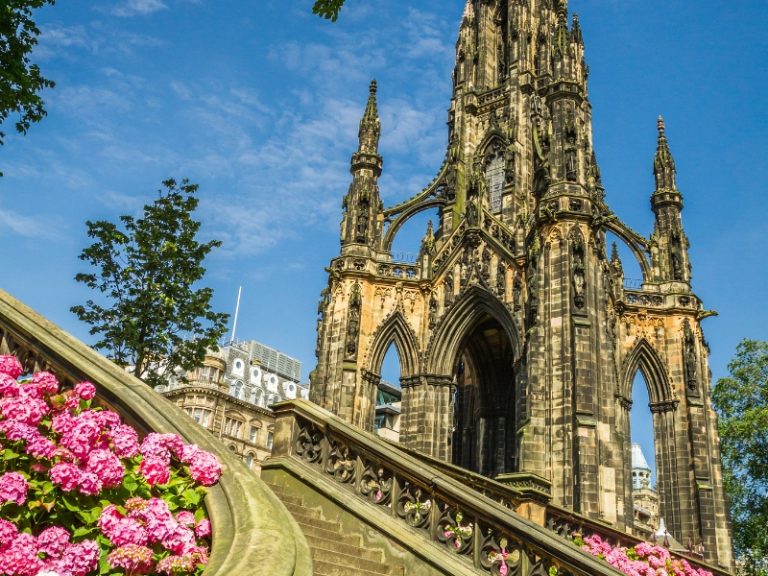
This Victorian Gothic spire on Princes Street honours the novelist Sir Walter Scott and was completed in 1844 to a design by the self-taught architect George Meikle Kemp. It is about 61 metres high, and under its canopy sits a white marble statue of Scott with his dog Maida by John Steell.
Read the full story →
2Royal Scottish Academy
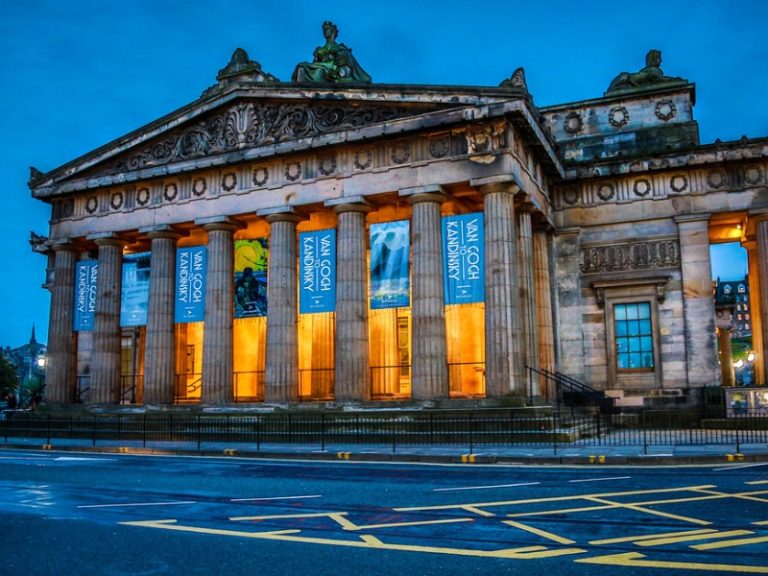
William Henry Playfair designed this Greek Doric temple at the foot of the Mound, which opened in the 1820s as the Royal Institution and later became the home of the Royal Scottish Academy. Look up at the end facing Princes Street, where a seated statue of the young Queen Victoria by John Steell crowns the building.
3Castle Esplanade
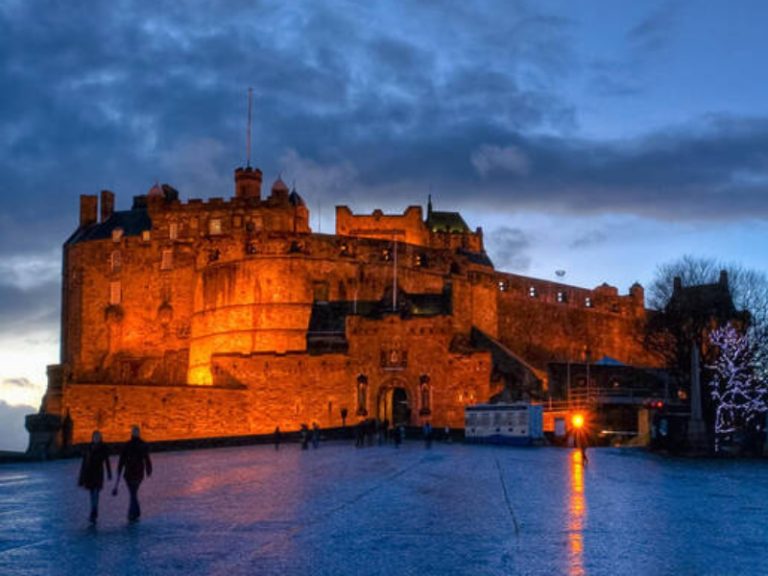
The Castle Esplanade is the wide parade ground in front of Edinburgh Castle, laid out in the 18th century. Every August since 1950 it has hosted the Royal Edinburgh Military Tattoo, and at its eastern end a small iron fountain, the Witches' Well, recalls the people executed here for witchcraft.
Read the full story →
4The Hub
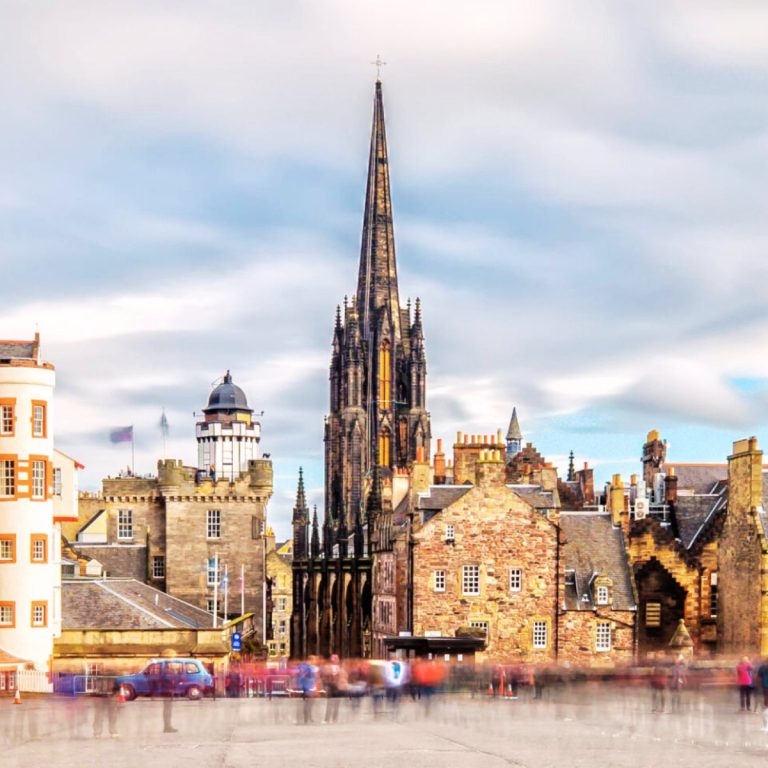
This former church at the top of the Royal Mile was built in the 1840s to designs by James Gillespie Graham and Augustus Pugin, as a meeting hall for the General Assembly of the Church of Scotland. Its Gothic spire is one of the tallest landmarks of the Old Town skyline, and since 1999 the building has been the home of the Edinburgh International Festival.
5Grassmarket
Below the southern cliffs of the castle rock, the Grassmarket served as a market place for horses and cattle from the 15th century. It was also a place of public executions, and a round memorial at its eastern end remembers the Covenanters hanged here in the 17th century. Today the square is lined with pubs, one of them aptly named The Last Drop.
Read the full story →
6Greyfriars Kirkyard
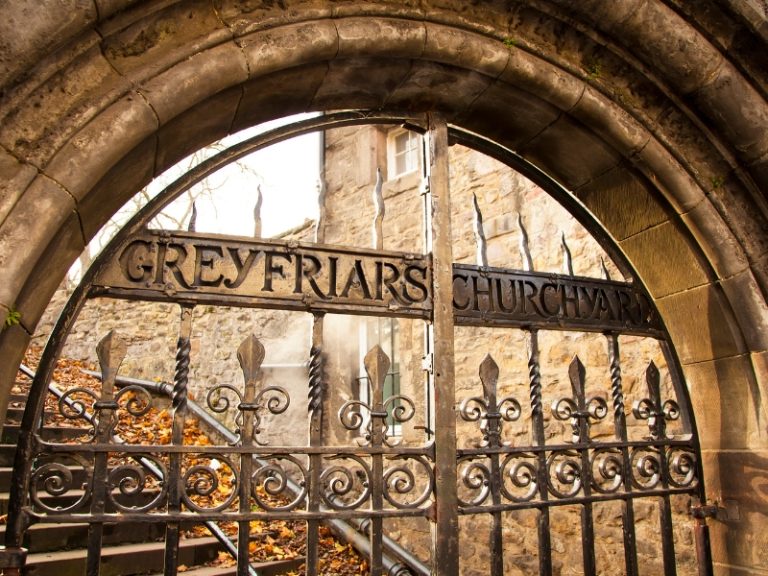
Greyfriars Kirk opened in 1620, and in 1638 the National Covenant, a founding document of Scottish Presbyterianism, was signed here. Many notable people of Edinburgh lie in the surrounding kirkyard. Outside stands the statue of Greyfriars Bobby, the Skye terrier said to have guarded his master's grave for 14 years.
Read the full story →
7St Giles' Cathedral
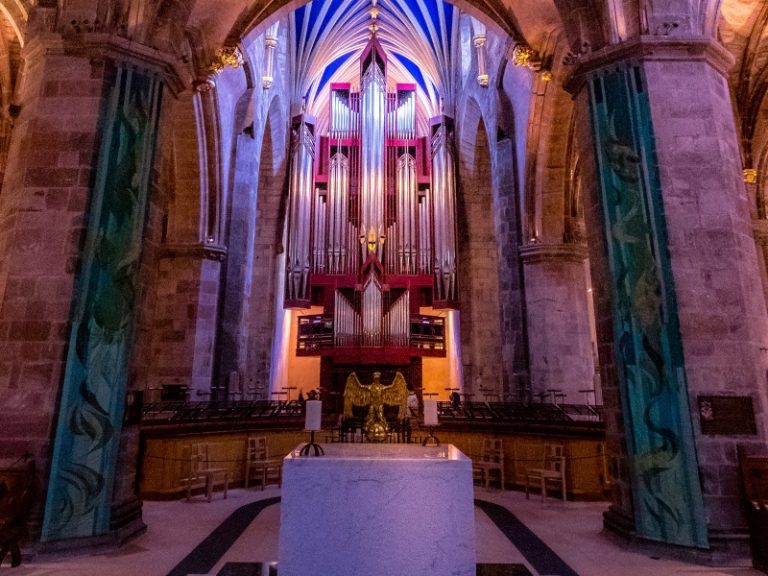
St Giles' Cathedral, the High Kirk of Edinburgh on the Royal Mile, is topped by a stone spire shaped like a crown, dating from the late 15th century. John Knox, leader of the Scottish Reformation, was its minister, and according to tradition a market woman named Jenny Geddes threw her stool at the preacher here in 1637 in protest against a new prayer book.
8Canongate
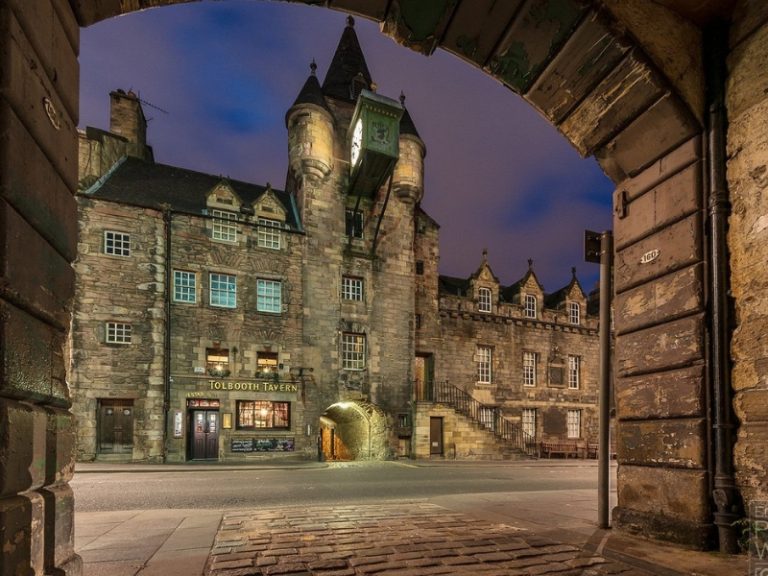
The Canongate, the lower part of the Royal Mile, was a separate burgh until it joined Edinburgh in 1856. Its name comes from the canons of Holyrood Abbey, founded by King David I in 1128. Look for the Canongate Tolbooth of 1591 with its clock projecting over the street, and the kirkyard where the economist Adam Smith is buried.
Read the full story →
9Burns Monument
This round Greek temple below Calton Hill honours Robert Burns, Scotland's national poet. It was designed by Thomas Hamilton and built in the 1830s, modelled on the Choragic Monument of Lysicrates in Athens.
10Calton HillFinish
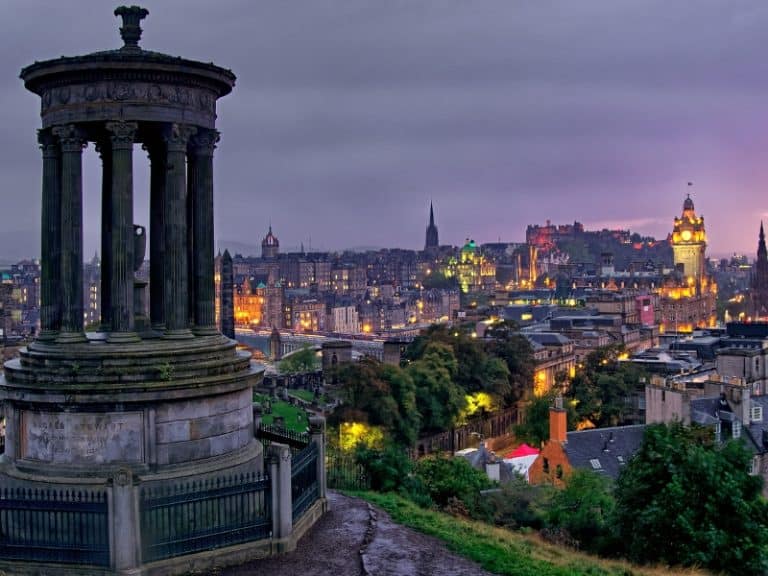
Calton Hill offers wide views over the Old Town, the castle and the Firth of Forth. The National Monument, a copy of the Parthenon honouring the Scots who died in the Napoleonic Wars, was begun in 1826 but left with only twelve columns when the money ran out. Nearby, the Nelson Monument is shaped like an upturned telescope.
Only logged in customers who have purchased this product may leave a review.




Germany –
Collected on GetYourGuide
Germany –
Collected on GetYourGuide