What is the Siena self-guided walking tour?
The Siena self-guided walking tour is a stroll through the medieval centre in which audio narration on your phone does a guide's job. Reserve about 3 hours: with 2 km to cover, the walking itself takes only 25 minutes, and the rest of the time goes on the 10 stops and what you hear there. The streets climb and fall, but the stops are never far apart.
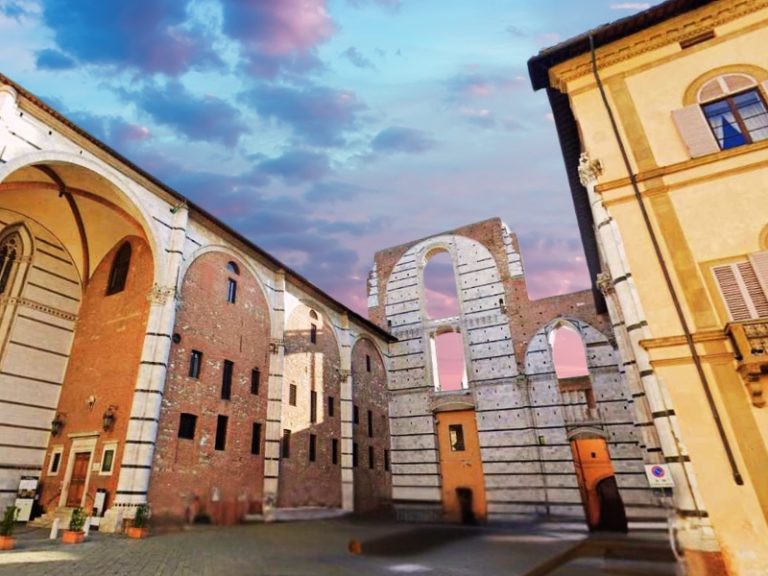
At Santa Maria della Scala, facing the cathedral steps, you hear about one of the first hospitals in Europe and the cobbler Sorore who, according to legend, founded it. The Facciatone tells of the New Cathedral that the Black Death brought to a halt in the mid-14th century, and on Piazza del Campo the narration turns to the Palio, run twice every summer. Beside the Palazzo Pubblico you learn why the Torre del Mangia is said to bear the nickname of its first bell-ringer, Mangiaguadagni, the earnings eater, and the Loggia del Papa recalls the gift Pope Pius II made to his Piccolomini relatives.
- Durationabout 3 hours
- Walkingabout 25 min · 2 km
- Stops10
- LanguagesEnglish, German, French, Italian, Spanish, Dutch
What you do on the walking tour
Listen
Each stop has its own chapter, from the city's districts and its plague years to the popes and bankers who left their names on its palaces. The same text is on screen if you prefer to read.
Stroll
Google Maps leads the way through steep, curving streets: just 25 minutes of walking over 2 km.
Break off
Sit on the sloping brick of the Campo for a while or spend an hour inside the cathedral, then carry on later or on another day.
Eat and browse
Tips for food and shops near the route come with the stops. The first stop and the order of the rest are yours to change in the app.
See the route and attractions →
How it works
- Book online Choose the number of people. Your booking reference arrives by email straight away.
- Get the app Download the World City Trail app from the App Store or Google Play and enter your booking reference.
- Walk when you like Start whenever you are ready, walk at your own pace and pause any time. No guide, no fixed schedule.
Who the walking tour is for
A first visit
One walk connects the cathedral hill with the Campo, the two poles of medieval Siena, and explains what each building stood for.
A day trip to Siena
3 hours covers the centre, which leaves time for lunch and the inside of the cathedral before you head back.
Anyone who avoids groups
The narrow streets fill quickly with tour groups: without one, you stop where you want and walk on when you are ready.
Good to know
- Bring a charged smartphone with mobile data; a power bank helps.
- No entry tickets needed: everything happens outside the buildings. Going inside is optional and paid separately.
- Family friendly; children must be accompanied by an adult.
- Not suitable for wheelchair users and difficult with strollers.
- Groups of up to 5 work best; larger groups split up, one ticket per person.
- Every purchase helps support stray cats and dogs in Greece.
The walk stop by stop: the Pinacoteca, the Duomo, Piazza del Campo, Palazzo Piccolomini
10 stops · about 25 min walking · start: Pinacoteca Nazionale · finish: Palazzo Piccolomini
The narration opens at the Pinacoteca Nazionale on Via San Pietro. The first half stays on the cathedral hill: Santa Maria della Scala, Siena Cathedral, the Facciatone of the unfinished New Cathedral and the Baptistery of San Giovanni, tucked beneath the cathedral's east end. The second half goes down to Piazza del Campo, with the Palazzo Pubblico and the Torre del Mangia on its lower side, and ends on Banchi di Sotto, where the Loggia del Papa and Palazzo Piccolomini stand close together. The app lets you begin at a different stop or change the order, and none of the stops charges for entry.
Open the route map ↗
1Pinacoteca NazionaleStart
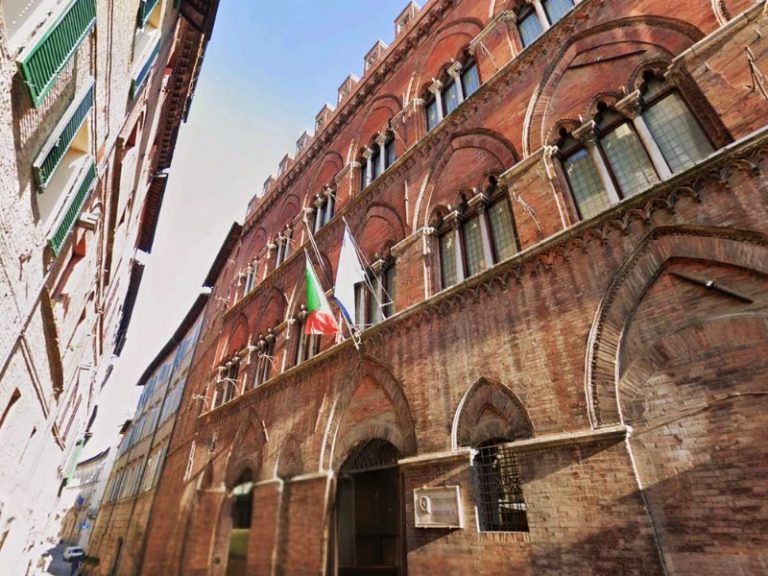
The Pinacoteca Nazionale occupies Gothic palaces on Via San Pietro and holds one of the largest collections of Sienese painting. Look out for the many panels with gold backgrounds from the 13th to the 15th centuries, painted by the masters of the Sienese school.
2Santa Maria della Scala
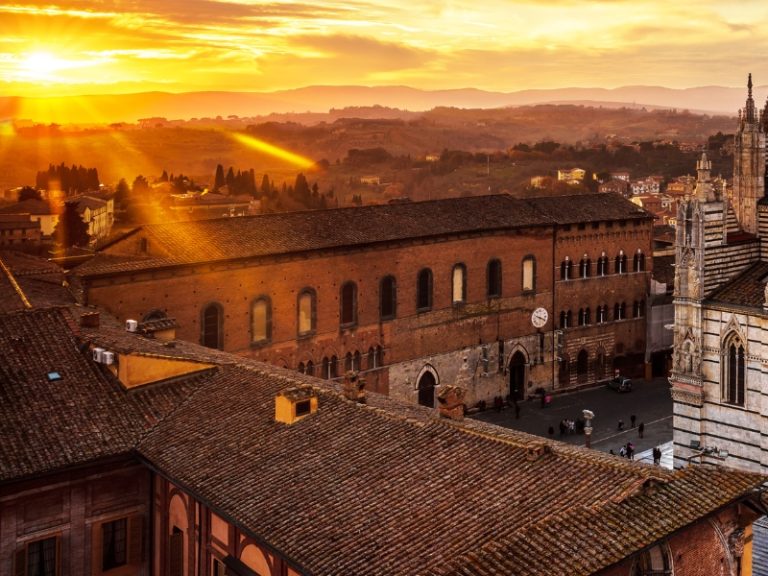
Facing the steps of the cathedral, Santa Maria della Scala was one of the first hospitals in Europe and cared for pilgrims, the sick and abandoned children for centuries. According to legend it was founded by a cobbler named Sorore, and today the complex is a museum with frescoes showing daily life in the hospital.
Read the full story →
3Siena Cathedral (Duomo)
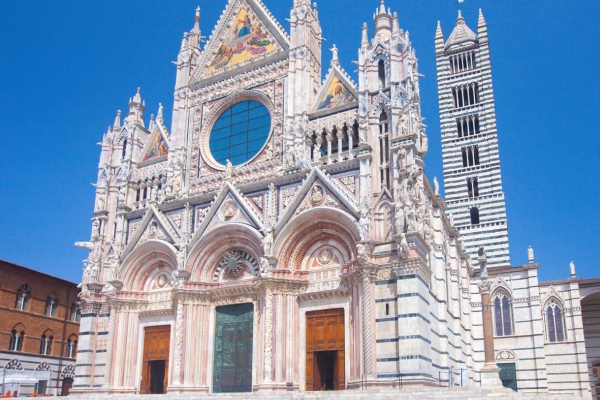
Siena Cathedral, dedicated to the Assumption of the Virgin, is striped inside and out with bands of white and dark marble, the colours of the city's black-and-white coat of arms. Its façade is crowded with statues and carvings, and the floor inside is covered with scenes in inlaid marble.
4Facciatone
The Facciatone is the unfinished façade of the New Cathedral, a huge enlargement that would have turned the existing cathedral into its transept. Work stopped after the Black Death struck Siena in the mid-14th century, and the empty arches still stand beside the Duomo, with a viewing terrace on top.
Read the full story →
5Baptistery of San Giovanni
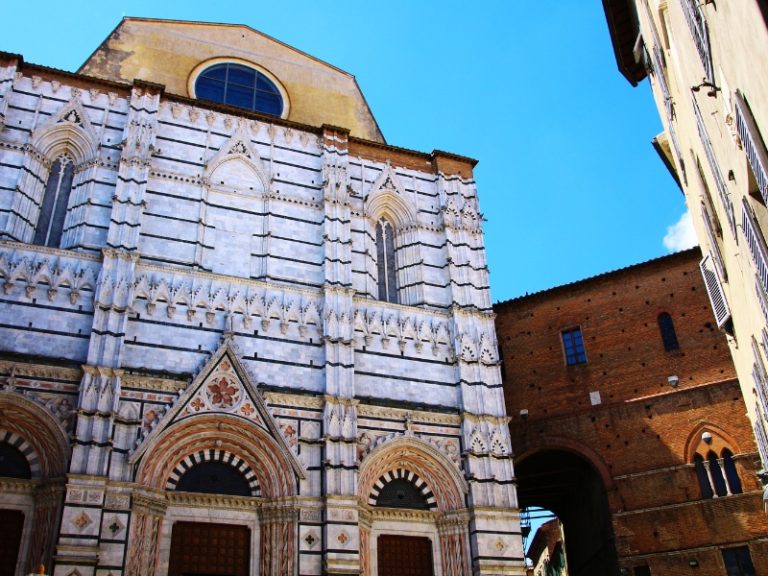
The Baptistery of San Giovanni lies beneath the eastern end of the cathedral, which was extended out over the slope of the hill. Its Gothic marble façade was never finished, and inside is a baptismal font decorated with bronze reliefs by leading sculptors of the early Renaissance.
Read the full story →
6Piazza del Campo
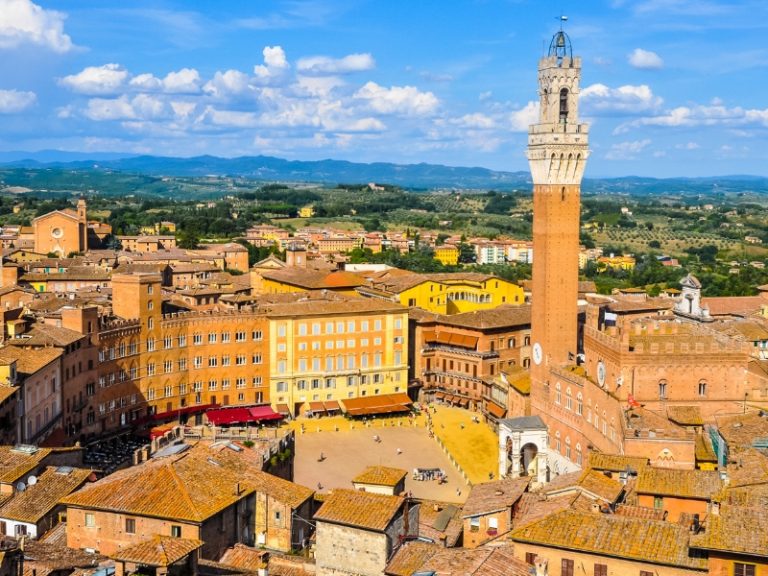
Piazza del Campo is Siena's main square, a sloping, shell-shaped space paved in red brick and divided into nine sections, said to recall the Council of Nine that governed the city in the late Middle Ages. The Fonte Gaia fountain stands at its upper edge, and twice every summer the square hosts the Palio horse race.
Read the full story →
7Palazzo Pubblico
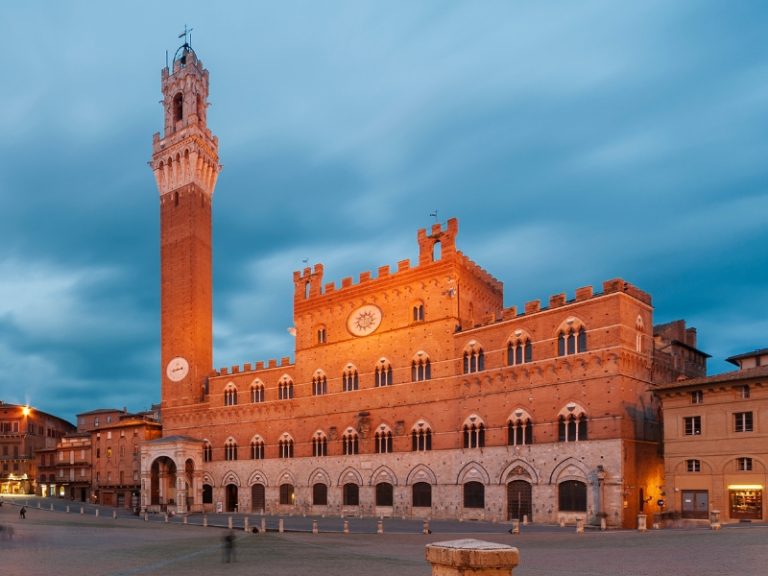
The Gothic Palazzo Pubblico has been Siena's town hall since the Middle Ages and closes the lower side of the shell-shaped Piazza del Campo, where the Palio horse race is run. Inside, the civic museum holds famous medieval frescoes on the effects of good and bad government.
8Torre del Mangia
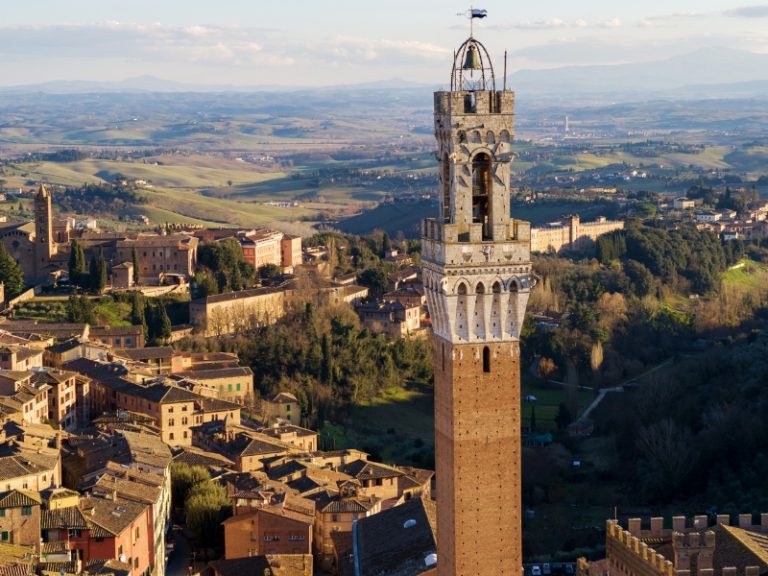
The Torre del Mangia is the slender brick bell tower of the Palazzo Pubblico, rising over Piazza del Campo since the 14th century. It is said to be named after its first bell-ringer, nicknamed Mangiaguadagni, the earnings eater, and the stone chapel at its foot was built as a vow after the plague.
9Loggia del Papa
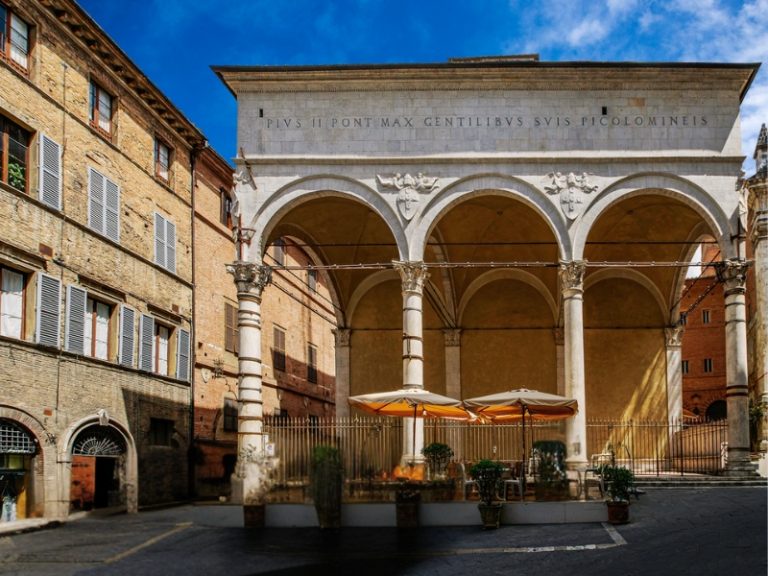
The Loggia del Papa, the Pope's Loggia, was commissioned in the 15th century by Pope Pius II as a gift to his Piccolomini relatives. Look for the Latin inscription running along the top of its three arches, which dedicates it to his family.
10Palazzo PiccolominiFinish
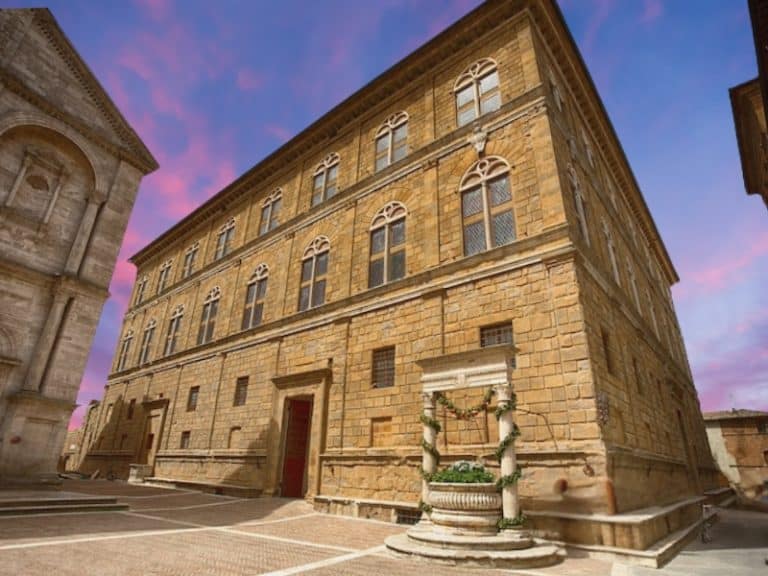
This Renaissance palace on Banchi di Sotto was built in the 15th century for the Piccolomini, the family of Pope Pius II. Its stone façade with large arched windows stands out among Siena's Gothic brick buildings, and today the palace houses the State Archive of Siena.
Read the full story →
Only logged in customers who have purchased this product may leave a review.



Italy –
Collected on GetYourGuide