
Table of Contents
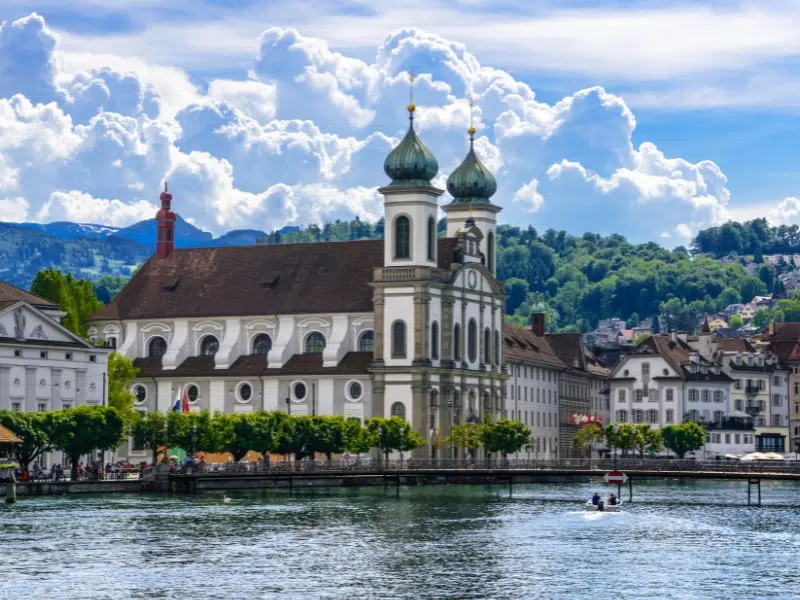
The Jesuit Church Saint Francis Cavier, situated on the picturesque banks of the Reuss River in Lucerne, Switzerland, is a remarkable symbol of Baroque architectural splendor and religious heritage. Constructed by the Jesuit order during the height of the Counter-Reformation, this magnificent church stands as a vivid testament to the era’s artistic innovation and religious fervor. With its striking beauty and historical significance, the church continues to captivate visitors and enrich the cultural landscape of Lucerne.
A Counter-Reformation Masterpiece
The Jesuit Church Saint Francis Cavier was conceived during the Counter-Reformation, a time when the Catholic Church sought to reaffirm its influence in response to the Protestant Reformation. Lucerne, a staunchly Catholic canton, became a focal point for this revival, and the construction of the Jesuit Church was an expression of this religious and cultural renewal.
Dedicated to St. Francis Xavier, the church’s design and construction, which began in 1666 and concluded in 1677, reflected the Jesuit order’s commitment to promoting faith through grand and inspiring art and architecture. The church is celebrated as the first significant Baroque structure north of the Alps in Switzerland, a monumental achievement that introduced a new architectural style to the region.
Architectural Significance
The Jesuit Church Saint Francis Cavier’s architecture showcases the grandeur and dramatic artistry characteristic of the Baroque period. Strongly influenced by Italian Baroque traditions, the church was designed to inspire awe and devotion.
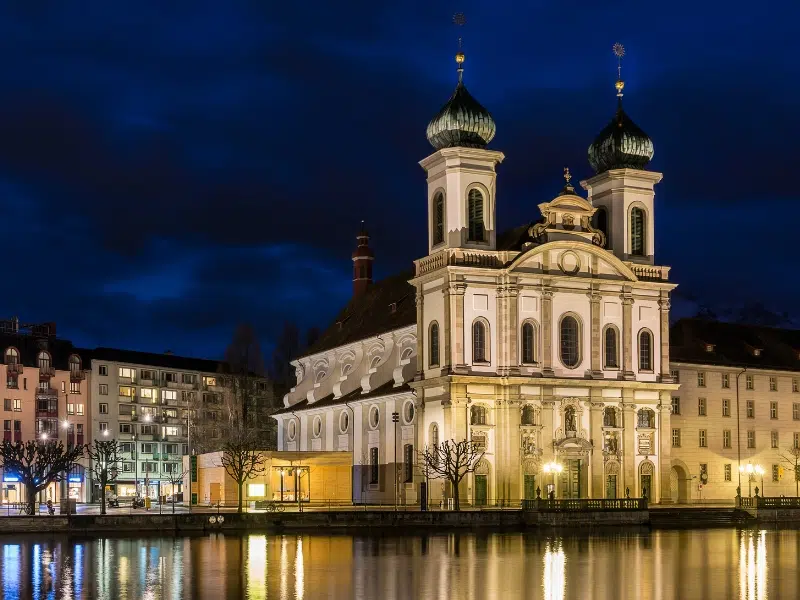
The façade, with its symmetrical composition and ornate details, is a masterpiece of sculptural artistry. Statues of saints, elaborate cornices, and a central pediment draw the eye upward, creating a sense of verticality and divine aspiration. The twin onion-domed towers, added in the late 19th century, further enhance the church’s distinctive silhouette against Lucerne’s skyline.
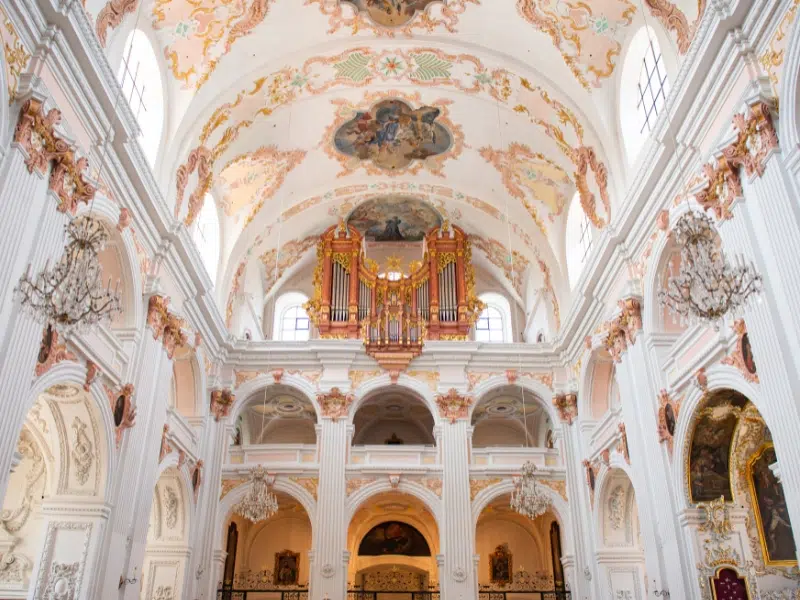
Inside, the church reveals an interior of breathtaking richness. The ceiling is adorned with vivid frescoes depicting scenes from the life of St. Francis Xavier and other biblical stories, reflecting the Jesuits’ emphasis on storytelling through visual art. The richly gilded altars, intricate stucco work, and statues of saints create an atmosphere of spiritual opulence and reverence.
A Cultural and Historical Landmark
Beyond its role as a place of worship, the Jesuit Church Saint Francis Xavier has become an integral part of Lucerne’s cultural and social fabric. The church’s prime location in the Old Town, with its proximity to other historic landmarks like the Chapel Bridge and the Water Tower, makes it a focal point for visitors exploring the city.
The church hosts a variety of cultural events, including classical music performances, art exhibitions, and seasonal celebrations, making it a vibrant venue that bridges history and modern-day life. Its spiritual and cultural functions coexist harmoniously, offering both worshippers and visitors a profound connection to Lucerne’s heritage.
A Journey Through Time and Beauty
Visiting the Jesuit Church Saint Francis Cavier in Lucerne Cavier is a journey into the artistic and spiritual heart of Lucerne. The interplay of light filtering through the stained glass, the intricate detailing of the altars, and the serene reflection of the church’s exterior in the Reuss River all contribute to a sensory experience that is both uplifting and contemplative.
The church’s location near the vibrant Reussquai promenade provides a perfect opportunity for visitors to explore the surrounding area. Stroll along the riverbank, enjoy the view of the historic Old Town, or simply take in the peaceful ambiance of this remarkable setting.
Jesuit Church Saint Francis Cavier is part of Lucerne’s scavenger hunt and walking tour!
Embark on an unforgettable journey through the enchanting city of Lucerne with World City Trail. Our interactive walking tour combines the thrill of exploration with the rich history and culture of this beautiful city.
Key Features:
Interactive gameplay: Solve engaging puzzles and challenges as you explore the city.
Hidden gems: Uncover lesser-known spots.
Cultural insights: Learn about the city’s fascinating history.
Flexibility: Explore at your own pace and create your own itinerary.
Family friendly activity and a great way to explore the city!
Further reading on Wikipedia: Lucerne