What is the Lucerne self-guided walking tour?
The Lucerne self-guided walking tour is a walk you take at your own pace, with audio narration on your phone instead of a guide beside you. Allow about 3 hours: 59 minutes of that is walking, the route measures 4.3 km, and 10 stops are where you stand and listen. Nothing is timed and no group has to be kept up with.
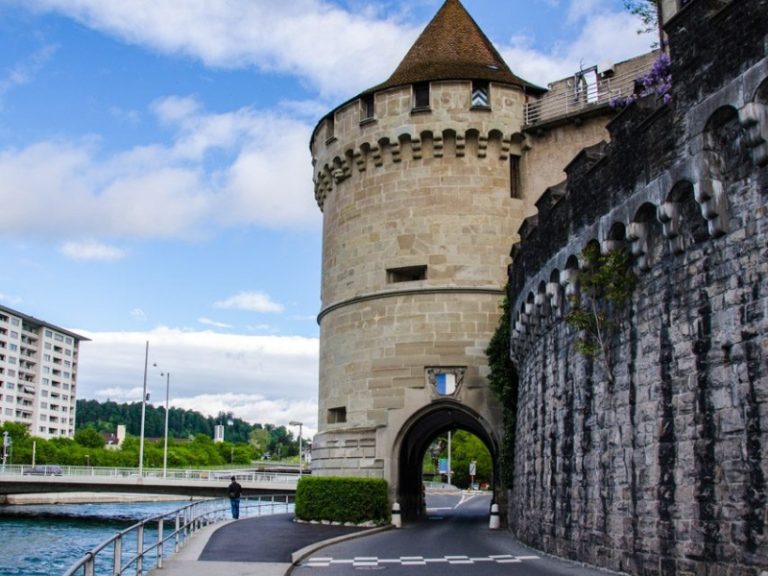
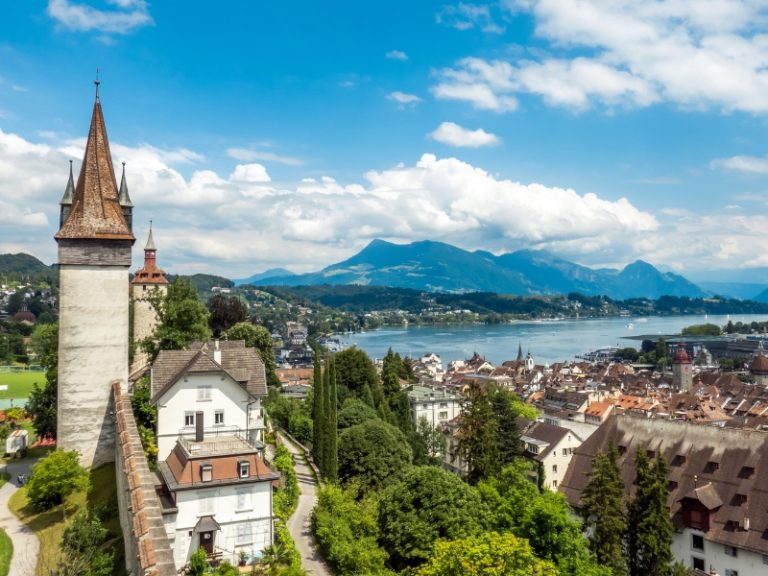
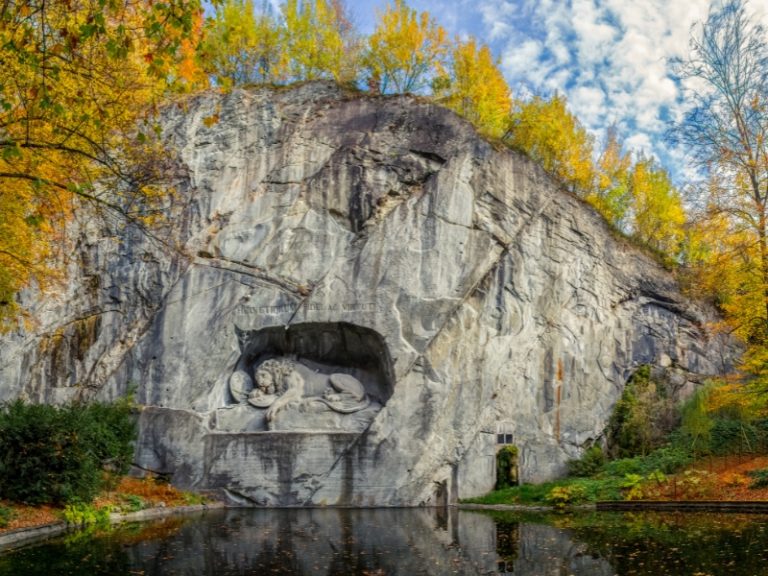
On the Spreuerbrücke the narration explains the name: Spreu is chaff, and this was the only bridge from which it could be tipped into the Reuss. On the Musegg Wall the Zyt Tower carries a clock made in 1535 that is allowed, by tradition, to strike a minute before every other clock in Lucerne. At the Lion Monument you hear what Mark Twain made of it: the most mournful and moving piece of stone in the world.
- Durationabout 3 hours
- Walkingabout 59 min · 4.3 km
- Stops10
- LanguagesEnglish, German, French, Italian, Spanish, Dutch, Chinese
What you do on the walking tour
Listen
Every stop brings the history of the place, its legends and the details that reward a close look. Readers find the same text on screen.
Walk on
Google Maps takes you from one stop to the next: 59 minutes on foot over 4.3 km, at the pace that suits you.
Break off
Stop for a coffee by the water or spend an hour in a museum, then take up the walk again, that day or another.
Eat and browse
Tips for food and shops near the route come with the stops. The opening stop and the order are both set in the app.
See the route and attractions →
How it works
- Book online Choose the number of people. Your booking reference arrives by email straight away.
- Get the app Download the World City Trail app from the App Store or Google Play and enter your booking reference.
- Walk when you like Start whenever you are ready, walk at your own pace and pause any time. No guide, no fixed schedule.
Who the walking tour is for
A first visit
One walk ties the two wooden bridges, the wall towers and the lake quay together and explains what you are looking at.
Anyone who avoids groups
No umbrella to follow and no departure to catch: you stay on a bridge as long as it holds you and move on when you decide.
A day by the lake
3 hours covers the old town, leaving the afternoon for a boat on the lake or the train up Mount Pilatus.
Good to know
- Bring a charged smartphone with mobile data; a power bank helps.
- No entry tickets needed: everything happens outside the buildings. Going inside is optional and paid separately.
- Family friendly; children must be accompanied by an adult.
- Not suitable for wheelchair users and difficult with strollers.
- Groups of up to 5 work best; larger groups split up, one ticket per person.
- Every purchase helps support stray cats and dogs in Greece.
The walk stop by stop: the Spreuer Bridge, the Musegg Wall, the Lion Monument, the Chapel Bridge
10 stops · about 59 min walking · start: Jesuit Church of St Francis Xavier · finish: Lucerne Town Hall
The Jesuit Church on the left bank of the Reuss is the first stop, with the Historical Museum in the old arsenal a short walk away. The covered Spreuer Bridge carries you over the river to the Nölli Tower, where the Musegg Wall comes down to the water, and the wall then runs along the hill above the roofs. Beyond them come the Lion Monument and the Hofkirche, after which the walk drops to the lake quay, takes the Chapel Bridge back across the Reuss and finishes under the arcades of the Town Hall on the Kornmarkt. A different opening stop or order is a tap away in the app, and no stop needs a ticket.
Open the route map ↗
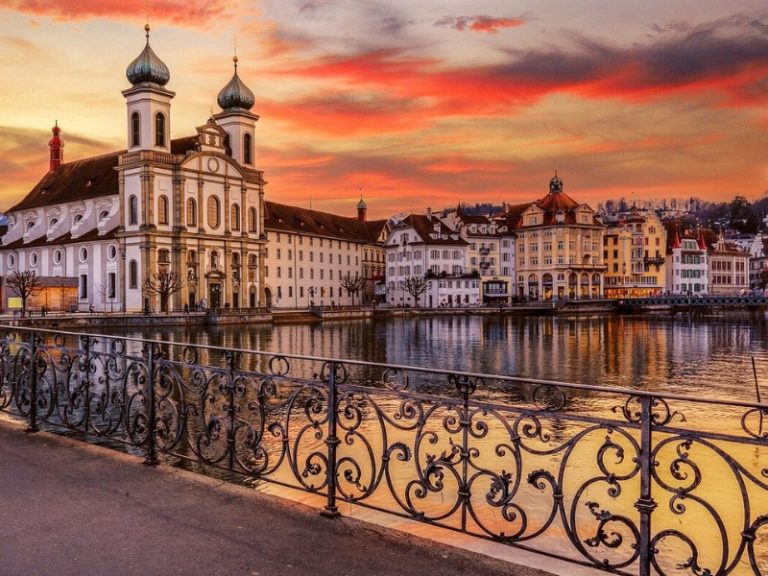
1Jesuit Church of St Francis XavierStart
The Jesuits built this church on the bank of the Reuss between 1666 and 1677, and it is one of the earliest large baroque churches in Switzerland. Its white façade is framed by two towers whose onion domes were only completed in the 19th century. From the forecourt you look across the river to the old town.
Read the full story →
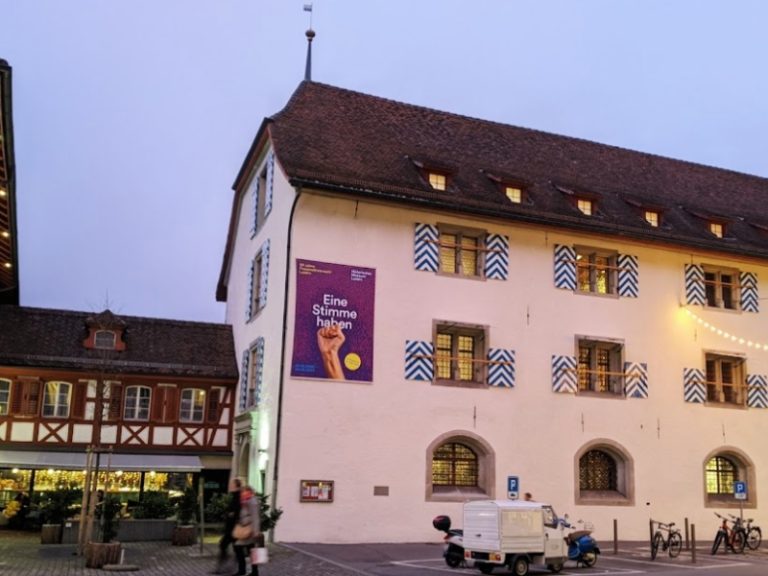
2Historical Museum Lucerne
The Historical Museum occupies the old arsenal on Pfistergasse, a 16th-century building where the city once stored its weapons and armour. Today it tells the story of Lucerne and its canton, and it is known for theatre tours in which actors bring the collection to life.
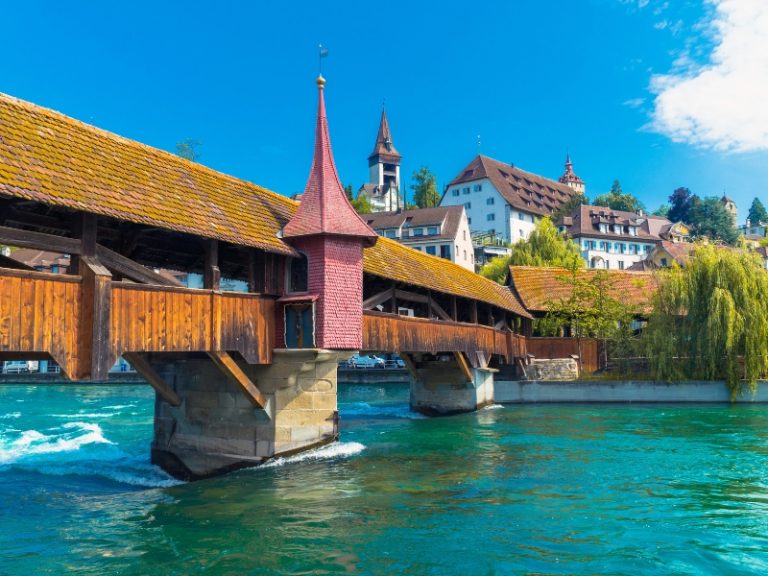
3Spreuer Bridge
The Spreuerbrücke is a covered wooden bridge across the Reuss whose history goes back to 1408. Its name comes from chaff (Spreu), which could only be thrown into the river from this bridge. Under its roof hang the 17th-century Dance of Death paintings by Kaspar Meglinger.
Read the full story →
4Nölli Tower
The Nölli Tower stands where the Musegg Wall comes down to the Reuss, at the western end of the old fortifications. Built in 1513, it has a gateway through its base, so the road still passes right under the tower.
5Musegg Wall
Built largely in the late 14th century, the Musegg Wall runs for about 870 metres along the hill above the old town and still has nine towers. The Zyt Tower carries the city's oldest clock, made in 1535, which by tradition may strike one minute before all the other clocks in Lucerne.
Read the full story →
6Lion Monument
The dying lion, carved into a sandstone cliff in 1820 and 1821, commemorates the Swiss Guards killed in Paris on 10 August 1792, when the Tuileries Palace was stormed during the French Revolution. Bertel Thorvaldsen designed it and Lukas Ahorn carved it. Mark Twain called it the most mournful and moving piece of stone in the world.
Read the full story →
7Hofkirche St Leodegar
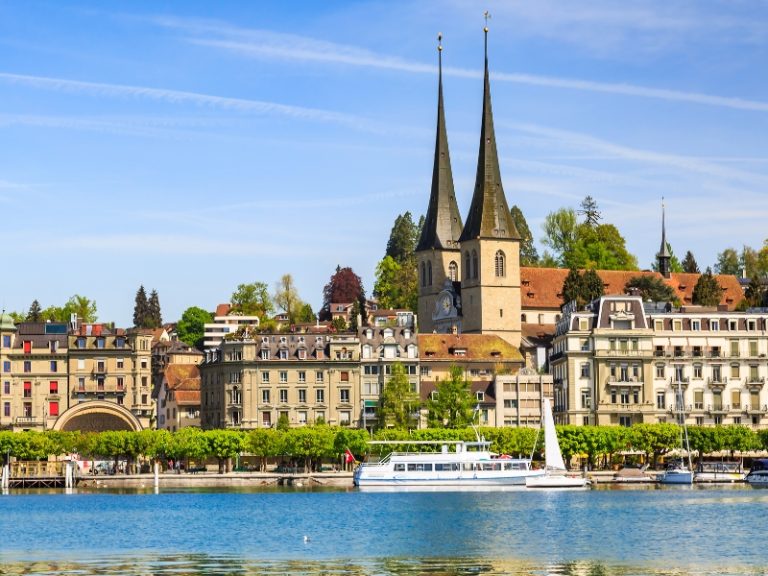
Lucerne's main church is dedicated to St Leodegar, the city's patron saint. After a fire in 1633 destroyed the old church except for its two slender Gothic towers, it was rebuilt by 1639 in late Renaissance style, rare for a large church north of the Alps. Arcades with old graves surround the church.
Read the full story →
8Lake Lucerne waterfront
Along the quay, the boats of Lake Lucerne tie up, including historic paddle steamers that still sail the lake. Its German name, Vierwaldstättersee, refers to the four forest cantons of Uri, Schwyz, Unterwalden and Lucerne on its shores. On a clear day Mount Pilatus and the Rigi rise beyond the water.
9Chapel Bridge
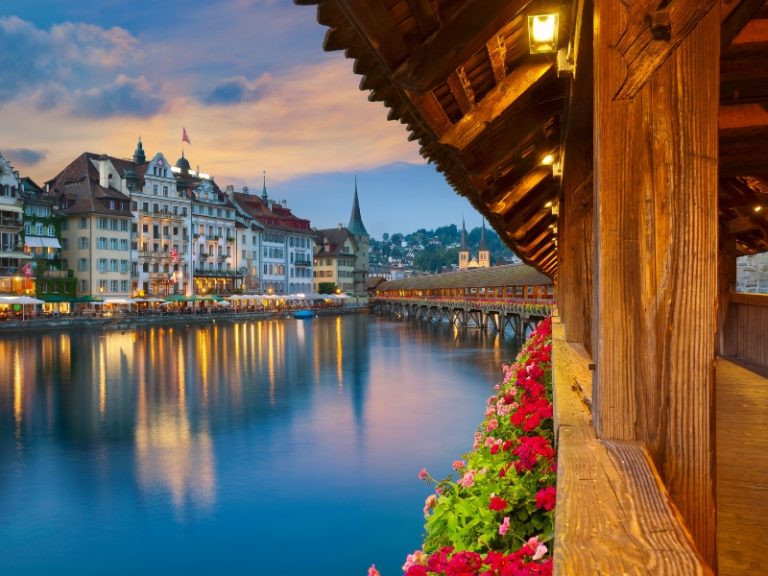
The Kapellbrücke, built in the 14th century, is one of the oldest covered wooden bridges in Europe and takes its name from St Peter's Chapel nearby. Many of the 17th-century triangular paintings under its roof were lost in a fire in 1993, after which the bridge was rebuilt. Beside it stands the octagonal Water Tower, once a prison, archive and treasury.
Read the full story →
10Lucerne Town HallFinish
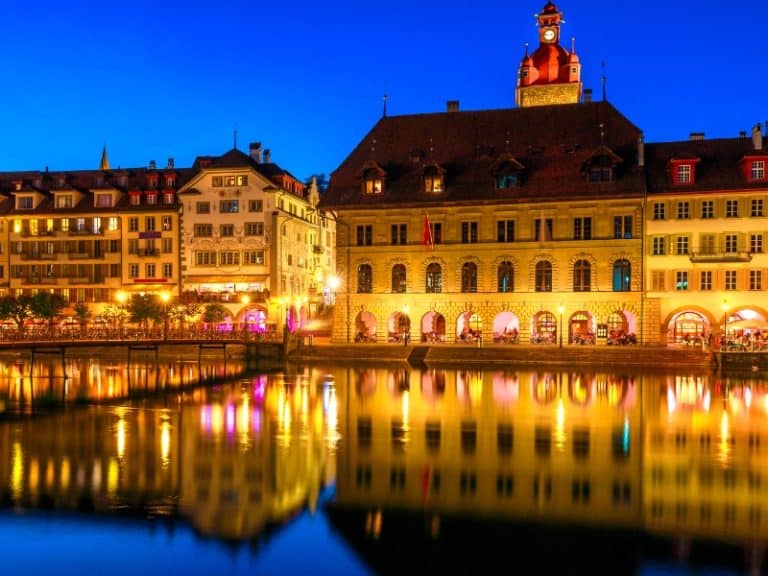
The Rathaus on the Kornmarkt was built between 1602 and 1606 by Anton Isenmann. It combines an Italian Renaissance façade with a large hipped roof inspired by Swiss farmhouses, and under its arcades along the river a market is still held.
Read the full story →
Only logged in customers who have purchased this product may leave a review.




Anonymous (verified owner) –
Carsten– Germany –
Collected on GetYourGuide
In Summe eine schöne Tour. Wir haben uns mehr Zeit genommen. Eine Vorlesefunktion wäre schön
Gemma Ginesta– Spain –
Collected on GetYourGuide
The app was not Good e nou FRG because when you click on next, the text of the next place appears but you do not know where it is, so you always have to close the window to find the place and then open the information again. The first thing to show when you click on next should be the place and then the information.
Jorge– Mexico –
Collected on GetYourGuide
Excelente, tienes la explicacion necesaria y lo mejor que tu marcas tu ritmo, lugares bien seleccionados
johan– France –
Collected on GetYourGuide
Super pratique pour visiter le maximum en peu de temps. Itinéraire bien construit.
Flavio– Switzerland –
Collected on GetYourGuide
Velocidade de resposta do app WorldCityTrail é lenta e, quando eu abri o app para carregar o serial, ele abriu em Tailandês, quando em configurei na instalação em Português….
United Kingdom –
Collected on GetYourGuide
The phone led guided tour covered all key points on a very wet day. We discovered many otherwise hidden treasures.
United States –
Collected on GetYourGuide
The app was helpful, but I wish it had a picture of the route with pictures of what you were going to see on it.