

Table of Contents
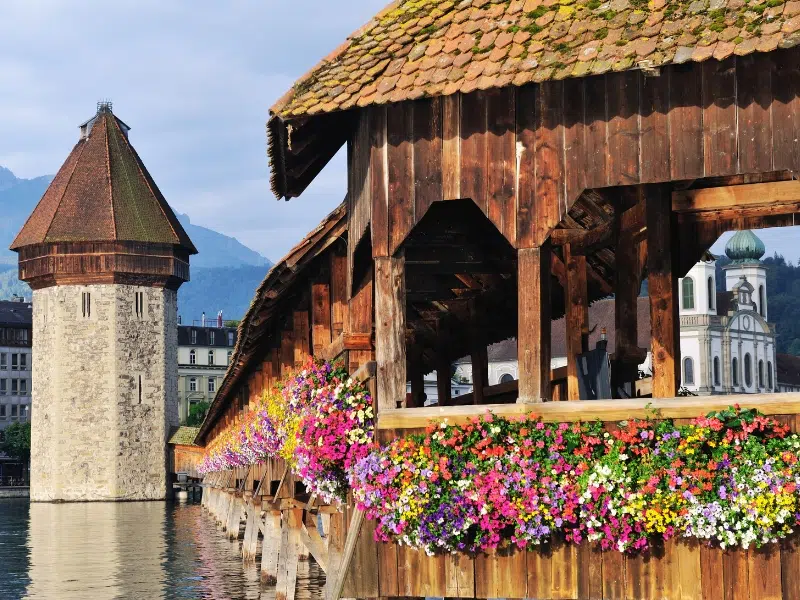
The Chapel Bridge (Kapellbrücke) in Lucerne, Switzerland, is a symbol of the city’s rich history and architectural charm. Spanning the Reuss River in the heart of the city, this 14th-century covered wooden bridge is one of the oldest and most famous landmarks in Switzerland. With its fascinating history, artistic significance, and picturesque setting, the Chapel Bridge captivates visitors from around the world.
A Medieval Marvel
Built in 1333, the Chapel Bridge was originally constructed as part of Lucerne’s fortifications, connecting the Old Town with the right bank of the Reuss River. Its name derives from its proximity to St. Peter’s Chapel, a nearby 12th-century religious site that adds to the bridge’s historical significance. This architectural gem has withstood centuries of change, serving as a testament to both medieval engineering and Lucerne’s strategic importance throughout the ages.
The Chapel Bridge is more than just a functional structure; it also serves as a canvas for historical storytelling. Within its covered walkway lies a series of 17th-century triangular paintings by the renowned artist Hans Heinrich Wägmann. These artworks illustrate scenes from Swiss history, the growth of Lucerne, and local legends. Although a devastating fire in 1993 destroyed a large portion of the bridge, substantial efforts have been made to restore or replace the lost paintings, ensuring their preservation and cultural importance for future generations.
Architectural Features
The Chapel Bridge is celebrated for its beautiful and intricately designed wooden structure, which includes an impressive covered walkway adorned with 17th-century paintings. These paintings, which were commissioned by the city’s guilds, were crafted by local artists and were not merely decorative; they also acted as an educational tool.
While many of these paintings were destroyed in the fire of 1993, the restoration efforts have successfully brought much of the artwork back to life. The replacements closely replicate the originals, preserving their artistic and architectural significance.
The construction of the Chapel Bridge features intricate woodwork, a testament to the craftsmanship of medieval builders. The bridge is supported by heavy beams arranged at regular intervals to ensure its stability and durability. These beams, expertly crafted with great precision, remain a lasting symbol of the engineering prowess of the time.

The Water Tower
One of the most iconic features of the Chapel Bridge is the Wasserturm (Water Tower), a stone structure that stands at the bridge’s eastern end. This octagonal tower, built around the same time as the bridge, is a symbol of Lucerne’s medieval architecture. Initially used as a watchtower, it also served as a prison, a treasury, and even a water reservoir for the town. The tower’s unique design, with its pointed roof and decorative elements, adds an extra layer of grandeur to the bridge’s architectural ensemble.
The Wasserturm is positioned to provide a commanding view of the Reuss River and the bridge itself, creating a striking visual contrast with the wooden structure of the Chapel Bridge. Its historical and functional significance only enhances the overall architectural appeal of the area, where the two structures have stood side by side for centuries.
A Timeless Icon
Today, the Chapel Bridge serves as a pedestrian walkway and a living piece of history. It draws millions of visitors annually who come to stroll along its wooden planks, marvel at its unique construction, and learn about Lucerne’s storied past. The bridge also serves as a symbol of resilience and cultural preservation, having been meticulously restored after the devastating fire.
Located at the heart of Lucerne, the Chapel Bridge is easily accessible and within walking distance of other major attractions, including the Lion Monument, the Jesuit Church, and the Musegg Wall. It serves as a gateway to the city’s historic Old Town, where cobblestone streets, quaint shops, and delightful cafés await exploration.
The Chapel Bridge is more than just a bridge; it is a testament to Lucerne’s medieval heritage, a showcase of Swiss artistry, and a symbol of the city’s enduring beauty. Whether you visit to admire its historical paintings, capture its scenic charm, or simply cross its storied planks, the Chapel Bridge promises an unforgettable experience.
Chapel Bridge is part of Lucerne’s scavenger hunt and walking tour!
Embark on an unforgettable journey through the enchanting city of Lucerne with World City Trail. Our interactive walking tour combines the thrill of exploration with the rich history and culture of this beautiful city.
Key Features:
Interactive gameplay: Solve engaging puzzles and challenges as you explore the city.
Hidden gems: Uncover lesser-known spots.
Cultural insights: Learn about the city’s fascinating history.
Flexibility: Explore at your own pace and create your own itinerary.
Family friendly activity and a great way to explore the city!
Further reading on Wikipedia: Lucerne