

Table of Contents
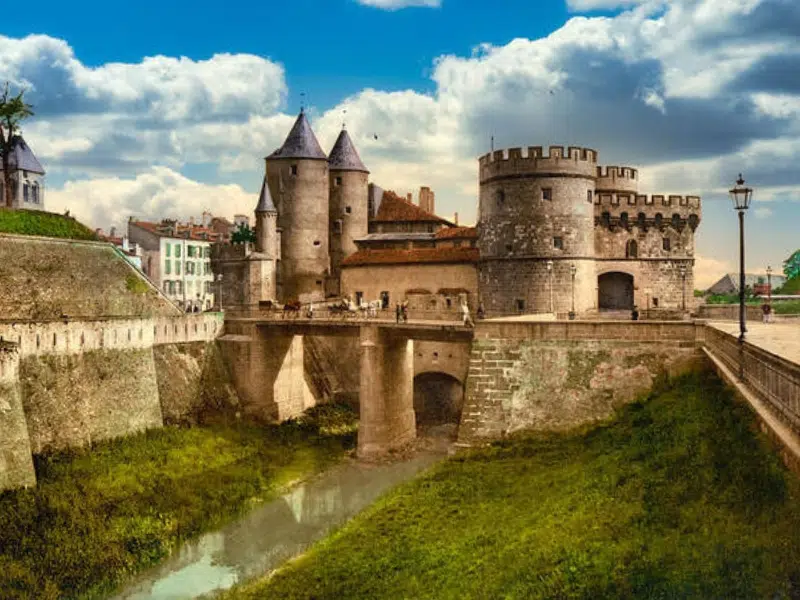
The German Gate (Porte des Allemands) in Metz, France, stands as a remarkable testament to the city’s medieval and military past. This historic monument, situated along the banks of the Moselle River, has been an iconic feature of the city for centuries. It once served as a crucial entry point into the fortified city of Metz, offering visitors and locals a glimpse into the city’s role in European history.
A Testament to Military Architecture
The German Gate was constructed in the 13th century as part of the city’s defensive walls. Its original purpose was to protect the city from invaders and secure its place as a key strategic point in the region. Today, it stands as an architectural landmark that tells the story of Metz’s rich and complex past, from its Roman roots to its time as part of the German Empire and its eventual incorporation into France.
The German Gate is a fine example of medieval military architecture. Featuring an impressive blend of defensive design and Gothic style, it is composed of thick stone walls, a series of towers, and a central archway that allowed for passage through the city’s fortifications. The gate’s robust structure was designed to withstand sieges and attacks, and it played a key role in the city’s defense system for centuries.
The gate’s two large round towers, which rise high above the surrounding landscape, served not only as defensive structures but also as watchtowers, allowing soldiers to monitor potential threats. The towers are connected by a stone bridge that spans a moat, adding to the gate’s imposing appearance. Visitors can still walk across the bridge and explore the area around the German Gate, offering a unique opportunity to experience its historical significance firsthand.
The Role of the German Gate in Metz
Throughout its history, the German Gate has witnessed the changing tides of Metz’s political and military landscape. During the Middle Ages, it played a central role in protecting the city from invasions. In the 19th and 20th centuries, the gate took on even greater significance when Metz became part of the German Empire after the Franco-Prussian War. This period saw extensive military fortifications and the construction of new defensive structures in the region.
Despite these shifts in power, the German Gate has remained a symbol of Metz’s resilience and strategic importance. It is an enduring symbol of the city’s connection to both French and German heritage. The gate’s name itself reflects this history, as it is known for being built by the German forces during the 13th century to help defend the city from invaders.
Visiting the German Gate
Today, the German Gate is a popular tourist attraction and an essential stop for anyone exploring the historic heart of Metz. Located near the city center, it is easily accessible for visitors looking to delve into the city’s past. The surrounding area is also home to scenic views of the Moselle River, making it an ideal spot for leisurely walks and photography.
The German Gate is not only a significant historical monument but also an important cultural landmark in Metz. It remains a powerful reminder of the city’s complex past and its enduring connection to European history. A visit to this iconic structure offers a fascinating journey through time, providing insight into the events that have shaped the region and the people of Metz.

German Gate is part of Metz scavenger hunt and walking tour!
Embark on an unforgettable journey through the enchanting city of Metz with World City Trail. Our interactive walking tour combines the thrill of exploration with the rich history and culture of this beautiful city.
Key Features:
Interactive gameplay: Solve engaging puzzles and challenges as you explore the city.
Hidden gems: Uncover lesser-known spots.
Cultural insights: Learn about the city’s fascinating history.
Flexibility: Explore at your own pace and create your own itinerary.
Family friendly activity and a great way to explore the city!
Further reading on Wikipedia: Metz