
Table of Contents
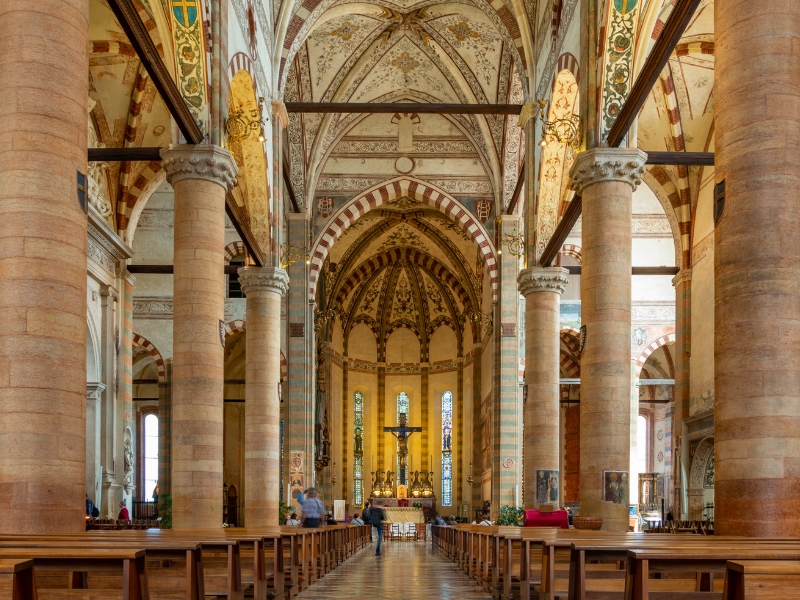
The Basilica di Santa Anastasia, located in the heart of Verona, Italy, stands as a magnificent example of Italian Gothic architecture, embodying the city’s rich religious and artistic heritage. More than just a place of worship, it is a testament to the evolution of Gothic architecture in Verona, the enduring influence of religious art, and the spiritual devotion that has shaped the city for centuries. Here, history, architectural grandeur, and sacred artistry converge, offering visitors a profound glimpse into Verona’s past and its artistic splendor.
A Testament to Dominican Influence
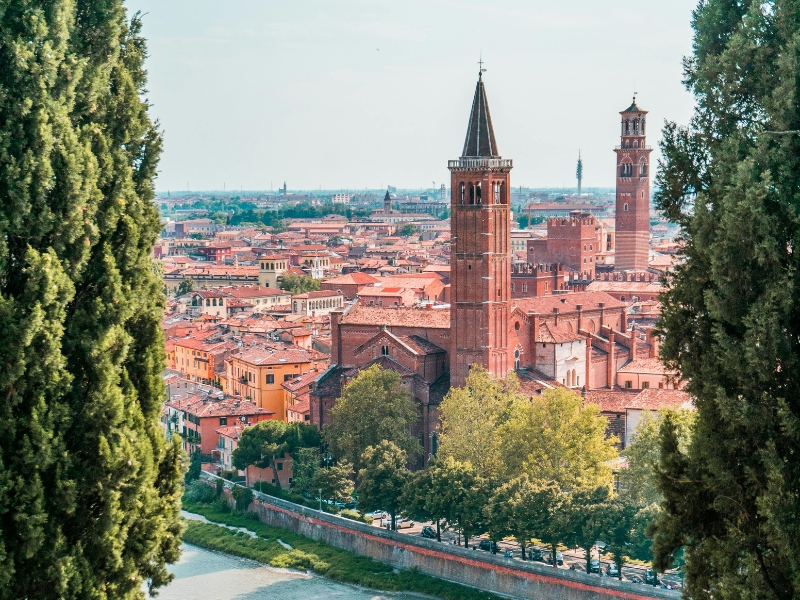
The origins of the Basilica di Santa Anastasia trace back to the 13th century, when the Dominican Order began construction on the site of an earlier church. Its completion, spanning several centuries, reflects the evolving architectural styles and artistic influences that shaped Verona during the Middle Ages and the Renaissance.
The basilica’s strategic location within Verona’s historic center underscores its significance as a religious, cultural, and artistic landmark. Over the centuries, it has remained a focal point of devotion, artistic patronage, and historical events, standing as a silent witness to the transformations of the city.
Architectural Grandeur
The Basilica di Santa Anastasia is a jewel of Veronese Gothic architecture, characterized by:
- A robust brick façade, simple yet imposing, reflecting the structural integrity of Gothic design.
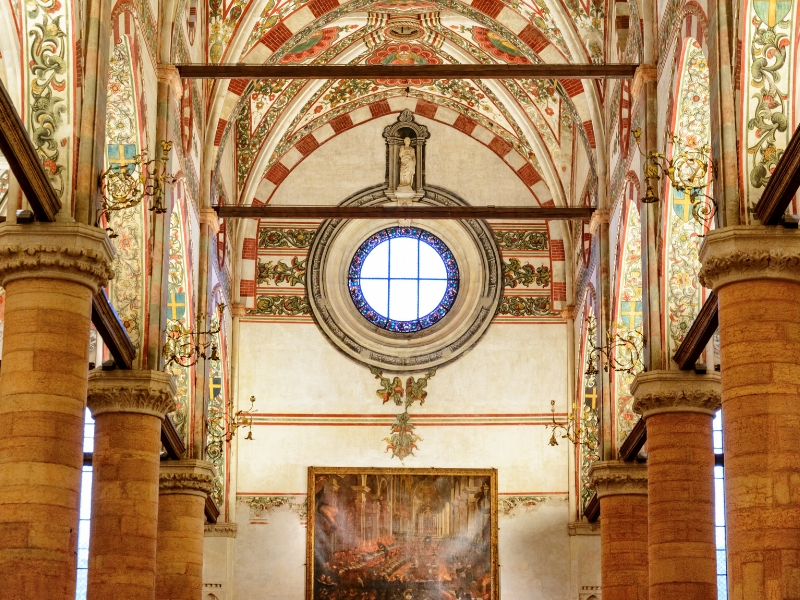
- Soaring vaulted ceilings, creating an awe-inspiring sense of height and grandeur.
- Intricate stone detailing, showcasing the craftsmanship of medieval artisans.
- Three spacious naves, enhancing the sense of light, space, and spiritual elevation.
- Numerous chapels, each adorned with frescoes, sculptures, and altarpieces, representing different artistic periods.
The use of local Veronese stone and brick, combined with intricate sculptural elements, reflects the artistic traditions of the region. While rooted in Gothic principles, the basilica also integrates local stylistic influences, resulting in a harmonious fusion of artistic traditions.
A Sacred Space Rich in History and Art
Beyond its architectural beauty, the Basilica di Santa Anastasia holds immense historical and cultural significance. It has been a setting for:
- Medieval religious ceremonies and processions.
- Aristocratic burials, with tombs of noble Veronese families.
- Renaissance artistic patronage, fostering the creation of remarkable frescoes and sculptures.
- Modern-day religious and cultural celebrations, keeping its legacy alive.
As a center of spiritual devotion, it continues to shape Verona’s religious landscape, attracting pilgrims, art enthusiasts, and historians alike.
A Gallery of Sacred Masterpieces
The Basilica di Santa Anastasia’s interior is adorned with an extraordinary collection of religious art, making it one of Verona’s most important artistic landmarks. Among its most notable treasures are:
- The Pellegrini Chapel – Home to intricate terracotta sculptures depicting biblical scenes, showcasing the mastery of Renaissance sculpture.
- The Cavalli Chapel – Adorned with vibrant frescoes, illustrating religious narratives with breathtaking detail.
- Pisanello’s Fresco of St. George and the Princess – One of the most celebrated artworks in the basilica, painted by Antonio Pisanello, a master of late Gothic and early Renaissance fresco painting.
- Majestic altarpieces and sculptures, each contributing to the basilica’s rich visual and spiritual experience.
These artworks, created by some of the most renowned artists of the period, provide valuable insight into the religious themes, artistic styles, and cultural influences of medieval and Renaissance Italy.
Basilica di Santa Anastasia is part of Verona scavenger hunt and walking tour!
Embark on an unforgettable journey through the enchanting city of Verona with World City Trail. Our interactive walking tour combines the thrill of exploration with the rich history and culture of this beautiful city.
Key Features:
Interactive gameplay: Solve engaging puzzles and challenges as you explore the city.
Hidden gems: Uncover lesser-known spots.
Cultural insights: Learn about the city’s fascinating history.
Flexibility: Explore at your own pace and create your own itinerary.
Family friendly activity and a great way to explore the city!