
Amsterdam, a city synonymous with its iconic canal houses, offers a unique window into the lives of its affluent past through institutions like Museum Van Loon in Amsterdam. Far from a typical museum, this grand canal-side mansion serves as a meticulously preserved testament to the wealth and influence of a prominent Dutch family, allowing visitors to step directly into the opulent world of the Dutch Golden Age and beyond.
The Origins of a Grand Canal House
The impressive building that now houses Museum Van Loon in Amsterdam is located on the prestigious Keizersgracht (Emperor’s Canal), one of Amsterdam’s three main canals that form the city’s famous canal belt, a UNESCO World Heritage site. This area was developed during the 17th century, a period of unprecedented prosperity for the Netherlands, driven by trade and maritime power.
The mansion at Keizersgracht 672 was designed by the renowned Dutch architect Adriaan Dortsman (c. 1635-1682), celebrated for his classical style and other significant works in Amsterdam, such as the Ronde Lutherse Kerk. The house was built in 1672 for Jeremias van Raey, a Flemish merchant. Interestingly, the first resident of this magnificent house was not Van Raey himself, but the celebrated painter Ferdinand Bol (1616-1680), a distinguished pupil of Rembrandt, who rented the property.
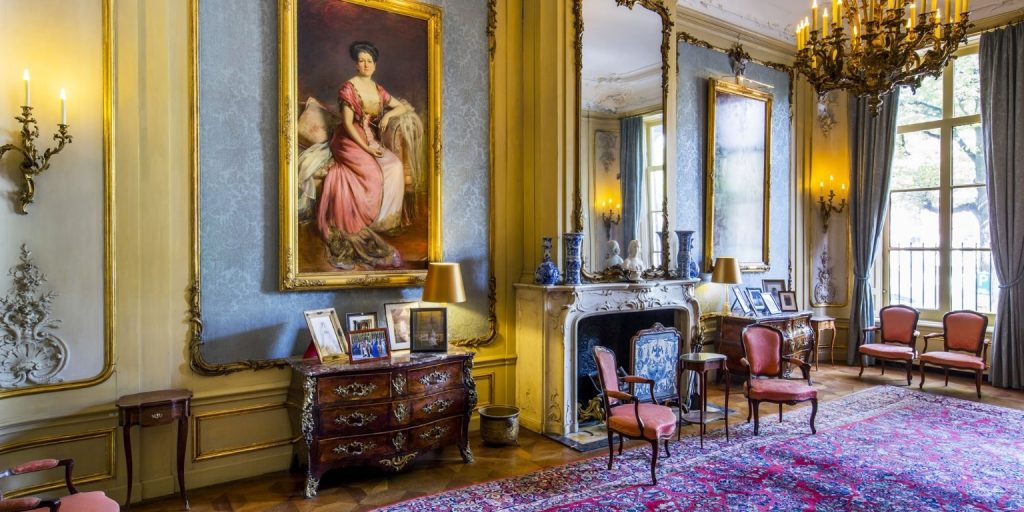
The house, along with its identical twin next door (Keizersgracht 674), was designed to showcase wealth and status. It features a grand facade topped with four sculptures representing Ceres (agriculture), Mars (war), Minerva (justice), and Vulcan (fire) – symbolizing the sources of the original owner’s prosperity. While the exterior retains its 17th-century grandeur, the interior has undergone renovations over time, particularly in the late 18th century by the Van Hagen family, who introduced the elegant Louis XV style that largely defines the museum’s current appearance.
The Van Loon Family and the Museum’s Establishment
The museum takes its name from the Van Loon family, a prominent regent family with a long and distinguished history in Amsterdam, dating back over four hundred years. Members of the Van Loon family held significant positions in the city’s government and played a crucial role in Dutch trade, with Willem van Loon being a co-founder of the Dutch East India Company (VOC) in 1602.
In 1884, the canal house at Keizersgracht 672 was acquired by the Van Loon family as a wedding gift for Willem Hendrik van Loon and Thora van Loon-Egidius. The family continued to reside in the house for decades, filling it with their extensive collection of portraits, furniture, silverware, porcelain, and other decorative arts accumulated over five centuries.
In a remarkable act of preservation and public sharing, Professor Maurits van Loon (1923-2006) established the Van Loon Foundation and opened the house to the public as a museum in 1973. The family still occupies the upper floors (the former servants’ quarters), maintaining a living connection to the historic property.
What to Experience at Museum Van Loon in Amsterdam
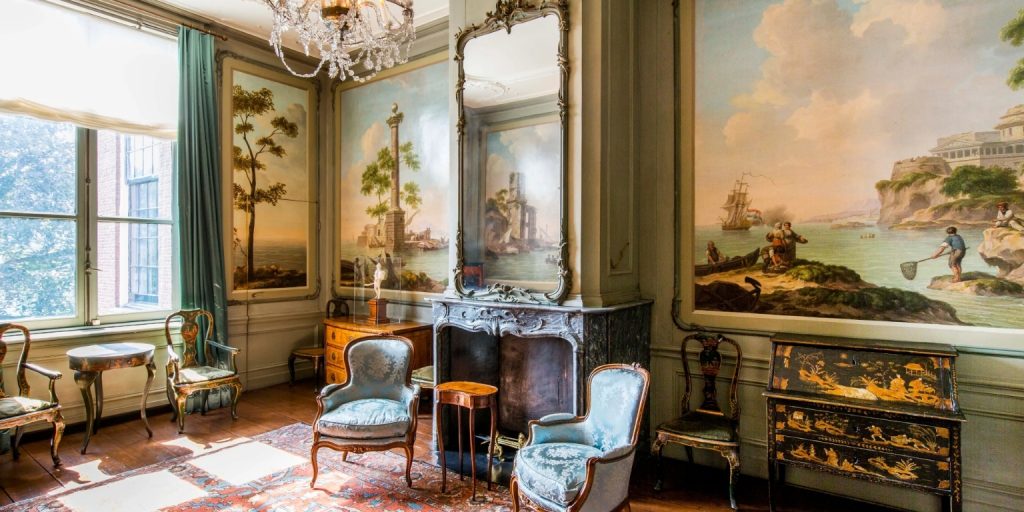
A visit to Museum Van Loon in Amsterdam offers an intimate and immersive experience. Unlike many traditional museums with ropes and barriers, visitors are encouraged to wander freely through the exquisitely preserved rooms, stepping into a bygone era.
Highlights include:
- Opulent Period Rooms: Explore the grand entrance hall, the Blue Drawing Room, the Dining Room (still used for special occasions), and the bedrooms, all furnished with original pieces and decorated in the 18th-century style.
- Extensive Family Collection: Discover a vast array of family portraits that trace the Van Loon lineage through centuries, alongside exquisite furniture, intricate silverware, and delicate porcelain, offering insights into their tastes and lives.
- The Kitchen and Servants’ Quarters: Gain a fascinating perspective on daily life by visiting the basement kitchen, complete with a sparkling array of copper pans, and learn about the hidden passages used by servants.
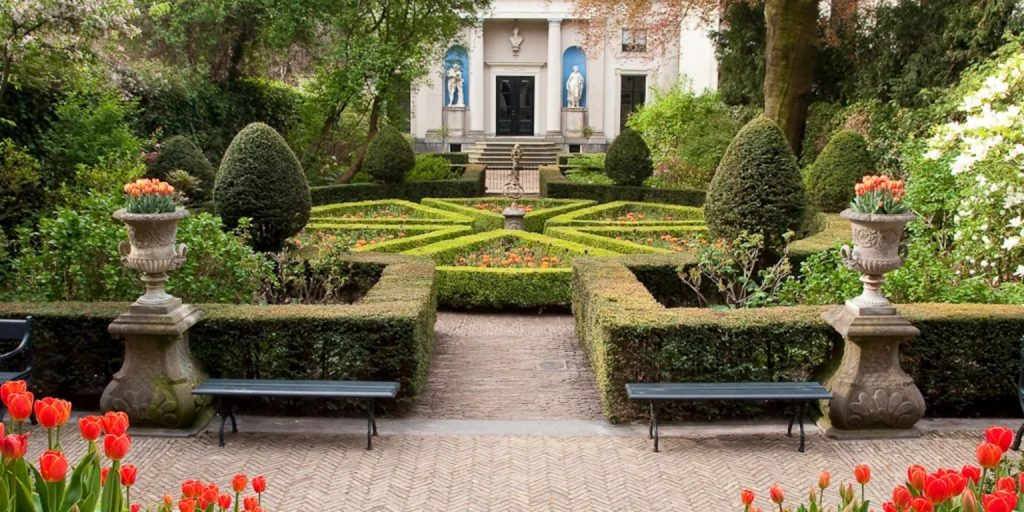
- The Garden and Coach House: A unique feature of Museum Van Loon is its large, formal 17th-century style garden, a tranquil oasis in the city center. At the far end of the garden stands the original coach house, which once housed the family’s carriages and now hosts varying arrangements of these historical vehicles or contemporary art exhibitions. This unified complex of house, garden, and coach house is rare for Amsterdam canal houses.
Museum Van Loon in Amsterdam stands as a vibrant testament to city’s rich past. It allows visitors to directly engage with the tangible history of a prominent family and appreciate the architectural splendor of the Golden Age. Its opening in 1973 as a museum, built upon a foundation laid in 1672, ensures that the stories and grandeur of Amsterdam’s regents continue to be shared and admired by all.