
Across the sidewalks and pathways of Berlin, small, unassuming brass plaques embedded in the cobblestones catch the light, often prompting passersby to pause and reflect. These are the Stolpersteine (Stumbling Stones), a powerful and deeply personal memorial to the victims of Nazi persecution. Far from grand monuments, these humble, hand-sized tributes bring the enormity of the Holocaust down to a human scale, marking the last known voluntary residence of individuals who were persecuted, deported, and murdered by the Nazi regime. Discovering the Stolpersteine in Berlin is to embark on a poignant journey through history, woven directly into the fabric of the modern city.
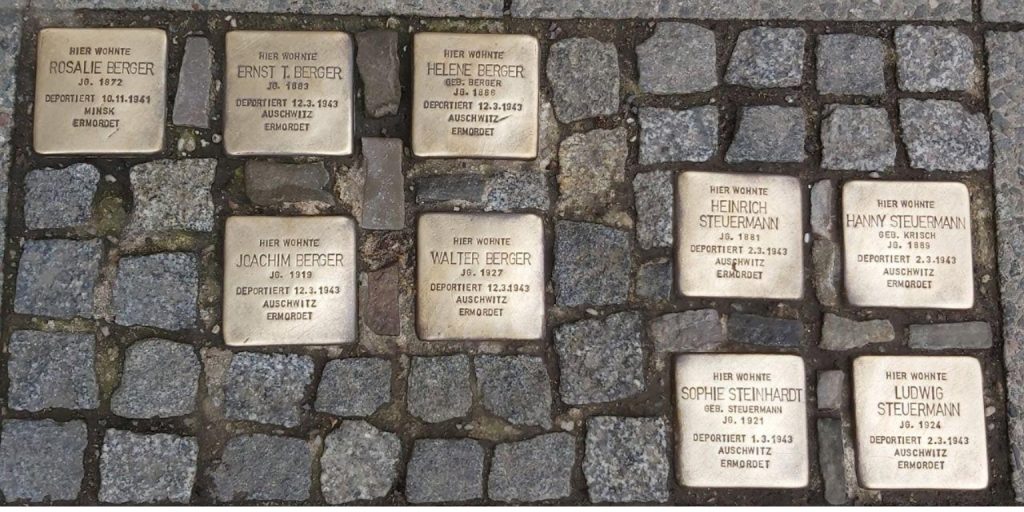
The Vision of Gunter Demnig: Art as Remembrance
The Stolpersteine project was conceived and initiated by German artist Gunter Demnig. His profound idea was born from a desire to reclaim the individual stories swallowed by the mass atrocities of the Holocaust. Instead of anonymous lists or distant memorials, Demnig sought to bring remembrance directly to the places where victims once lived and worked, creating a physical presence that confronts passersby with the reality of what happened “here.”
The very first Stolperstein was laid in Berlin in 1996 without official permission, but the project soon gained momentum and widespread support. Demnig’s first major installation of 50 Stolpersteine in Cologne followed in 1997. The project rapidly expanded, first across Germany, then into dozens of other European countries. By 2024, over 100,000 Stolpersteine have been laid across Europe, making it the world’s largest decentralized memorial.

The Philosophy Behind the “Stumbling Stones”
The name “Stolpersteine” literally translates to “stumbling stones” or “stumbling blocks.” This name holds multiple layers of meaning:
- Physical Stumble: The small plaques cause people to physically stumble, metaphorically tripping over a piece of history they might otherwise overlook.
- Mental Stumble: The act of reading the engraved details — the name, birth date, deportation date, and fate of a specific individual — causes a mental “stumble,” forcing contemplation on a life abruptly ended.
- Remembrance: The stones personalize the abstract numbers of victims, giving back identity to those who were dehumanized and annihilated.
Each Stolperstein in Berlin bears the inscription “Hier wohnte…” (Here lived…), followed by the victim’s name, year of birth, the date and place of their deportation or arrest, and finally, their fate (e.g., “ermordet in Auschwitz” – murdered in Auschwitz). These seemingly simple details represent immense individual tragedies, connecting the abstract horror of the Holocaust to specific lives and addresses.
The project is deliberately inclusive, commemorating not only Jewish victims but also Roma and Sinti, homosexuals, disabled people, political dissidents, Jehovah’s Witnesses, and all others persecuted by the Nazi regime. This broad scope ensures that no victim group is forgotten.
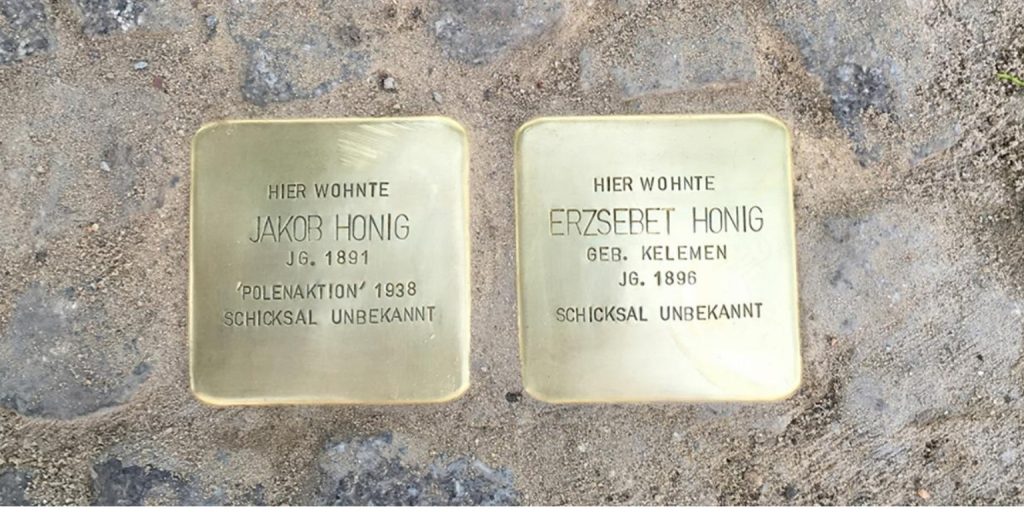
Stolpersteine in Berlin: A Citywide Memorial
Berlin, as the former capital of Nazi Germany and a city with a large Jewish population prior to the Holocaust, naturally hosts a significant number of Stolpersteine. The first official Stolpersteine in Berlin were laid in 2000. Since then, thousands more have been added across its various districts. There are now over 9,000 Stolpersteine in Berlin alone, marking the former homes and workplaces of countless individuals. They are not concentrated in one memorial site but are intentionally dispersed throughout the urban landscape, appearing organically in residential neighborhoods, commercial streets, and near former public institutions.
The placement of each stone is meticulously researched, often in cooperation with descendants, local historical societies, and city archives. Families of victims frequently participate in the laying ceremonies, creating deeply moving moments of remembrance and connection. These ceremonies are quiet, dignified affairs, bringing together neighbors, historians, and relatives to honor the memory of those who lived and were lost.
The Stolpersteine in Berlin serve as constant, quiet reminders of a painful past, ensuring that the victims are remembered not as statistics, but as individuals who once walked these very streets. They foster dialogue, encourage historical inquiry, and contribute profoundly to Germany’s culture of remembrance, embedding the lessons of the Holocaust into the everyday urban experience for generations to come.