
In the heart of Tallinn’s beautifully preserved Old Town, a city with a rich tapestry of medieval history and maritime legend, stands a church with a story as soaring as its spire. St. Olaf’s Church, or Oleviste kirik in Estonian, is more than just a religious landmark; it is a symbol of Tallinn’s ambition, its resilience, and its incredible Hanseatic League past. For a brief but significant period in history, this church was the tallest building in the world, a testament to the city’s power and prosperity that still inspires awe today.
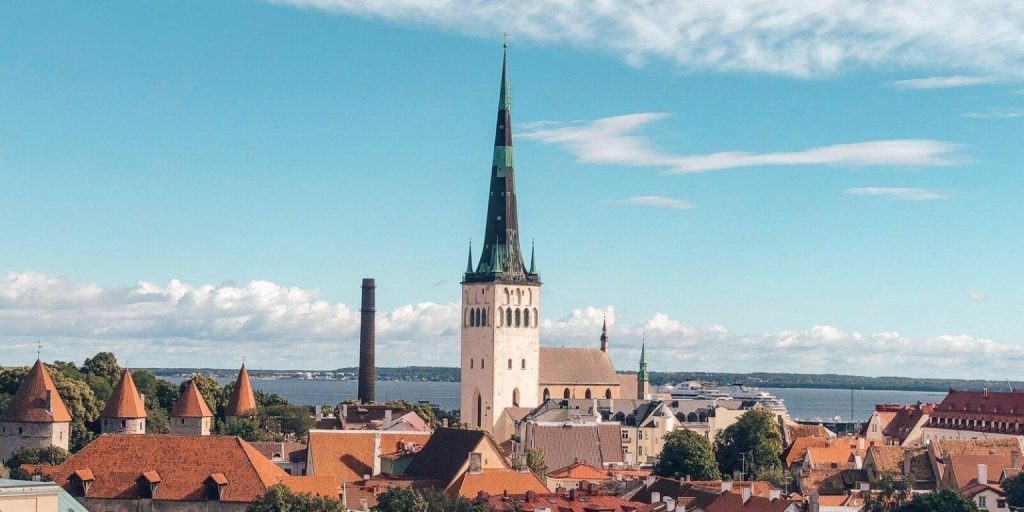
A Towering Legacy from the Hanseatic Era
The history of St. Olaf’s holy place dates back to the 12th century, when it was built as a dedication to St. Olaf, the patron saint of merchants and sailors. As Tallinn grew into a powerful trading hub of the Hanseatic League, the city’s merchants sought to build a church that reflected their wealth and faith. The result was a stunning example of Gothic architecture, a grand structure designed not only for worship but also as a beacon for incoming ships.
But it was the church’s incredible spire that truly captured the imagination of the world. From 1549 to 1625, with an estimated height of 159 meters (522 feet), the church’s spire was considered the tallest building in the world. This record, while debated by some historians, is a key part of the church’s legend and symbolizes Tallinn’s status as a major northern European power. The soaring spire, visible for miles from the sea, served as a guide and a symbol of welcome for sailors navigating the treacherous Baltic waters.
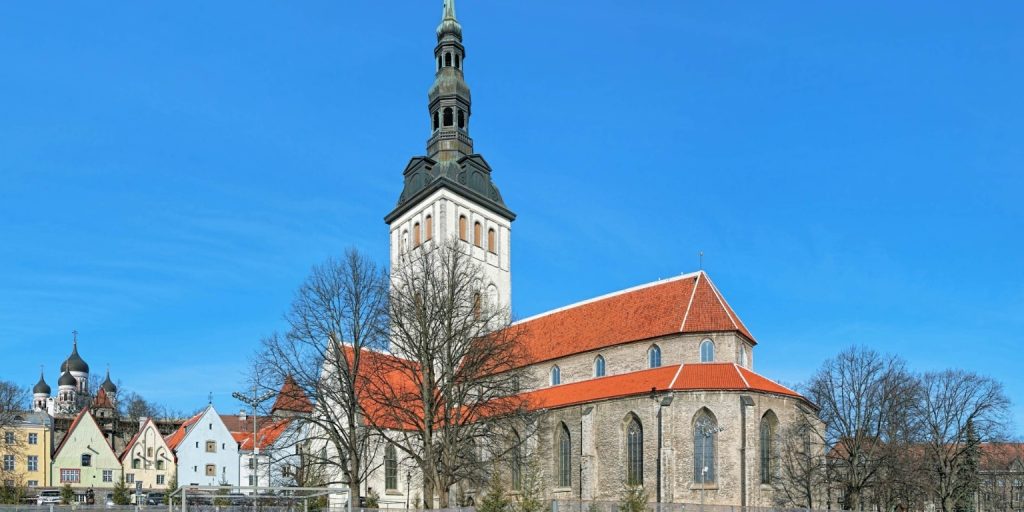
The Church of Lightning and Spies
Unfortunately, the great height made it a frequent target for lightning strikes. The spire was consumed by fire multiple times throughout its history, with major blazes in 1625 and 1820 that destroyed its upper sections. Each time, the resilient people of Tallinn rebuilt their cherished spire, though not to its original record-breaking height. The spire visible today, while still impressive at 124 meters, stands as a testament to the church’s enduring legacy.
This place role in history continued to evolve. During the Soviet occupation of Estonia, its spire took on a new, more sinister purpose. It was reportedly used by the KGB as a radio tower and a surveillance point to monitor the city below and the ships in the harbor, a silent observer in a different kind of war. This dark chapter adds a fascinating layer to the church’s story, showing how its landmark status was exploited for military and political purposes.
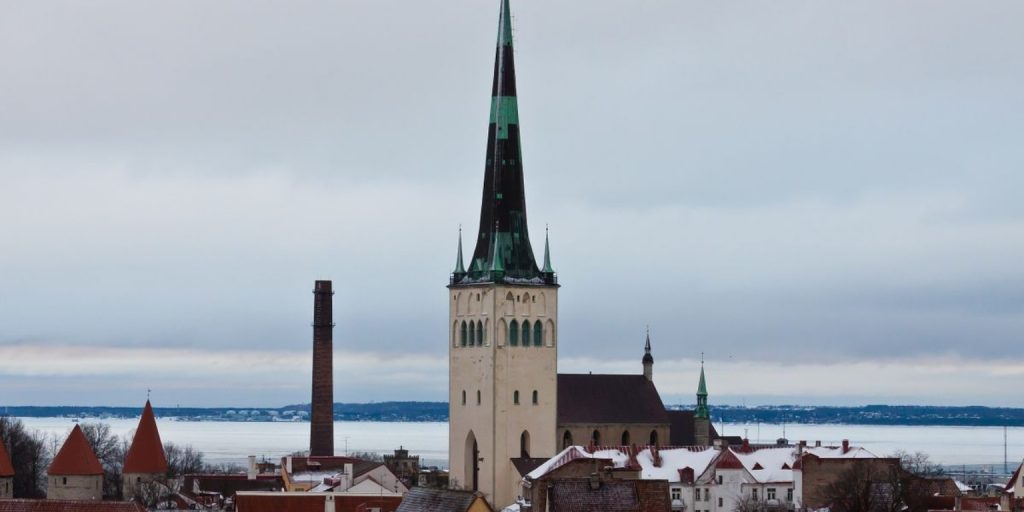
A Climb to an Unforgettable View
Today, this place is one of Tallinn’s most popular tourist attractions. While the church itself is beautiful and holds services, the main draw for many visitors is the climb to its observation platform. For a small fee, and during the warmer months, visitors can ascend a narrow, spiraling staircase to the top of the tower. The climb is a physical challenge, but the reward is immense.
From the observation platform, visitors are treated to an unparalleled 360-degree panoramic view of Tallinn. The entire Old Town spreads out like a medieval map, with its red-tiled roofs, cobblestone streets, and ancient walls all visible in stunning detail. In the distance, the modern city and the vast expanse of the Baltic Sea complete the breathtaking vista. The view from St. Olaf’s Church is a humbling reminder of the city’s history and its timeless beauty, offering a perspective that truly captures the heart and soul of Estonia’s capital.