
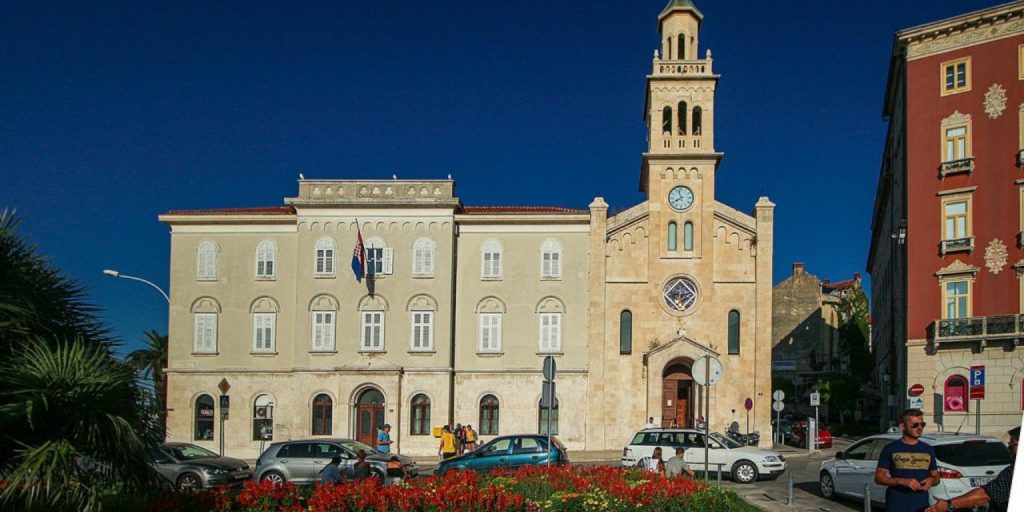
On the western edge of Split’s bustling Riva promenade, where the Adriatic Sea meets the city’s ancient stonework, stands a place of profound tranquility and historical depth: the Church and Monastery of St. Francis. This Franciscan complex is more than a religious site; it is a living chronicle of the city’s past, a sanctuary of art, and a revered resting place for some of Croatia’s most celebrated figures. Stepping into its peaceful confines offers a welcome escape from the vibrant energy of the waterfront and a journey through centuries of faith and culture.
A History of Resilience
The roots of the Church and Monastery of St. Francis reach back to a pivotal moment in the 13th century, when the Franciscan order established its presence in Split. The location itself is ancient, built upon the site of an early Christian church dedicated to St. Felix, a martyr from the time of Diocletian’s persecutions. Over the centuries, the monastery was tragically destroyed and rebuilt multiple times, a testament to the community’s resilience. The current structure, with its simple facade and narrow width, largely dates from a major reconstruction at the turn of the 20th century, which followed the original foundations.
The complex’s famous cloister, however, has a much older story. It dates to the 13th century and stands as a beautiful example of Romanesque and Gothic architecture. Its covered porch and slender columns provide a quiet oasis for contemplation, a stark contrast to the lively Riva just outside. The cloister has endured as a peaceful heart of the monastery, its simple, dignified style offering a sense of enduring peace that has comforted generations of friars and visitors.
A Treasury of Art and Croatian Heritage
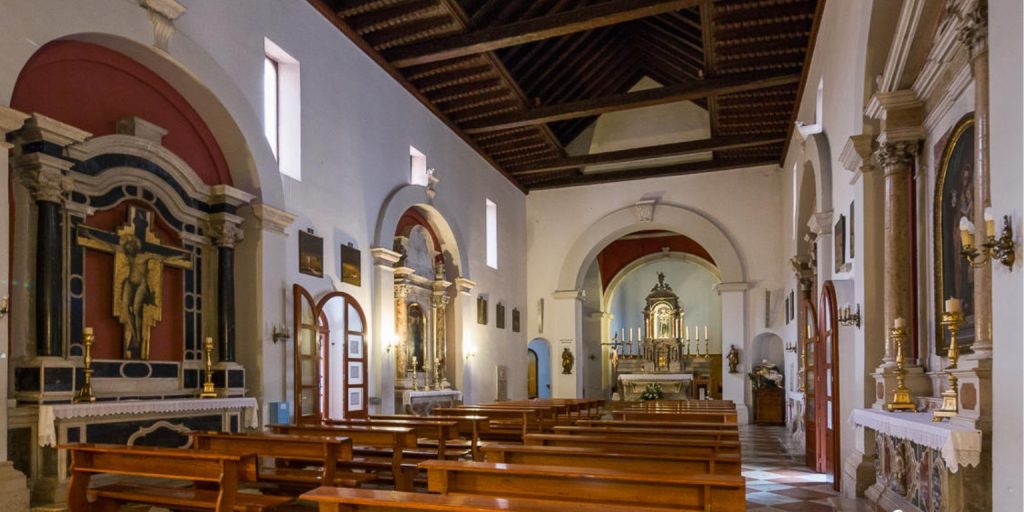
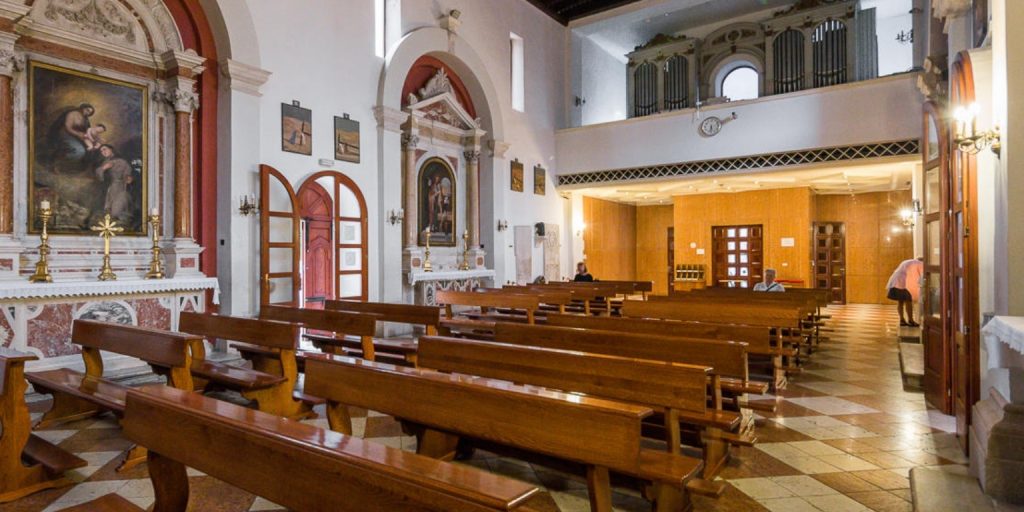
Inside the Church of St. Francis, visitors discover a treasure trove of art and history. Its most valuable work is a stunning 15th-century Gothic Crucifix, painted by Blaž Jurjev of Trogir, which hangs above one of the altars. The church also houses a unique Roman sarcophagus that depicts the Crossing over the Red Sea, a remarkable piece of ancient artistry.
However, the church’s greatest significance lies in its role as a burial ground for some of the most influential figures in Croatian history. For this reason, it is often referred to as the “Small Pantheon of the Croatian people.” Among those who found their final rest here are Marko Marulić, revered as the father of Croatian literature; Toma Archdeacon, a chronicler who documented medieval Split; and Ante Trumbić, a prominent politician and diplomat whose elegant sarcophagus was created by the renowned sculptor Ivan Meštrović. The presence of these great minds within its walls transforms the church into a place of national pilgrimage, a quiet space to honor the individuals who shaped Croatia’s cultural and political identity.
A Place of Spiritual and Cultural Importance
The Church and Monastery of St. Francis in Split serves not only as a spiritual center for the Franciscan community but also as a cultural landmark. The monastery complex includes a library that holds a vast collection of books and manuscripts, some dating back to the 16th century. While it is a working religious site, it is also a welcoming destination for tourists who seek to understand the city’s soul.
Located at the very beginning of the Riva, the church is a perfect starting point for exploring the city. It offers a unique connection between the bustling modern waterfront and the deep historical roots that lie just a few steps away. For anyone seeking to experience the true essence of Split, a visit to this serene and historically rich complex is a must. It is a place where every stone and every tomb tells a story, making the Church and Monastery of St. Francis a truly irreplaceable gem.