
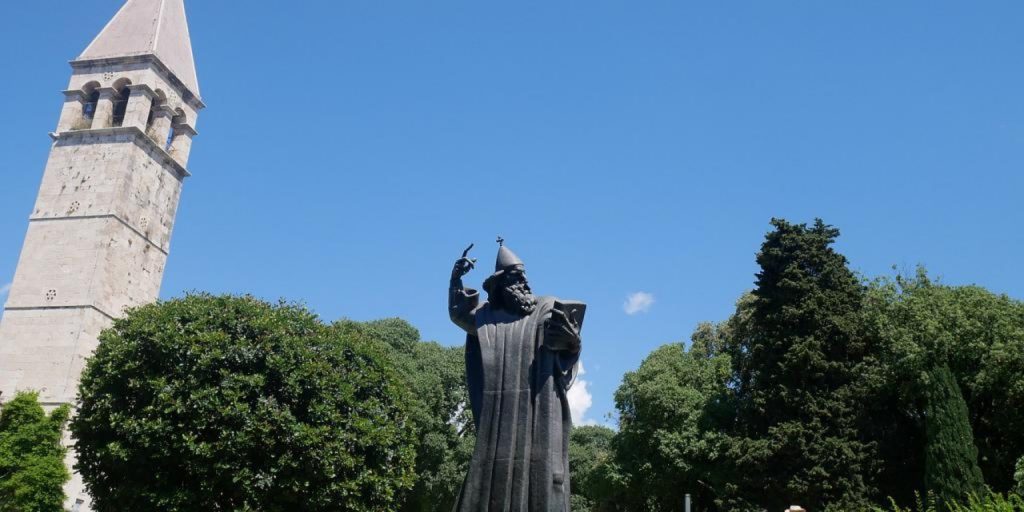
In the vibrant city of Split, where ancient Roman ruins meet modern Mediterranean life, few landmarks capture the imagination quite like the bronze statue of Grgur Ninski. Towering majestically outside the city’s ancient Golden Gate, this colossal monument is more than just a piece of art; it is a powerful symbol of Croatian national identity, a tribute to a defiant bishop, and a source of good luck for countless visitors. A visit to Split is simply not complete without a moment spent in its shadow and the fulfilling of a cherished local tradition.

A Champion of Croatian Language and Identity
The statue commemorates Grgur Ninski (Gregory of Nin), a 10th-century Croatian bishop who lived during a pivotal moment in the nation’s history. At a time when the Catholic Church insisted on Latin as the sole liturgical language, making it inaccessible to the common people, Grgur Ninski took a bold stand. He championed the use of the Old Church Slavonic language and the Glagolitic script in religious services, a defiant act against the Latin-dominated church hierarchy. This courageous effort was not just a linguistic preference; it was a fundamental fight for the preservation of Croatian culture and heritage.
Grgur’s legacy cemented his place as a hero and a symbol of resistance against foreign influence, ensuring that the faith and culture of the Croatian people were forever intertwined.

A Masterpiece by Ivan Meštrović
The artist behind this monumental work is Ivan Meštrović, widely regarded as one of the greatest Croatian sculptors of the 20th century. Unveiled in 1929, the statue stands at a commanding 8.5 meters (28 feet) tall, its imposing presence a visual representation of Grgur’s spiritual authority and unwavering resolve. Meštrović’s work captures the bishop in a moment of powerful declaration, his hand outstretched as if delivering an eternal blessing or a powerful sermon. The sheer scale and emotional depth of the sculpture make it a masterpiece that speaks to both history enthusiasts and art lovers alike.
The Tradition of Good Luck
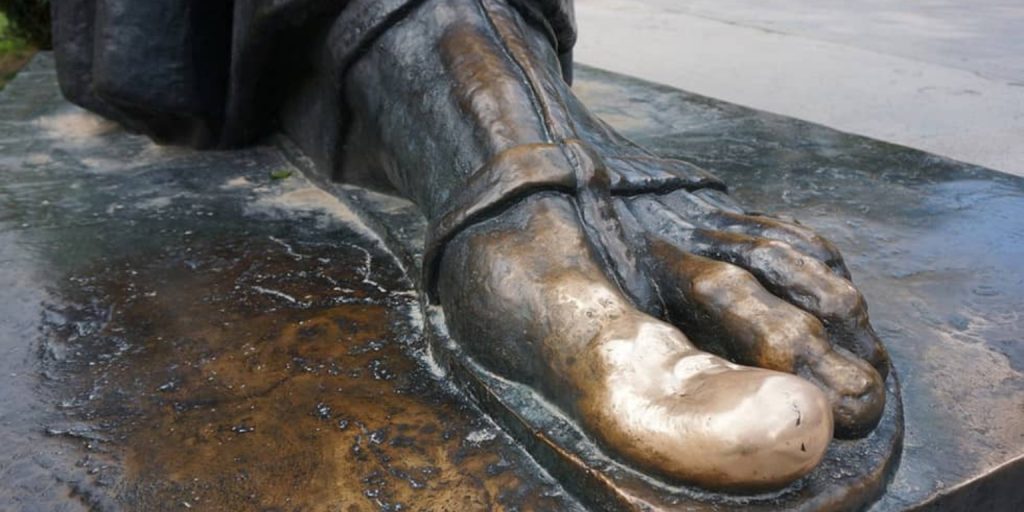
Of all the statue’s features, one stands out and has become a global phenomenon: its big toe. The bronze toe is noticeably shiny, polished to a brilliant gold by the hands of millions of visitors. According to local legend, rubbing the statue’s toe and making a wish brings good luck. The tradition is also believed to guarantee that you will one day return to Split. The constant flow of tourists, all eager to participate in this simple ritual, has transformed the statue into an interactive landmark. It is a tangible connection to the past, a moment of shared belief that links every person who has stood before the statue and touched its gleaming toe.
A Journey Through History and Culture
While the Grgur Ninski statue has become an iconic symbol of Split, its location holds significant historical context. It was originally placed in the central courtyard of Diocletian’s Palace, but after being removed during World War II, it was re-erected in its current spot outside the Golden Gate. This new location is fitting, as the gate was once the main ceremonial entrance to the palace, giving the statue a prominent and powerful position to greet visitors to the historic city. Today, it stands as the final stop for many city tours, serving as a reminder of the historical and cultural depth of Split and Croatia.
The Grgur Ninski statue is not just an artistic marvel; it is a living part of the city’s narrative. It represents the enduring spirit of a nation that fought to preserve its language and identity. For tourists and locals alike, it is a point of pride, a source of inspiration, and a promise of a lucky return to one of Europe’s most captivating cities.