
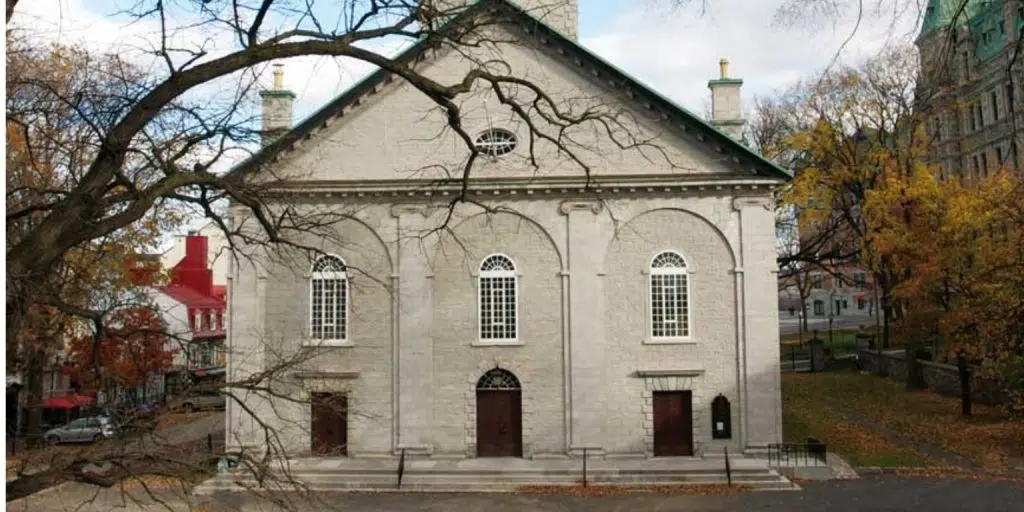
In the heart of historic Old Quebec, a city renowned for its French-Canadian heritage and Catholic landmarks, stands a monument that tells a different story. The Cathedral of the Holy Trinity de Québec, a stately and elegant Anglican cathedral, is a powerful symbol of the city’s complex history. As the first Anglican cathedral to be built outside the British Isles, this architectural gem is a cornerstone of the English-speaking community and a must-see for anyone exploring the city’s diverse and layered past. Its presence is a testament to the British influence that followed the Conquest of New France and a beautiful example of classical design in a distinctly North American setting.
A Symbol of the British Crown
The history of the Cathedral of the Holy Trinity is steeped in the political and religious shifts of the late 18th century. Following the British conquest of Quebec, the Crown sought to establish a strong Anglican presence in its new colony, a predominantly Catholic society. The project was commissioned by King George III himself, who not only provided the generous funding for its construction but also gifted the cathedral with an exceptional collection of Georgian silver communion service, a treasure that is still on display today.
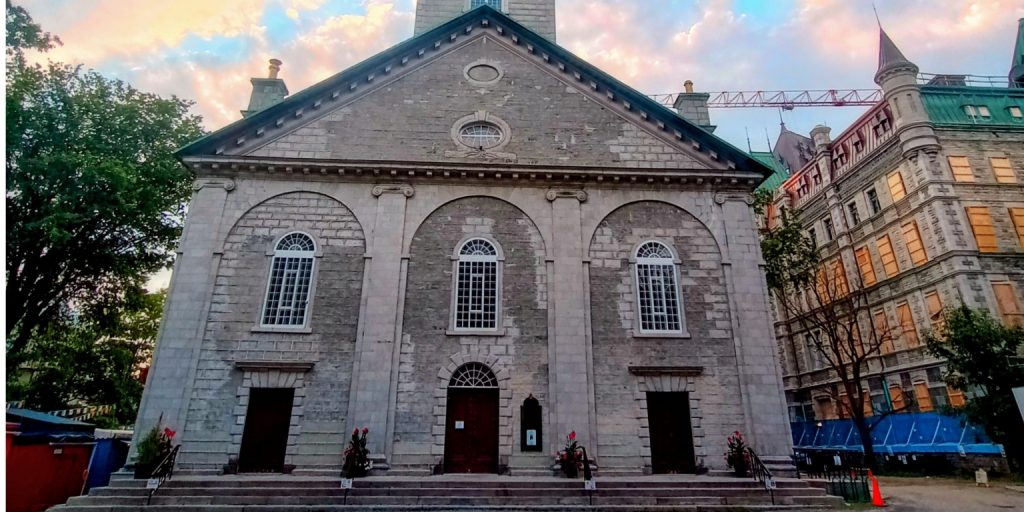
Construction began in 1800 and was completed in 1804. The cathedral was a deliberate architectural statement. Its design, drafted by two military engineers, Major William Robe and Captain William Hall, was a sophisticated example of Palladian architecture, a refined style of British classicism. The architects drew inspiration from London’s St. Martin-in-the-Fields, adapting its solemn dignity and elegant simplicity to the North American landscape. The result was a serene and perfectly symmetrical building that stood in stark contrast to the ornate Gothic Revival of many of its contemporaries.
An Interior of Understated Elegance
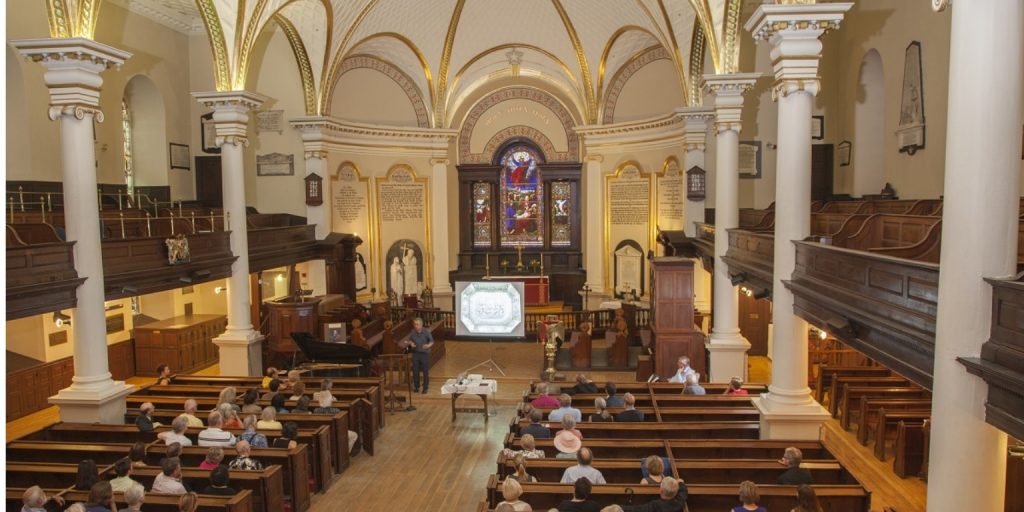
While the exterior of the cathedral is marked by its graceful simplicity, the interior is a haven of understated elegance and rich history. The nave is flanked by rows of Ionic columns, which support a vaulted ceiling, creating an open and airy atmosphere. The pews, carved from local oak, were once rented by parishioners, a practice common in the era. One of the most unique and historically significant features is the royal pew, located in the upper balcony and marked by the royal coat of arms of King George III. This pew remains reserved for members and representatives of the Royal Family, a living link to the cathedral’s origins.
The cathedral also boasts a number of other notable features. Its octagonal bell tower is home to the oldest change-ringing peal of bells in Canada, a set of eight bells cast in 1830 by the renowned Whitechapel Bell Foundry in London. The sound of these bells, which are still in operation, adds a melodious layer to the soundscape of Old Quebec. The cathedral’s impressive pipe organ, a Casavant organ installed in 1909, also contributes to the rich musical tradition that has long been a part of its services.
A National Historic Site and Cultural Beacon
The Cathedral of the Holy Trinity is more than just a place of worship; it is a vital part of the city’s cultural and historical fabric. It was designated a National Historic Site of Canada in 1989, a recognition of its historical and architectural values. Today, the cathedral continues to be the mother church for the Anglican Diocese of Quebec and a welcoming space for both its congregation and the public.
Cathedral of the Holy Trinity visitors can explore the cathedral’s history through guided and self-guided tours, which highlight the impressive architecture and its many treasures, including the “King’s Gift” silver collection. The cathedral also serves as a cultural beacon, hosting a variety of events, from classical concerts to art exhibitions, making it a hub of community life in Old Quebec. This remarkable cathedral stands not only as a testament to the past but as a vibrant and enduring part of the city’s present.