
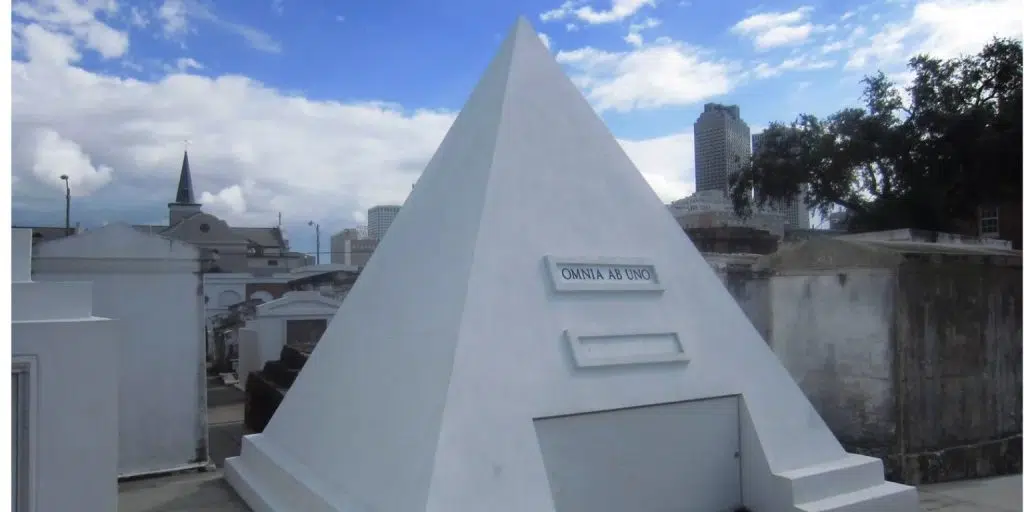
In a city renowned for its above-ground cemeteries, where history and mystery are etched into every crumbling tomb, one modern mausoleum stands out in stark and enigmatic contrast. The Nicolas Cage pyramid tomb in New Orleans has become an unofficial landmark, a curious monument that perfectly encapsulates the city’s blend of the historical and the eccentric. Located in the hallowed grounds of St. Louis Cemetery No. 1, this nine-foot-tall, stark white pyramid is a testament to the actor’s flamboyant reputation and a subject of endless fascination for locals and tourists alike.
A Cemetery of Legends and Lore
To understand the tomb, one must first understand its location. St. Louis Cemetery No. 1 is the oldest and most famous cemetery in New Orleans, a sprawling city of the dead established in 1789. Its narrow lanes and ornate, above-ground crypts are the final resting place for many of the city’s most significant historical figures, including the first mayor, Etienne de Boré, and the legendary Voodoo Queen, Marie Laveau. The cemetery’s atmosphere is thick with history, superstition, and a unique Creole culture that views death not as an ending, but as a continuation of life.
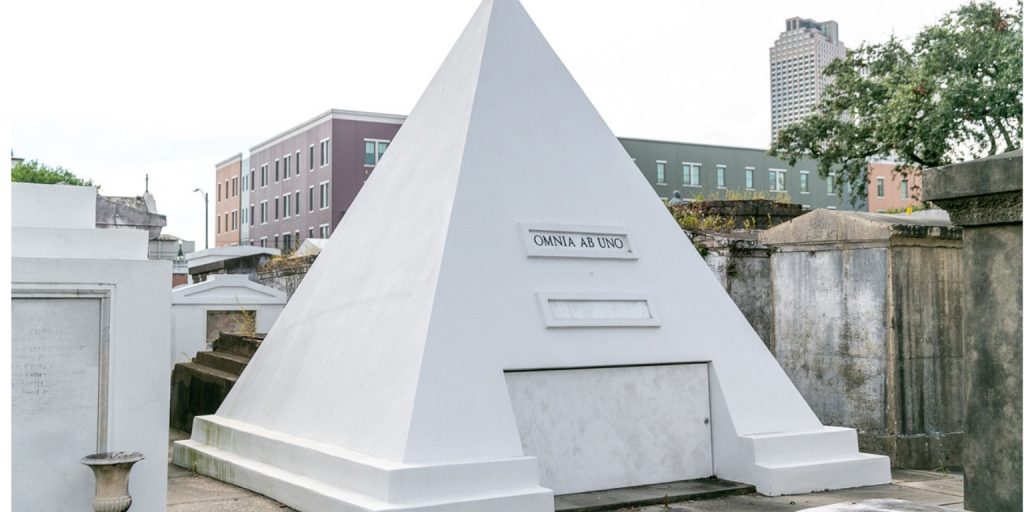
It is in this sacred and ancient context that the Nicolas Cage pyramid tomb was erected in 2010. Its modern, minimalist design and pristine white surface stand in stark opposition to the patina and moss of the centuries-old tombs surrounding it. This contrast is precisely what makes it so captivating and, to some, controversial. Many purists and locals initially bristled at the idea of a Hollywood celebrity’s futuristic monument disrupting the historical fabric of the cemetery. However, like so many other unconventional elements that have come to define New Orleans, the tomb has since been absorbed into the city’s rich and complicated tapestry.
The Mysteries of the Pyramid
The reasons behind the Pyramid Tomb construction are as mysterious and varied as the actor himself. Nicolas Cage has never publicly spoken about his motivation, allowing a number of compelling theories to fill the vacuum of information.
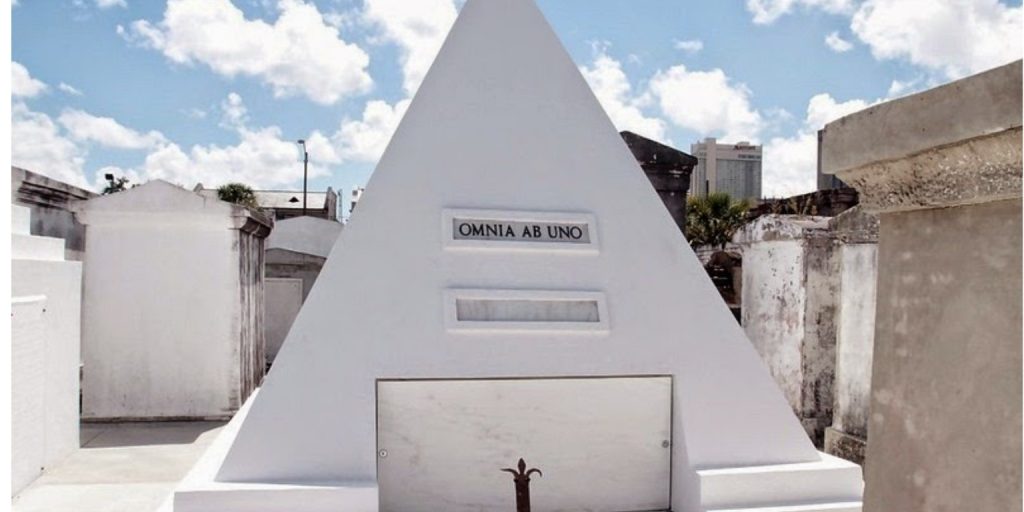
One of the most persistent theories links the tomb to Cage’s cinematic work. Fans of the National Treasure film series, which deals with secret symbols and ancient mysteries, have drawn a connection to the pyramid’s shape. This theory is reinforced by the tomb’s sole inscription: a cryptic Latin phrase, “Omnia Ab Uno,” which translates to “Everything From One.” This phrase, a well-known Masonic motto, only deepens the speculation about Illuminati ties and hidden knowledge, appealing to the actor’s on-screen persona as a seeker of arcane truths.
A more grounded, but equally fascinating, theory connects the tomb to one of Cage’s infamous real estate acquisitions: the notoriously haunted LaLaurie Mansion. Cage once owned the gruesome French Quarter mansion, which is said to be haunted by the spirits of enslaved people tortured there in the 19th century. According to local lore, Cage’s purchase of the tomb, located just steps away from the grave of Voodoo Queen Marie Laveau, was an attempt to seek her protection from the vengeful spirits that allegedly drove him from the mansion.
A Landmark for the Living
Regardless of the true reason, thePyramid Tomb has become a pilgrimage site for fans of the eccentric actor. Tourists on guided tours—the only way to legally enter the cemetery—make a point of visiting the tomb, which is often adorned with red lipstick marks left by admirers. The pyramid has cemented itself not only as an oddity but as an integral part of the New Orleans cemetery experience, a tangible representation of a living celebrity’s fascinating and enduring connection to a city that celebrates both life and death in a way no other can. It is a monument that invites us to ponder not just the actor’s legacy, but the very nature of mystery, memory, and immortality itself.