
The Elbphilharmonie, a monumental concert hall that seems to float on the waters of the Elbe River, is the centerpiece of Hamburg’s urban revitalization. More than just a building, it is an architectural and acoustic marvel that has transformed the city’s skyline and cemented its status as a leading cultural hub. The “Elphi,” as it is affectionately known, is a powerful symbol of ambition, a place where the gritty industrial past of a port city meets a soaring, modern, and artistic future.
A Striking Design of Contrasts
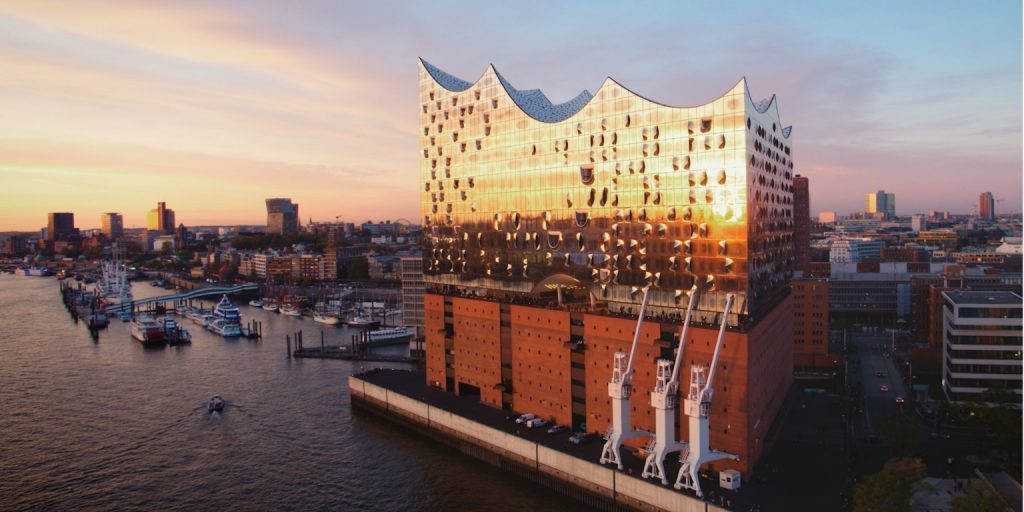
The design of the Elbphilharmonie is a study in brilliant contrasts. Architects Herzog & de Meuron chose to build the new concert hall on top of an existing brick warehouse, the Kaispeicher A, which had stood on the site since 1966. This choice was a deliberate and poetic nod to Hamburg’s maritime heritage. The robust, dark brick of the old warehouse provides a solid foundation, its unadorned surface a tribute to the city’s industrial past.
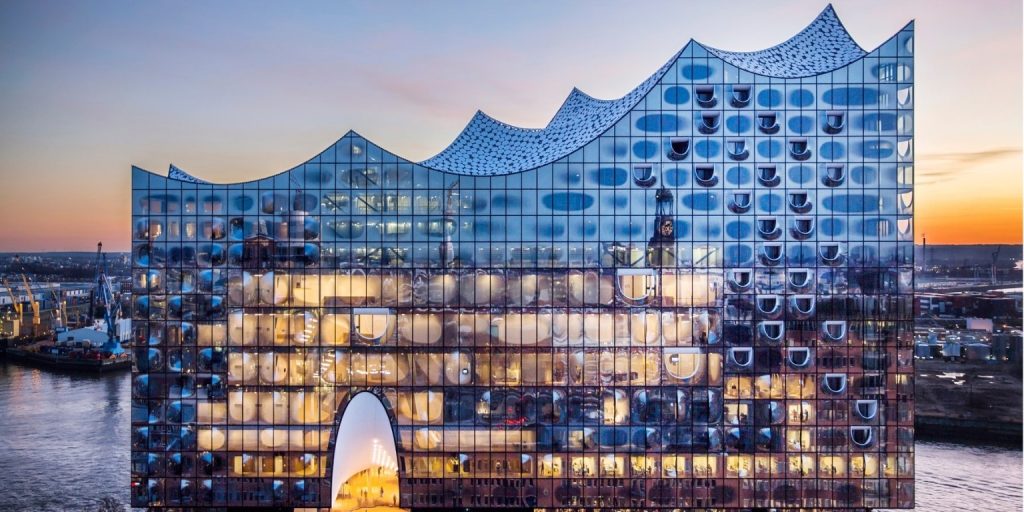
Rising from this brick base is a spectacular glass structure whose curved, wavy facade gives the building its distinctive look. The glass panels, some of which are subtly colored and reflect the sky, create a shimmering effect that changes with the light. The shape of the roof, with its sharp peaks and gentle curves, evokes the sails of ships, icebergs, or even waves, all powerful visual metaphors for a port city. This fusion of old and new—the heavy brick and the light, transparent glass—is at the core of the building’s aesthetic genius.
The Plaza: A Public Gateway to the Sky
One of the most innovative features of the Elbphilharmonie is its commitment to public accessibility. A major part of the building’s design is the Plaza, a publicly accessible viewing platform located between the brick base and the glass superstructure. At a height of 37 meters (121 feet), the Plaza provides a stunning, open-air promenade that offers a complete 360-degree panorama of the harbor, the city, and the river.
Visitors are transported to the Plaza via the “Tube,” a long, curving escalator that is an architectural experience in itself. As passengers ascend through the brightly lit, seemingly endless tunnel, they are gradually disconnected from the ground, only to emerge onto a vast terrace with breathtaking views. The Plaza is more than just a waiting area; it is a destination in its own right, a free urban space that allows residents and tourists alike to appreciate the sheer scale of the building and its spectacular location.
An Acoustic and Architectural Triumph
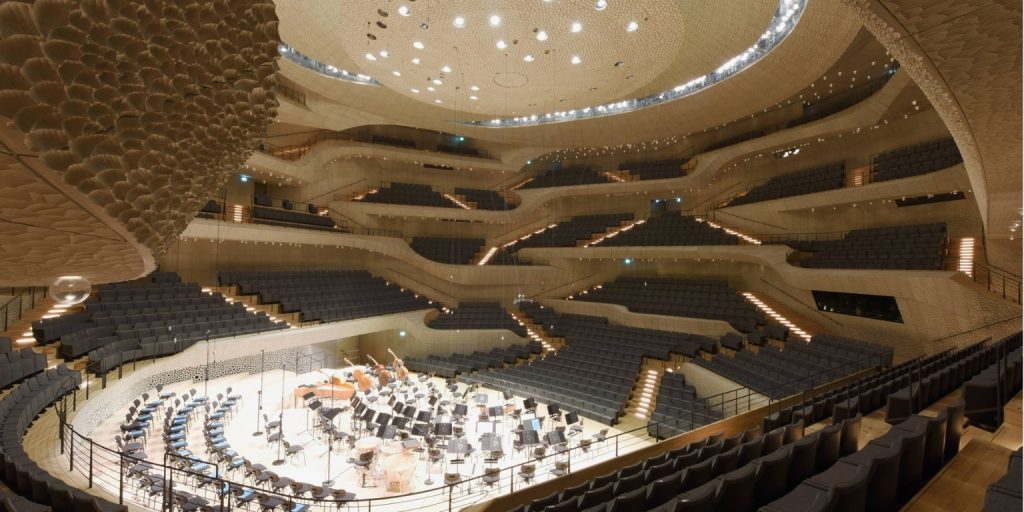
The heart of the Elbphilharmonie is its Grand Hall, a space that has been hailed as one of the finest concert halls in the world. Designed by renowned acoustician Yasuhisa Toyota, the hall is a testament to the power of sound engineering. The interior is characterized by a unique “vineyard” seating arrangement, where the orchestra is placed in the center and the audience is seated on tiers that rise like a terraced vineyard. This design creates an intimate atmosphere and allows for perfect acoustics for every seat.
The hall’s interior walls and ceiling are covered with over 10,000 gypsum fiber panels, each one unique and meticulously crafted to ensure the perfect diffusion of sound. This acoustic “skin” is a work of art in itself, and it is a crucial component of the hall’s success. The building also houses a smaller Recital Hall and a Studio, which host a wide range of musical performances from chamber music to jazz and pop.
A Symbol of Urban Revival
The Elbphilharmonie was a project of immense complexity and cost, with a construction history marked by significant delays and budget overruns that led to widespread public criticism. However, since its opening in January 2017, it has proven to be an unqualified success. It has attracted a huge number of visitors, both for concerts and for the Plaza, and has become a powerful economic driver for the surrounding HafenCity district, an area that was once a neglected port.
The Elbphilharmonie is a powerful symbol of Hamburg’s commitment to culture and urban renewal. It is a monument that honors the city’s past while courageously looking to the future. It stands as a powerful reminder that ambitious projects, though they may face challenges, can ultimately become the iconic landmarks that define a city for generations.