
Kaleiçi, Antalya's walled old town, slopes from the busy centre down to the Roman harbour, and its lanes hold more than two thousand years of history in a small space. This guide covers six places in and around it: a Roman gate, the clock tower, the Seljuk minaret that became the city's symbol, two small museums, one about toys and one about Ottoman life, and a Roman tower above the sea. The city itself was founded in the 2nd century BC by King Attalus II of Pergamon, who gave it the name Attaleia.
Hadrian's Gate
This triple marble arch was built in AD 130 to honour the emperor Hadrian, who visited the city that year. Locals call it Üçkapılar, the Three Gates. For centuries it was hidden inside the later city walls, and it only came fully into view again when those walls were taken down in the 20th century. It is one of the best-preserved Roman monuments on Turkey's south coast.
- The ruts worn by cart wheels into the ancient paving stones under the arches.
- The carved rosettes and flowers on the coffered ceilings of the arches, and the two towers on either side.
Clock Tower
The clock tower (Saat Kulesi) stands at Kalekapısı, the main entrance to the old town, on a stretch of the medieval city walls. The lower part is a stone tower of the old fortifications; the clock was added on top in the early 20th century, in the late Ottoman period. Today it is a meeting point and the place where the modern city and Kaleiçi meet. The tram stops right beside it, which makes it an easy place to start.
- The difference between the old stone base and the newer upper section with the clock faces.
Yivli Minaret
The Yivli Minare, or Fluted Minaret, is the symbol of Antalya and appears on its coat of arms. It was built in the early 13th century under the Seljuk sultan Alaeddin Keykubad I, after the Seljuks took the city. Its tall brick shaft has eight deep flutes and was once decorated with blue and turquoise glazed tiles, some of which survive. The mosque next to it was rebuilt in the 14th century.
- The traces of turquoise tiles high on the minaret.
- The terrace nearby, with a view over the harbour and the bay.
- The rest of the complex around the minaret, with 14th-century tombs and a former dervish lodge (Mevlevihane) now used as an art gallery.
Antalya Toy Museum
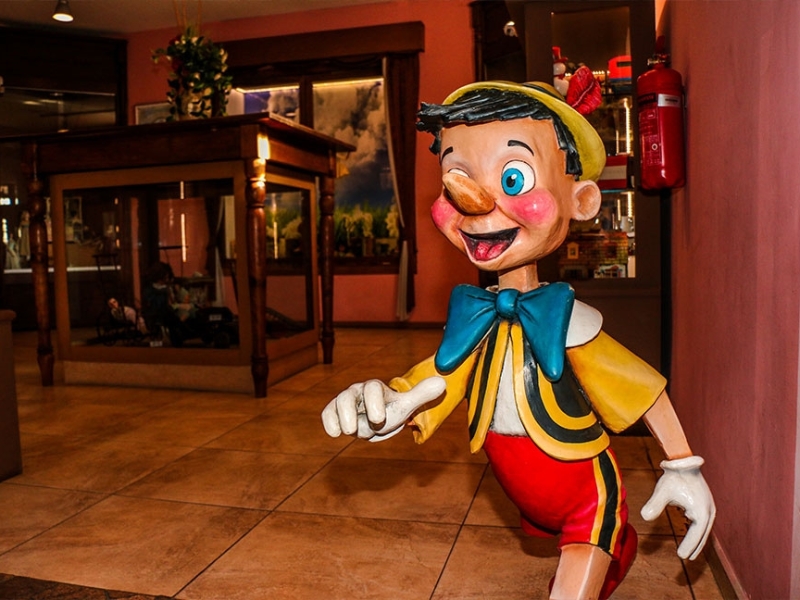
The Toy Museum is a small museum run by the Antalya Metropolitan Municipality near the Kaleiçi marina, opened around 2011. Its collection of more than 1,500 toys was bought at auctions around the world. The oldest pieces date from the 1800s, and they include early industrial toys from the United States, Germany and Japan, as well as handmade toys from Anatolia. It is a good stop with children, and adults often recognise the toys of their own childhood.
- The tin toys and dolls from the 19th and early 20th centuries, next to cartoon figures from more recent decades.
Suna and İnan Kıraç Kaleiçi Museum
This museum, run by Koç University's research institute in Antalya, occupies a restored traditional Antalya house and the former Greek Orthodox church of Hagios Georgios (St George) next door. The church was rebuilt in 1863, according to its inscription, and fell out of use after the population exchange of the 1920s. Suna and İnan Kıraç bought it in 1991, restored it and opened it as an exhibition hall in 1996.
The house shows scenes of everyday Ottoman life in Antalya, and the church hosts temporary exhibitions on the history and cultures of the region. It is not on our scavenger hunt route, but it lies in the middle of Kaleiçi, a short walk from several of the stops.
- The vaulted nave of the old church and its upper gallery, once reserved for women.
Hıdırlık Tower
At the south-western edge of Kaleiçi, above the cliffs, stands Hıdırlık Tower, a round Roman tower on a square base, from the 2nd century AD. Its original purpose is not certain: it may have been a tomb, a lighthouse or part of the defences, and it was later built into the city walls. Next to it is Karaalioğlu Park, and from here you get one of the best sunset views over the bay towards the mountains.
- The view from the cliff edge over the Mediterranean and the Taurus Mountains.
- Karaalioğlu Park itself, a large green space along the top of the cliffs, popular with families in the evening.
How to see them in one walk
Start at Republic Square, then walk to the Clock Tower at Kalekapısı. The Yivli Minaret is a few steps away. Head into Kaleiçi and follow the lanes downhill to the harbour and the Toy Museum near the marina. Climb back up through the old town, past the Kaleiçi Museum, to Hadrian's Gate on its eastern edge. From there walk south along Atatürk Caddesi to Karaalioğlu Park and Hıdırlık Tower for the view. The lanes are steep in places and the summer heat is strong, so start early or go in the late afternoon. Many old Ottoman houses in Kaleiçi are now small hotels and courtyard cafés, so a tea stop is never far away.
See Antalya with World City Trail
Our Antalya scavenger hunt turns Kaleiçi into a game you play on your phone. The route links 10 stops, from Republic Square to Hıdırlık Tower, and Hadrian's Gate, the Clock Tower, the Yivli Minaret, the Toy Museum and Hıdırlık Tower are all stops, along with the statue of King Attalus II, the Iskele Mosque, the Yenikapı Greek church and the Atatürk House Museum. At each stop you solve a puzzle and learn a story, at your own pace.
There is also a self-guided walking tour and an outdoor escape game in Antalya, for people who prefer a different format.
Play the Antalya scavenger hunt →
Take the self-guided walking tour of Antalya →
Play the outdoor escape game in Antalya →
Facts checked in October 2026.