
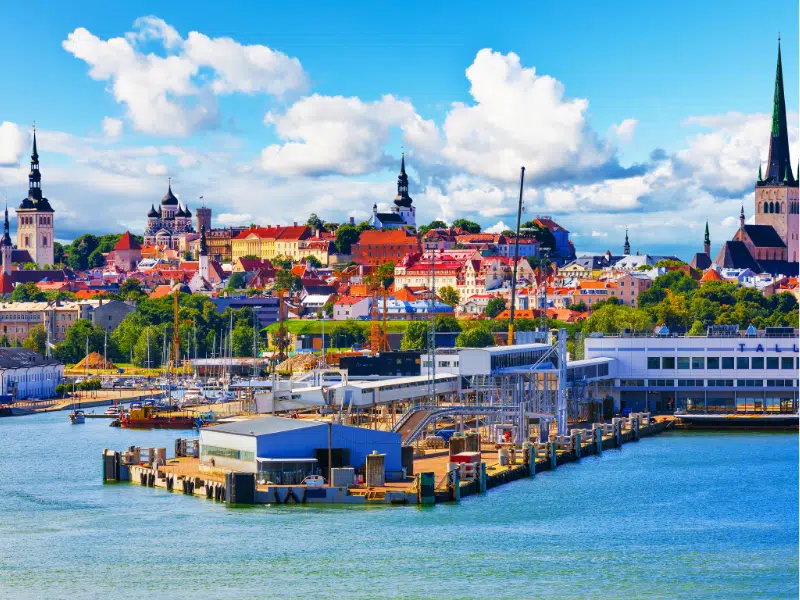
Tallinn's Old Town is one of the most complete medieval town centres in Northern Europe, with its walls, towers and Gothic town hall still standing. For centuries it was a merchant city of the Hanseatic League; today it is the capital of one of the most digital countries in the world. Here are the facts and stories that make the city special.
10 curiosità su Tallinn
- Un municipio gotico del 1404: il Municipio di Tallinn fu completato nel 1404 ed è il più antico municipio dei Paesi baltici e della Scandinavia.
- Il Vecchio Tommaso sulla guglia: dal 1530 una banderuola a forma di guardia cittadina, Vana Toomas, veglia sulla città dalla cima della torre del municipio. La figura che si vede oggi è una copia.
- Una farmacia dal Medioevo: la Farmacia del Municipio, sulla piazza, è citata per la prima volta nel 1422 ed è una delle farmacie più antiche d’Europa ancora in attività.
- La questione dell’albero di Natale: Tallinn sostiene che la Confraternita delle Teste Nere, una corporazione di mercanti celibi, eresse un albero di Natale nella piazza del Municipio nel 1441, uno dei primi in Europa. Riga rivendica qualcosa di simile, e l’amichevole rivalità continua.
- Walls that still stand: about 1.85 kilometres of the medieval town wall and 26 of its defensive towers survive, which makes Tallinn's fortifications some of the best preserved in Europe.
- Peek into the kitchen: the cannon tower Kiek in de Kök takes its Low German name, meaning 'peek into the kitchen', from the guards who could look down into the kitchens of the houses below.
- Maybe once the tallest building in the world: in the 16th century the spire of St Olaf's Church rose to about 159 metres, and some historians believe it was the world's tallest building from 1549 until 1625, when lightning set it on fire. It has been struck by lightning at least ten times.
- Una cattedrale di fronte al parlamento: la cattedrale ortodossa russa di Aleksandr Nevskij, su Toompea, fu costruita tra il 1894 e il 1900, quando l’Estonia faceva parte dell’Impero russo. Sorge proprio di fronte al castello di Toompea, sede del parlamento estone.
- Un pioniere digitale: Skype è stato creato da ingegneri estoni, e nel 2005 l’Estonia è diventata il primo Paese a permettere il voto online in elezioni nazionali.
- La Porta Viru: le due torri rotonde in fondo a via Viru sono ciò che resta di un sistema di porte che un tempo proteggeva l’ingresso orientale della città medievale.
La leggenda del vecchio del lago Ülemiste
Lake Ülemiste lies on the edge of Tallinn, above the Old Town. Legend says a grey old man lives in its waters. Once a year, on a dark autumn night, he walks up to the town gate and asks the guard whether the city is finished yet. The guard must always answer that it is not, and that there is still a great deal of work to do. If the old man ever hears that Tallinn is complete, he will let the lake's waters loose and drown the city. That, so the story goes, is why Tallinn is never quite finished, and why there is always something being built somewhere.
Toompea e la Città Bassa in breve
Medieval Tallinn was really two towns. On the limestone hill of Toompea lived the nobles and the bishop, around the castle that now houses Estonia's parliament. Below lay the Lower Town, a Hanseatic city of merchants and craftsmen with its own laws, council and walls. The two sides often quarrelled, and the tower at the foot of Pikk jalg, the Long Leg, has a gate that could be shut between them. Today you can walk up either Pikk jalg or the steep, stepped Lühike jalg, the Short Leg, and see both towns in a few minutes.
Cosa mangiare a Tallinn
- Pane di segale: il leib, scuro e compatto, accompagna quasi ogni pasto estone, e molti ristoranti lo fanno in casa.
- Kiluvõileib: una tartina di spratti su pane di segale con burro, uovo ed erbe, uno spuntino estone classico.
- Verivorst: sanguinaccio servito con marmellata di mirtilli rossi, piatto tradizionale di Natale.
- Kama: un mix di farine tostate di cereali e piselli, mescolato con kefir o latticello a colazione o come dessert.
- Vana Tallinn: un liquore scuro e dolce a base di rum, da bere liscio, nel caffè o sul gelato.
Da sapere prima di partire
- Tallinn è un porto crocieristico molto frequentato, quindi il centro storico è più affollato a metà giornata. Mattina e sera sono molto più tranquille.
- Per la classica vista sui tetti rossi e sui campanili, vai ai belvedere di Kohtuotsa e Patkuli, su Toompea.
- Il Palazzo di Kadriorg, costruito per Pietro il Grande a partire dal 1718, si trova in un grande parco a pochi minuti di tram dal centro.
- La Telliskivi Creative City, in vecchie fabbriche vicino al centro storico, è piena di caffè, negozietti e street art, e dal porto partono traghetti per Helsinki più volte al giorno.
Scopri Tallinn con World City Trail
La nostra caccia al tesoro a Tallinn trasforma questi luoghi in un gioco sul tuo telefono. Il percorso collega 10 tappe e dura circa due ore, con circa 38 minuti di cammino, passando da luoghi come la Porta Viru, la cattedrale di Aleksandr Nevskij e la piazza del Municipio.
A ogni tappa risolvi un enigma e ascolti una breve storia, al tuo ritmo. Puoi iniziare quando vuoi.
Gioca alla caccia al tesoro di Tallinn →
Fatti verificati a ottobre 2026.