
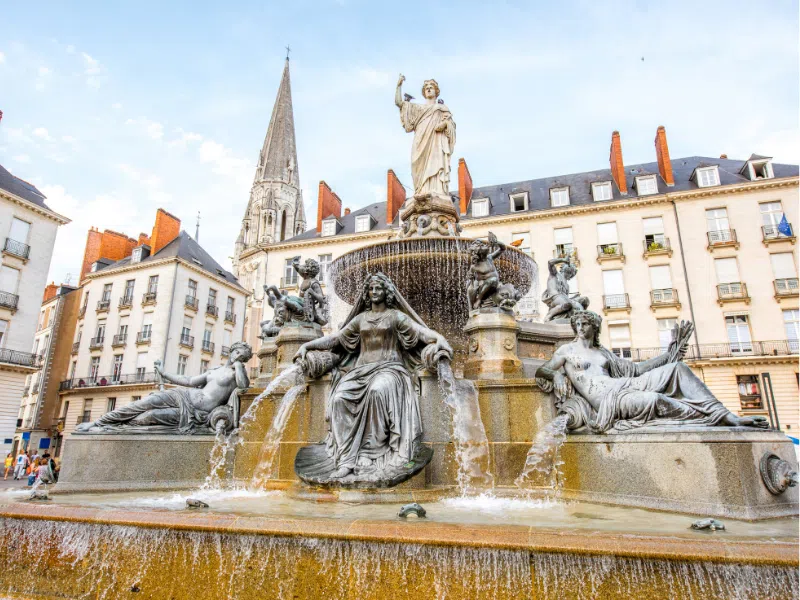
Nantes was the capital of the Dukes of Brittany, then a great Atlantic port, and today it is better known for a 12-metre mechanical elephant than for its ships. Its castle, its white cathedral and its streets of merchants' houses sit on the Loire, a short drive from the ocean. Here are the facts and stories that make the city special.
10 curiosità su Nantes
- Un editto che cambiò la Francia: nel 1598 il re Enrico IV firmò l’Editto di Nantes, che concedeva libertà di culto ai protestanti francesi e chiudeva decenni di guerre di religione. Luigi XIV lo revocò nel 1685.
- A ducal castle in the city centre: the Château des ducs de Bretagne was begun in 1466 by Duke Francis II. Its white walls and moat now hold the city's history museum.
- Una cattedrale costruita in 457 anni: la prima pietra della Cattedrale di Saint-Pierre-et-Saint-Paul fu posata nel 1434, e l’edificio fu completato solo nel 1891.
- Due incendi in una vita: un incendio del tetto nel 1972 portò a un lungo restauro della cattedrale, e il 18 luglio 2020 un incendio doloso distrusse il suo grande organo, costruito nel 1621.
- Una tomba ducale in marmo bianco: nella cattedrale si trova la tomba del duca Francesco II e di sua moglie Margherita di Foix, realizzata all’inizio del XVI secolo dallo scultore Michel Colombe.
- Qui nacque Jules Verne: l’autore di Ventimila leghe sotto i mari nacque a Nantes l’8 febbraio 1828. Un museo affacciato sulla Loira è dedicato a lui.
- La patria del Petit Beurre: l’azienda di biscotti LU, da Lefèvre-Utile, creò il suo famoso biscotto al burro a Nantes nel 1886. La torre della vecchia fabbrica oggi ospita il centro d’arte Lieu Unique.
- A port with a dark past: in the 18th century Nantes was France's leading slave-trading port. In 2012 the city opened the Memorial to the Abolition of Slavery along the Loire quays.
- Una galleria su tre livelli: il Passage Pommeraye, aperto nel 1843, collega due strade a quote diverse con scale, gallerie e statue sotto un tetto di vetro.
- Capitale verde: Nantes è stata Capitale verde europea nel 2013, e una linea verde dipinta sul selciato guida i visitatori tra opere d’arte e monumenti.
Anna di Bretagna, duchessa e due volte regina
Anne of Brittany was born in the castle in 1477, the daughter of Duke Francis II. She became duchess at eleven, when Brittany was still an independent duchy that France wanted to absorb. To keep the peace she married King Charles VIII of France in 1491, and after his death she married his successor, Louis XII, in 1499, so she was queen of France twice. She fought to keep Brittany's rights and is still a heroine for many Bretons. When she died in 1514, she asked for her heart to be brought back to Nantes; it came in a gold reliquary and was placed with her parents. Brittany was formally united with France in 1532.
Les Machines de l'Île, explained
On the Île de Nantes, in the halls of the city's old shipyards, artists build giant machines inspired by Jules Verne and Leonardo da Vinci. The best known is the Great Elephant, launched in 2007: 12 metres tall and 8 metres wide, made of 45 tonnes of wood and steel, it carries up to 49 passengers on a slow walk, swinging its trunk and spraying water. Nearby, the Carousel of Marine Worlds, opened in 2012, stacks giant squid, crabs and fish on three levels nearly 25 metres high. You can watch the workshop through a gallery and see the next machines being built.
Cosa mangiare a Nantes
- Beurre blanc: una salsa di burro, scalogno e vino bianco o aceto, nata nella zona di Nantes e servita con il pesce della Loira.
- Muscadet: il vino bianco secco dei vigneti a sud-est della città, l’abbinamento classico per ostriche e frutti di mare.
- Gâteau nantais: una torta densa di mandorle, bagnata nel rum e glassata, nata ai tempi in cui zucchero e rum arrivavano dal porto.
- LU biscuits: Petit Beurre and other LU biscuits are sold all over town, and you can see the brand's history in the old factory tower.
- Berlingots nantais: piccole caramelle dure a forma di piramide, dai colori vivaci, vendute in scatole di latta come souvenir.
Da sapere prima di partire
- Il cortile e i bastioni del castello si visitano liberamente. Per il museo di storia all’interno serve un biglietto.
- Prendi il Navibus, la navetta fluviale, dal centro attraverso la Loira fino a Trentemoult, un vecchio villaggio di pescatori dalle case colorate.
- D’estate il festival Le Voyage à Nantes aggiunge opere temporanee lungo la linea verde, e il percorso d’arte Estuaire segue la Loira fino a Saint-Nazaire.
Scopri Nantes con World City Trail
La nostra caccia al tesoro a Nantes trasforma questi luoghi in un gioco sul tuo telefono. Il percorso collega 10 tappe e dura circa due ore, con circa 36 minuti a piedi, e passa tra l’altro per la Cattedrale di Saint-Pierre-et-Saint-Paul.
A ogni tappa risolvi un enigma e ascolti una breve storia, al tuo ritmo. Puoi iniziare quando vuoi.
Gioca alla caccia al tesoro di Nantes →
Fatti verificati a ottobre 2026.