
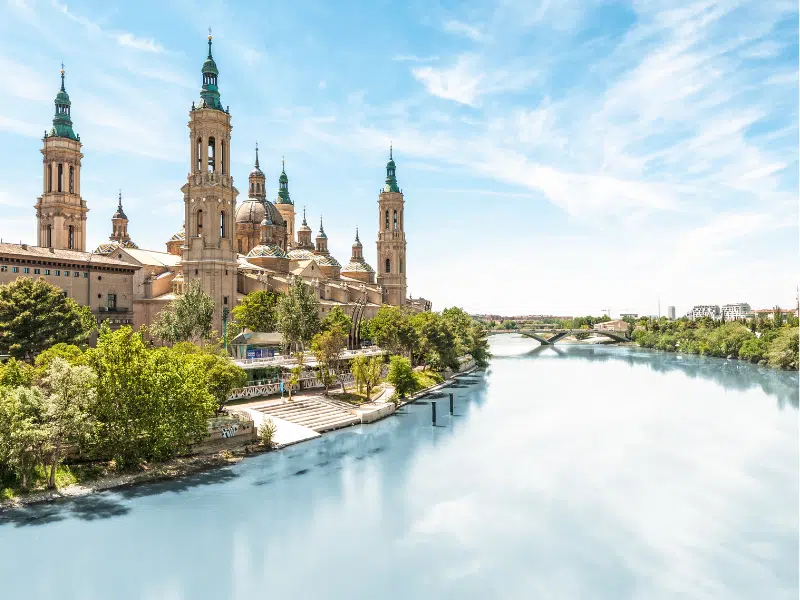
Zaragoza has been a Roman colony, the seat of an Islamic kingdom and the capital of the Kingdom of Aragon, and each era left a building you can still walk into. It is Spain's fifth-largest city, yet its centre is compact, strung along the River Ebro around one of the country's best-known basilicas. Here are the facts and stories that make it special.
10 ciekawostek o Saragossie
- Nazwa od cesarza: Rzymianie założyli miasto około 14 roku p.n.e. jako Caesaraugusta, na cześć cesarza Augusta. Z biegiem wieków nazwa przeszła w arabskie Saraqusta, a w końcu w Zaragoza.
- Filar z nieba: według tradycji 2 stycznia roku 40 Maryja ukazała się apostołowi Jakubowi nad brzegiem Ebro i dała mu kolumnę z jaspisu. Bazylika del Pilar zbudowana jest wokół niej.
- Cztery wieże i jedenaście kopuł: bazylikę budowano głównie w latach 1681–1872. Część sklepień wokół jej Świętej Kaplicy namalował młody Francisco de Goya.
- Bomby, które nie wybuchły: w 1936 roku, podczas hiszpańskiej wojny domowej, na bazylikę zrzucono trzy bomby i żadna nie wybuchła. Dwie wciąż są wystawione w środku.
- Goya's home ground: Francisco de Goya was born in 1746 in Fuendetodos, a village south of Zaragoza, and trained as a painter in the city before making his name in Madrid.
- Islamski pałac z parlamentem: Aljafería powstała głównie w latach 1065–1081 dla al-Muqtadira, władcy taify Saragossy. Później była pałacem królewskim i siedzibą inkwizycji, a dziś mieszczą się w niej Cortes de Aragón, parlament regionalny.
- A tower from an opera: the Aljafería's Troubadour Tower is named after the 1836 play El trovador by Antonio García Gutiérrez, which Verdi turned into his opera Il trovatore.
- Mudéjar heritage: in 2001 the Aljafería, La Seo cathedral and the church of San Pablo were added to the UNESCO World Heritage site 'Mudéjar Architecture of Aragon', known for its patterned brick and glazed tiles.
- Arena z 1764 roku: Plaza de Toros de la Misericordia otwarto w 1764 roku, co czyni ją jedną ze starszych aren w Hiszpanii; mieści ponad 10 000 widzów.
- A world's fair about water: in 2008 Zaragoza hosted Expo 2008, themed on water and sustainable development, on a meander of the Ebro. Several of its buildings, such as the Bridge Pavilion by Zaha Hadid, still stand.
Oblężenia Saragossy i Agustina z Aragonii
In the summer of 1808, Napoleon's troops laid siege to Zaragoza, and the city held out far longer than anyone expected. Its best-known story is about Agustina, a young woman bringing supplies to the defenders at the Portillo gate. Seeing that the gunners there had fallen, she fired a cannon at the advancing French herself and rallied the defence. The French withdrew that August but returned in December, and after a second siege of house-to-house fighting and disease the city surrendered in February 1809. Agustina de Aragón became a national heroine, Goya drew her in his series The Disasters of War, and she is buried in the church of the Portillo.
Mercado Central w pigułce
Zaragoza's central market, designed by Félix Navarro and opened in 1903, is a modernist hall of iron and glass on the edge of the old town. After nearly two years of restoration it reopened in February 2020. Its stalls sell lamb, cured ham, cheese and vegetables from the Ebro valley, and it is a good place to put together a picnic for the riverbank.
Co zjeść w Saragossie
- Ternasco de Aragón: młoda jagnięcina, zwykle pieczona z ziemniakami, z chronionym oznaczeniem geograficznym.
- Migas a la aragonesa: smażone okruchy chleba z czosnkiem, chorizo i wieprzowiną, często z winogronami lub jajkiem sadzonym.
- Borraja: ogórecznik, lokalne warzywo zwykle gotowane z ziemniakami i polane oliwą.
- Tapas w El Tubo: plątanina wąskich uliczek starego miasta pełna małych barów z tapas.
- Frutas de Aragón and adoquines: candied fruit dipped in chocolate, and the giant 'cobblestone' sweets of the Pilar, wrapped in paper printed with a jota verse.
Dobrze wiedzieć przed wizytą
- A lift goes up one of the basilica's towers for a view over the Ebro, the domes and the city.
- Przejdź późnym popołudniem przez Puente de Piedra, kamienny most, aby zobaczyć klasyczny widok bazyliki odbijającej się w rzece.
- The Fiestas del Pilar fill the city in the week around 12 October. On the 12th, the Ofrenda de Flores covers a huge frame around the Virgin's figure with flowers. Book accommodation early.
- Miłośnicy Goi zobaczą jego freski w bazylice i obrazy w Museo Goya na starym mieście, a potem mogą odwiedzić jego dom rodzinny w Fuendetodos.
Odkryj Saragossę z World City Trail
Nasza gra miejska w Saragossie zamienia te miejsca w grę na telefonie. Trasa łączy 10 przystanków i trwa około trzech godzin, z czego około 48 minut to spacer: pałac Aljafería, Plaza de Toros de la Misericordia i Mercado Central.
Na każdym przystanku rozwiązujesz zagadkę i słuchasz krótkiej historii, we własnym tempie. Możesz zacząć, kiedy chcesz, i grać po angielsku, niemiecku, francusku, włosku, hiszpańsku lub niderlandzku.
Zagraj w grę miejską w Saragossie →
Fakty sprawdzone w październiku 2026.