
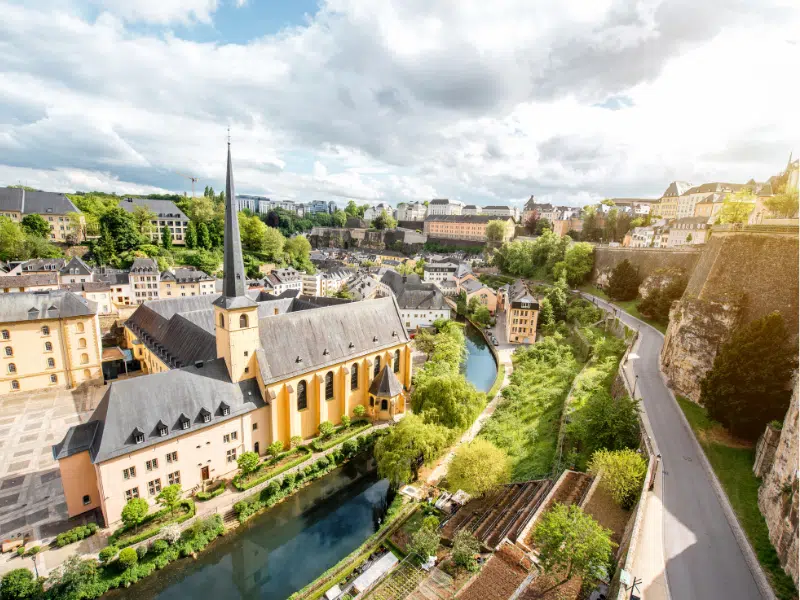
Luxembourg City stands on a rocky plateau above two deep river valleys, and for centuries that position made it one of the most fought-over fortresses in Europe. Today it is the capital of the world's only grand duchy and one of the seats of the European Union, yet its old quarters, bridges and tunnels still tell the fortress story. Here are the facts and stories that make the city special.
10 ciekawostek o Luksemburgu
- Miasto zrodzone na skale: w 963 roku hrabia Zygfryd nabył od opactwa św. Maksymina w Trewirze skalny cypel Bock nad Alzette i zbudował na nim zamek. Osada, która wokół niego wyrosła, stała się Luksemburgiem.
- Gibraltar Północy: garnizony hiszpańskie, francuskie, austriackie i pruskie tak często rozbudowywały twierdzę, że zyskała ten przydomek. Po traktacie londyńskim z 1867 roku została w dużej części rozebrana, a Luksemburg ogłoszono państwem neutralnym.
- Miasto pod ziemią: Hiszpanie zaczęli drążyć kazamaty Bock w 1644 roku. W czasie II wojny światowej tunele chroniły podczas nalotów nawet 35 000 osób.
- World Heritage since 1994: the old quarters and fortifications of Luxembourg City were added to UNESCO's World Heritage List in 1994.
- The world's only grand duchy: Luxembourg is the last sovereign grand duchy, and the Grand Ducal Palace in the old town is the Grand Duke's official residence in the capital.
- Trzy języki urzędowe: luksemburski, francuski i niemiecki są urzędowe. Ustawy pisze się po francusku, gazety często są po niemiecku, a po luksembursku mówi się w domu.
- Darmowy transport dla wszystkich: w 2020 roku Luksemburg jako pierwszy kraj na świecie wprowadził bezpłatne autobusy, tramwaje i pociągi w całym kraju, z wyjątkiem pierwszej klasy w pociągach.
- Rekordowy most: gdy w 1903 roku otwarto Most Adolfa, jego łuk nad doliną Pétrusse był największym kamiennym łukiem na świecie. Od 2018 roku pod jego pomostem wisi kładka dla rowerzystów i pieszych.
- Złota dama: Gëlle Fra, złocona figura na wysokim obelisku na Place de la Constitution, upamiętnia Luksemburczyków poległych w I wojnie światowej. Naziści zburzyli pomnik w 1940 roku; posąg odnaleziono po dziesięcioleciach i w 1985 roku wrócił na kolumnę.
- A fair since 1340: the Schueberfouer, the city's big funfair held every late summer, was founded in 1340 by John the Blind, Count of Luxembourg and King of Bohemia.
Legenda o Meluzynie
Luxembourg's best-known legend says that Count Siegfried fell in love with Melusina, a beautiful woman he met by the Alzette. She agreed to marry him on one condition: one day every week she must be left completely alone. For years he kept his promise, until curiosity won. He looked through the keyhole and saw her in her bath with the tail of a fish. Discovered, Melusina sank into the rock of the Bock and was never seen again. Legend says she is still inside, knitting one stitch a year, and that if she finishes before someone sets her free, the whole city will disappear into the rock with her.
The Knuedler, Place d'Armes and the national poets
Place Guillaume II is known to locals as the Knuedler, from the knotted cord worn by the Franciscan friars whose monastery once stood here. The horseman in the middle is William II, King of the Netherlands and Grand Duke of Luxembourg, and the City Hall lines one side. A short walk away, Place d'Armes, once the parade ground of the garrison, is the city's open-air living room. Nearby stands the monument to Dicks and Lentz, the two 19th-century poets who helped make Luxembourgish a written language. Michel Lentz wrote the words of the national anthem, Ons Heemecht, and the monument carries the national motto from another of his songs: Mir wëlle bleiwe wat mir sinn, we want to remain what we are.
Co zjeść w Luksemburgu
- Judd mat Gaardebounen: wędzona karkówka z bobem w kremowym sosie, danie narodowe, najlepsze latem, gdy bób jest świeży.
- Gromperekichelcher: chrupiące placki ziemniaczane z cebulą i pietruszką, sprzedawane na targach i na Schueberfouer.
- Bouneschlupp: sycąca zupa z fasolki szparagowej z ziemniakami, boczkiem i często kiełbasą.
- Kachkéis: miękki, płynny ser gotowany do smarowania chleba, często z odrobiną musztardy.
- Crémant i wina znad Mozeli: musujący Crémant de Luxembourg i białe wina, takie jak riesling i pinot gris, pochodzą z winnic nad Mozelą.
Dobrze wiedzieć przed wizytą
- Komunikacja miejska jest bezpłatna, podobnie jak winda panoramiczna z Górnego Miasta do Pfaffenthal i kolejka na Kirchberg, dzielnicę instytucji europejskich.
- Przejdź się Chemin de la Corniche, który pisarz Batty Weber nazwał najpiękniejszym balkonem Europy, dla widoków na Grund i dolinę Alzette.
- Kazamaty Bock są zwykle otwarte od wiosny do jesieni. Sprawdź przed wizytą, bo mogą być zamknięte z powodu prac konserwacyjnych.
- Zamek Vianden na północy i winiarskie wioski nad Mozelą to łatwe jednodniowe wycieczki autobusem lub pociągiem.
Odkryj Luksemburg z World City Trail
Our Luxembourg scavenger hunt turns these sights into a game you play on your phone. The route links 10 stops and takes around two hours, with about 30 minutes of walking, and its stops include the Monument to Dicks and Lentz, Place d'Armes and Place Guillaume II.
Na każdym przystanku rozwiązujesz zagadkę i słuchasz krótkiej historii, we własnym tempie. Możesz zacząć, kiedy chcesz.
Zagraj w grę miejską w Luksemburgu →
Fakty sprawdzone w październiku 2026.