
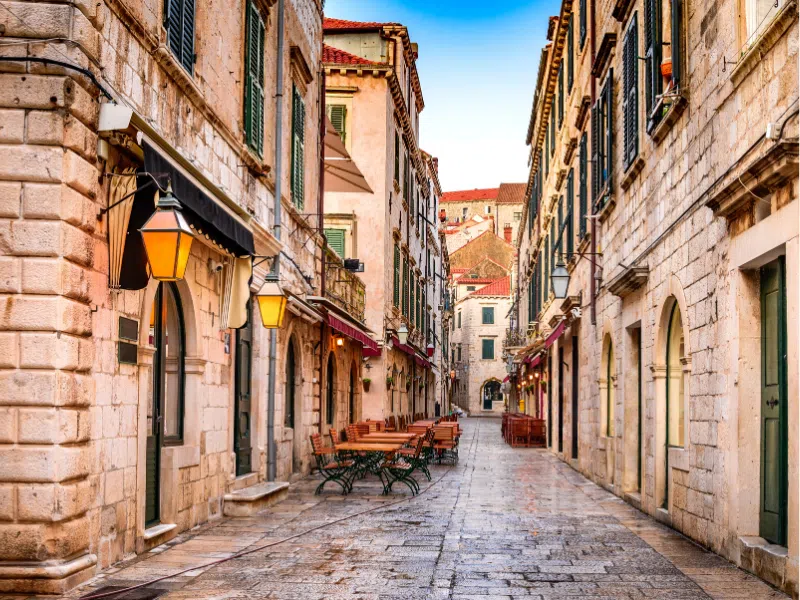
Przez stulecia Dubrownik był stolicą własnego małego państwa, Republiki Raguzy, która przetrwała między Wenecją a Imperium Osmańskim dzięki handlowi i zręcznej dyplomacji. Otoczone murami Stare Miasto nad Adriatykiem wygląda wciąż podobnie jak w 1808 roku, gdy republika przestała istnieć. Oto fakty i historie, które sprawiają, że to miasto jest wyjątkowe.
10 ciekawostek o Dubrowniku
- Mury, które można obejść dookoła: mury miejskie ciągną się przez około 1940 metrów wokół Starego Miasta, z wieżami i fortami po drodze. Pełne okrążenie to najlepszy sposób, by zobaczyć morze dachów z czerwonej dachówki.
- Freedom above all: the Republic's motto was Libertas. Above the entrance to Fort Lovrijenac is the inscription 'Non bene pro toto libertas venditur auro', freedom is not sold for all the gold in the world.
- Jedna z pierwszych kwarantann: w 1377 roku republika nakazała przybyszom z terenów dotkniętych zarazą spędzić 30 dni w odosobnieniu przed wejściem do miasta. To jedno z najwcześniejszych praw o kwarantannie na świecie. Późniejsze budynki kwarantanny, Lazareti, wciąż stoją za wschodnią bramą.
- Apteka działająca od 1317 roku: apteka w klasztorze franciszkanów przy Bramie Pile to jedna z najstarszych wciąż działających aptek w Europie.
- An early ban on the slave trade: in 1416 the Republic's council voted to forbid the slave trade, centuries before most of Europe did the same.
- Sixteen stone faces: Onofrio's Great Fountain, built from 1438, was the end point of an aqueduct that brought fresh water to the city. Water still pours from 16 carved masks around its base.
- A knight as a measuring stick: Orlando's Column, set up in 1418 in front of St Blaise's Church, shows a medieval knight. The length of his forearm served as the Republic's official unit of length, the Dubrovnik ell.
- Odbudowany po wielkim trzęsieniu ziemi: w 1667 roku trzęsienie ziemi zniszczyło dużą część miasta. Główną ulicę, Stradun, odbudowano z rzędami jednakowych kamiennych domów, a jej wapienny bruk wypolerowały stulecia kroków.
- Zniszczony i odnowiony: Stare Miasto jest na liście światowego dziedzictwa UNESCO od 1979 roku. W czasie oblężenia w latach 1991–92 było ostrzeliwane, a mapa przy Bramie Pile pokazuje miejsca trafień. Dachy naprawiono, ale nowsze, jaśniejsze dachówki wciąż rzucają się w oczy.
- King's Landing on screen: from its second season, Game of Thrones used Dubrovnik as King's Landing, with Fort Lovrijenac and the Jesuit Stairs among the best-known locations.
Legenda o świętym Błażeju
Dubrovnik's patron saint is Saint Blaise, an Armenian bishop of the 4th century, and the city's love for him comes from a legend. In the 10th century, Venetian ships anchored off the coast, claiming they only needed water and supplies. Saint Blaise appeared in a vision to a priest named Stojko and warned him that the Venetians were planning a surprise attack. Stojko alerted the city's leaders, the defences were readied and the Venetians sailed away. Since then Saint Blaise has watched over the city: his statue stands above the gates and on the walls, usually holding a model of Dubrovnik in his hand. His feast on 3 February is the city's biggest celebration, with processions, flags and relics carried through the streets, and it is on UNESCO's list of intangible cultural heritage.
Brama Pile w pigułce
Pile Gate is the main entrance to the old town from the west. The outer gate dates from 1537, and a wooden drawbridge on chains crosses the old moat. In the days of the Republic the bridge was raised every evening and the gates were locked, cutting the city off for the night. Look up to see Saint Blaise in a niche above the arch. Through the inner gate, Onofrio's Great Fountain and the long, straight line of Stradun open up in front of you.
Co zjeść w Dubrowniku
- Czarne risotto: crni rižot z mątwą i jej atramentem to klasyczne danie dalmatyńskiego wybrzeża.
- Ston oysters: from the bay of Mali Ston, about an hour's drive north-west, and best eaten raw with a squeeze of lemon.
- Rožata: Dubrovnik's custard pudding with caramel, traditionally flavoured with a rose liqueur.
- Arancini: w Dubrowniku to kandyzowana skórka pomarańczowa, którą rodziny robią w domu i sprzedają na targach.
- Plavac Mali: czerwony szczep z pobliskiego półwyspu Pelješac, z którego powstają znane wina, takie jak Dingač i Postup.
Dobrze wiedzieć przed wizytą
- Wybierz się na mury wcześnie rano albo późnym popołudniem. Na górze jest mało cienia, a trasę obchodzi się tylko w jednym kierunku.
- Na Starym Mieście najtłoczniej jest w środku dnia, gdy przypływają pasażerowie statków wycieczkowych. Wieczorem jest znacznie spokojniej.
- Po klasyczny widok na mury i wyspy wjedź kolejką linową albo wejdź zygzakowatą ścieżką na górę Srđ.
- Łodzie ze starego portu zabiorą cię na wyspę Lokrum w około kwadrans, na kąpiel, cieniste ścieżki i spotkanie z pawiami.
Odkryj Dubrownik z World City Trail
Our Dubrovnik scavenger hunt turns these sights into a game you play on your phone. The route links 10 stops and takes around two hours, with only about 17 minutes of walking, and includes Pile Gate and Onofrio's Great Fountain.
Na każdym przystanku rozwiązujesz zagadkę i słuchasz krótkiej historii, we własnym tempie. Możesz zacząć, kiedy chcesz.
Zagraj w grę miejską w Dubrowniku →
Fakty sprawdzone w październiku 2026.