
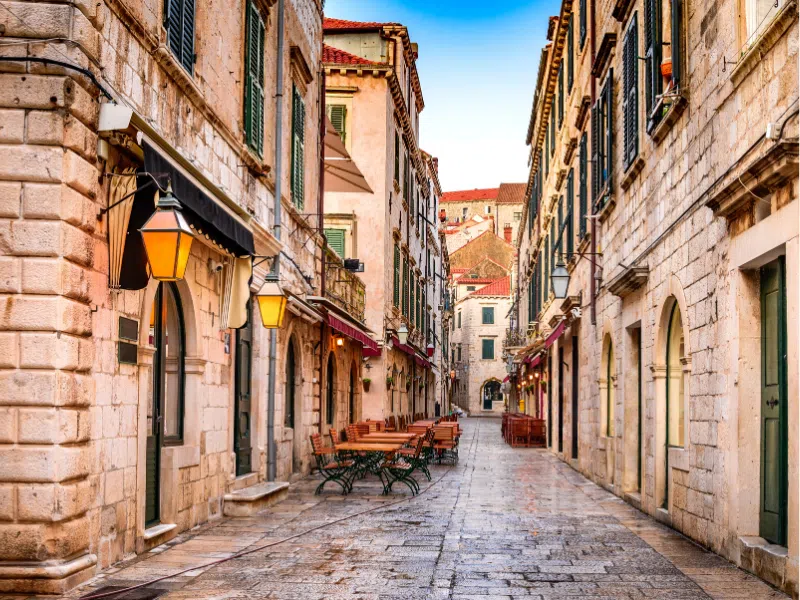
Per secoli Dubrovnik fu la capitale di un piccolo Stato tutto suo, la Repubblica di Ragusa, che sopravvisse tra Venezia e l’Impero ottomano grazie al commercio e a un’abile diplomazia. Il suo centro storico cinto da mura sull’Adriatico è ancora molto simile a com’era quando la Repubblica finì, nel 1808. Ecco i fatti e le storie che rendono speciale la città.
10 curiosità su Dubrovnik
- Mura da percorrere tutt’intorno: la cinta muraria corre per circa 1.940 metri attorno al centro storico, con torri e fortezze lungo il percorso. Fare il giro completo è il modo migliore per vedere il mare di tetti in cotto.
- Freedom above all: the Republic's motto was Libertas. Above the entrance to Fort Lovrijenac is the inscription 'Non bene pro toto libertas venditur auro', freedom is not sold for all the gold in the world.
- Una delle prime quarantene: nel 1377 la Repubblica impose a chi arrivava da zone colpite dalla peste 30 giorni di isolamento prima di entrare in città, una delle prime leggi sulla quarantena al mondo. Gli edifici per la quarantena costruiti in seguito, i Lazzaretti, sono ancora in piedi fuori dalla porta orientale.
- Una farmacia aperta dal 1317: la farmacia del monastero francescano vicino alla Porta Pile è una delle più antiche farmacie d’Europa ancora in attività.
- An early ban on the slave trade: in 1416 the Republic's council voted to forbid the slave trade, centuries before most of Europe did the same.
- Sixteen stone faces: Onofrio's Great Fountain, built from 1438, was the end point of an aqueduct that brought fresh water to the city. Water still pours from 16 carved masks around its base.
- A knight as a measuring stick: Orlando's Column, set up in 1418 in front of St Blaise's Church, shows a medieval knight. The length of his forearm served as the Republic's official unit of length, the Dubrovnik ell.
- Ricostruita dopo il grande terremoto: nel 1667 un terremoto distrusse gran parte della città. La via principale, lo Stradun, fu ricostruita con file di case di pietra tutte uguali, e il suo selciato di calcare è stato lucidato da secoli di passi.
- Danneggiata e restaurata: il centro storico è Patrimonio dell’Umanità UNESCO dal 1979. Durante l’assedio del 1991–92 fu bombardato, e una mappa vicino alla Porta Pile mostra dove caddero le granate. I tetti sono stati riparati, ma si notano ancora le tegole più nuove e chiare.
- King's Landing on screen: from its second season, Game of Thrones used Dubrovnik as King's Landing, with Fort Lovrijenac and the Jesuit Stairs among the best-known locations.
La leggenda di San Biagio
Dubrovnik's patron saint is Saint Blaise, an Armenian bishop of the 4th century, and the city's love for him comes from a legend. In the 10th century, Venetian ships anchored off the coast, claiming they only needed water and supplies. Saint Blaise appeared in a vision to a priest named Stojko and warned him that the Venetians were planning a surprise attack. Stojko alerted the city's leaders, the defences were readied and the Venetians sailed away. Since then Saint Blaise has watched over the city: his statue stands above the gates and on the walls, usually holding a model of Dubrovnik in his hand. His feast on 3 February is the city's biggest celebration, with processions, flags and relics carried through the streets, and it is on UNESCO's list of intangible cultural heritage.
La Porta Pile in breve
Pile Gate is the main entrance to the old town from the west. The outer gate dates from 1537, and a wooden drawbridge on chains crosses the old moat. In the days of the Republic the bridge was raised every evening and the gates were locked, cutting the city off for the night. Look up to see Saint Blaise in a niche above the arch. Through the inner gate, Onofrio's Great Fountain and the long, straight line of Stradun open up in front of you.
Cosa mangiare a Dubrovnik
- Risotto nero: il crni rižot, con seppie e il loro nero, è il piatto classico della costa dalmata.
- Ston oysters: from the bay of Mali Ston, about an hour's drive north-west, and best eaten raw with a squeeze of lemon.
- Rožata: Dubrovnik's custard pudding with caramel, traditionally flavoured with a rose liqueur.
- Arancini: a Dubrovnik sono scorze d’arancia candite, che le famiglie preparano in casa e vendono ai mercati.
- Plavac Mali: il vitigno rosso della vicina penisola di Pelješac, da cui nascono vini noti come il Dingač e il Postup.
Da sapere prima di partire
- Percorri le mura al mattino presto o nel tardo pomeriggio. Lassù l’ombra è poca, e il giro si fa in un solo senso.
- Il centro storico è più affollato a metà giornata, quando arrivano i passeggeri delle navi da crociera. La sera è molto più tranquillo.
- Per la classica vista sulle mura e sulle isole, prendi la funivia o il sentiero a tornanti fino al monte Srđ.
- Le barche dal porto vecchio portano all’isola di Lokrum in circa un quarto d’ora, per nuotare, camminare all’ombra e incontrare i pavoni.
Scopri Dubrovnik con World City Trail
Our Dubrovnik scavenger hunt turns these sights into a game you play on your phone. The route links 10 stops and takes around two hours, with only about 17 minutes of walking, and includes Pile Gate and Onofrio's Great Fountain.
A ogni tappa risolvi un enigma e ascolti una breve storia, al tuo ritmo. Puoi iniziare quando vuoi.
Gioca alla caccia al tesoro di Dubrovnik →
Fatti verificati a ottobre 2026.