
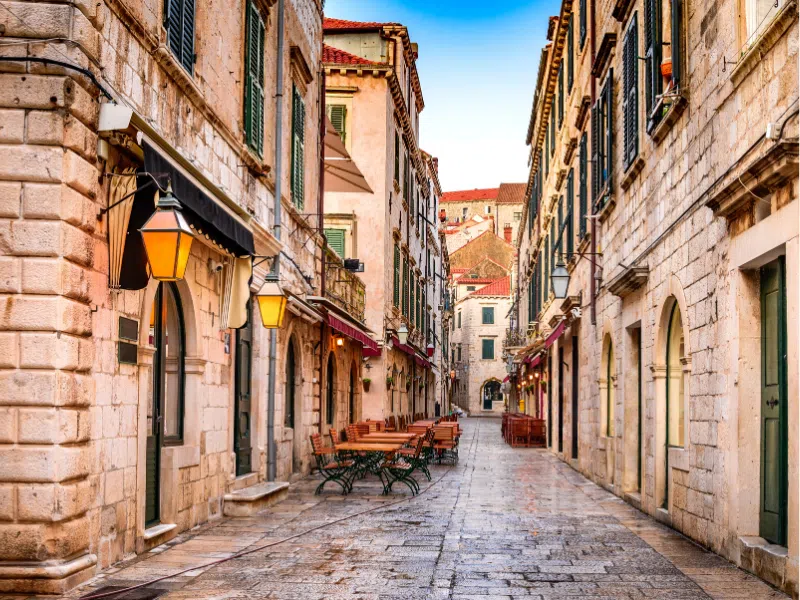
Durante séculos, Dubrovnik foi a capital do seu próprio pequeno Estado, a República de Ragusa, que sobreviveu entre Veneza e o Império Otomano graças ao comércio e a uma diplomacia hábil. A cidade velha amuralhada à beira do Adriático continua muito parecida com o que era quando a República terminou, em 1808. Estes são os factos e as histórias que tornam a cidade especial.
10 curiosidades sobre Dubrovnik
- Muralhas que se percorrem de ponta a ponta: as muralhas estendem-se por cerca de 1940 metros à volta da cidade velha, com torres e fortes pelo caminho. Dar a volta completa é a melhor forma de ver o mar de telhados de terracota.
- Freedom above all: the Republic's motto was Libertas. Above the entrance to Fort Lovrijenac is the inscription 'Non bene pro toto libertas venditur auro', freedom is not sold for all the gold in the world.
- Uma das primeiras quarentenas: em 1377, a República obrigou quem chegava de zonas com peste a ficar 30 dias isolado antes de entrar na cidade, uma das primeiras leis de quarentena do mundo. Os edifícios de quarentena construídos mais tarde, os Lazareti, continuam de pé junto à porta leste.
- Uma farmácia aberta desde 1317: a farmácia do mosteiro franciscano, perto da Porta de Pile, é uma das mais antigas farmácias da Europa ainda em funcionamento.
- An early ban on the slave trade: in 1416 the Republic's council voted to forbid the slave trade, centuries before most of Europe did the same.
- Sixteen stone faces: Onofrio's Great Fountain, built from 1438, was the end point of an aqueduct that brought fresh water to the city. Water still pours from 16 carved masks around its base.
- A knight as a measuring stick: Orlando's Column, set up in 1418 in front of St Blaise's Church, shows a medieval knight. The length of his forearm served as the Republic's official unit of length, the Dubrovnik ell.
- Reconstruída depois do grande sismo: em 1667, um terramoto destruiu grande parte da cidade. A rua principal, o Stradun, foi reconstruída com filas de casas de pedra iguais, e a calçada de calcário está polida por séculos de passos.
- Danificada e restaurada: a cidade velha é Património Mundial da UNESCO desde 1979. Durante o cerco de 1991–92 foi bombardeada, e um mapa junto à Porta de Pile mostra onde caíram os projéteis. Os telhados foram reparados, mas ainda se notam as telhas mais novas e claras.
- King's Landing on screen: from its second season, Game of Thrones used Dubrovnik as King's Landing, with Fort Lovrijenac and the Jesuit Stairs among the best-known locations.
A lenda de São Brás
Dubrovnik's patron saint is Saint Blaise, an Armenian bishop of the 4th century, and the city's love for him comes from a legend. In the 10th century, Venetian ships anchored off the coast, claiming they only needed water and supplies. Saint Blaise appeared in a vision to a priest named Stojko and warned him that the Venetians were planning a surprise attack. Stojko alerted the city's leaders, the defences were readied and the Venetians sailed away. Since then Saint Blaise has watched over the city: his statue stands above the gates and on the walls, usually holding a model of Dubrovnik in his hand. His feast on 3 February is the city's biggest celebration, with processions, flags and relics carried through the streets, and it is on UNESCO's list of intangible cultural heritage.
A Porta de Pile, explicada
Pile Gate is the main entrance to the old town from the west. The outer gate dates from 1537, and a wooden drawbridge on chains crosses the old moat. In the days of the Republic the bridge was raised every evening and the gates were locked, cutting the city off for the night. Look up to see Saint Blaise in a niche above the arch. Through the inner gate, Onofrio's Great Fountain and the long, straight line of Stradun open up in front of you.
O que comer em Dubrovnik
- Risotto negro: o crni rižot, com choco e a sua tinta, é o prato clássico da costa dálmata.
- Ston oysters: from the bay of Mali Ston, about an hour's drive north-west, and best eaten raw with a squeeze of lemon.
- Rožata: Dubrovnik's custard pudding with caramel, traditionally flavoured with a rose liqueur.
- Arancini: em Dubrovnik são cascas de laranja cristalizadas, que as famílias fazem em casa e vendem nos mercados.
- Plavac Mali: a casta tinta da vizinha península de Pelješac, que dá vinhos conhecidos como o Dingač e o Postup.
Antes de ires
- Percorre as muralhas logo de manhã ou ao fim da tarde. Lá em cima há pouca sombra, e o circuito faz-se num só sentido.
- A cidade velha está mais cheia a meio do dia, quando chegam os passageiros dos cruzeiros. À noite é muito mais calma.
- Para a vista clássica sobre as muralhas e as ilhas, apanha o teleférico ou sobe o trilho em ziguezague até ao monte Srđ.
- Os barcos do porto velho levam-te à ilha de Lokrum em cerca de um quarto de hora, para nadar, passear à sombra e ver pavões.
Descobre Dubrovnik com a World City Trail
Our Dubrovnik scavenger hunt turns these sights into a game you play on your phone. The route links 10 stops and takes around two hours, with only about 17 minutes of walking, and includes Pile Gate and Onofrio's Great Fountain.
Em cada paragem resolves um enigma e ouves uma pequena história, ao teu ritmo. Podes começar quando quiseres.
Jogar a caça ao tesouro de Dubrovnik →
Factos verificados em outubro de 2026.