What is the Basel self-guided walking tour?
The Basel self-guided walking tour is a walk you take at your own pace, with audio narration on your phone where a guide would otherwise be. Allow about 3 hours: 44 minutes of that is walking, the route measures 3.5 km, and 10 stops are where you stand and listen. Nothing is timed and there is no group to keep up with.
The first monument was made by Frédéric Auguste Bartholdi, who also carved the Statue of Liberty, and the narration explains why Strasbourg wanted to thank Switzerland for 1870. At the Kunstmuseum you hear about the Amerbach Cabinet, a private collection the city bought in 1661 and the reason Basel is often called the home of the oldest public art collection. The walk ends by the Rhine, where small ferries cross without an engine, pulled along a cable by the current alone.
- Durationabout 3 hours
- Walkingabout 44 min · 3.5 km
- Stops10
- LanguagesEnglish, German, French, Italian, Spanish, Chinese
What you do on the walking tour
Listen
Every stop brings the history of the place, the stories around it and the details carved into the sandstone. Readers find the same text on screen.
Walk on
Google Maps shows the way from stop to stop: 44 minutes on foot over 3.5 km, at the pace you prefer.
Break off
Have a coffee on the Marktplatz or give an hour to a museum, then take up the walk again, that day or another.
Eat and browse
Tips for food and shops near the route come with the stops. The first stop and the order are both set in the app.
See the route and attractions →
How it works
- Book online Choose the number of people. Your booking reference arrives by email straight away.
- Get the app Download the World City Trail app from the App Store or Google Play and enter your booking reference.
- Walk when you like Start whenever you are ready, walk at your own pace and pause any time. No guide, no fixed schedule.
Who the walking tour is for
A first visit
One walk ties the Minster hill, the Marktplatz, the old city gate and the river together and explains what you are looking at.
Anyone who avoids groups
Nothing to follow and no meeting time: you stay on the Pfalz terrace as long as the view holds you and move on when you decide.
A day in Basel
3 hours covers the old town, which leaves the afternoon for a museum or a swim down the Rhine in summer.
Good to know
- Bring a charged smartphone with mobile data; a power bank helps.
- No entry tickets needed: everything happens outside the buildings. Going inside is optional and paid separately.
- Family friendly; children must be accompanied by an adult.
- Not suitable for wheelchair users and difficult with strollers.
- Groups of up to 5 work best; larger groups split up, one ticket per person.
- Every purchase helps support stray cats and dogs in Greece.
The walk stop by stop: the Minster, the Marktplatz, the Spalentor, the Rhine
10 stops · about 44 min walking · start: Strassburger Denkmal · finish: Rhine in Basel
The walk opens at the Strassburger Denkmal, in the park beside the Elisabethen church and minutes from the main station, and the church itself is the second stop. The Kunstmuseum on St Alban-Graben follows, after which the route climbs to the Minster and the Natural History Museum on Augustinergasse. Downhill lies the Town Hall on the Marktplatz; a detour west reaches the Spalentor and comes back by St Peter's Church. The Mittlere Brücke carries you over the water, and the last stop is the bank of the Rhine itself. The app allows a different first stop or a different order, and no stop asks for a ticket.
Open the route map ↗
1Strassburger DenkmalStart
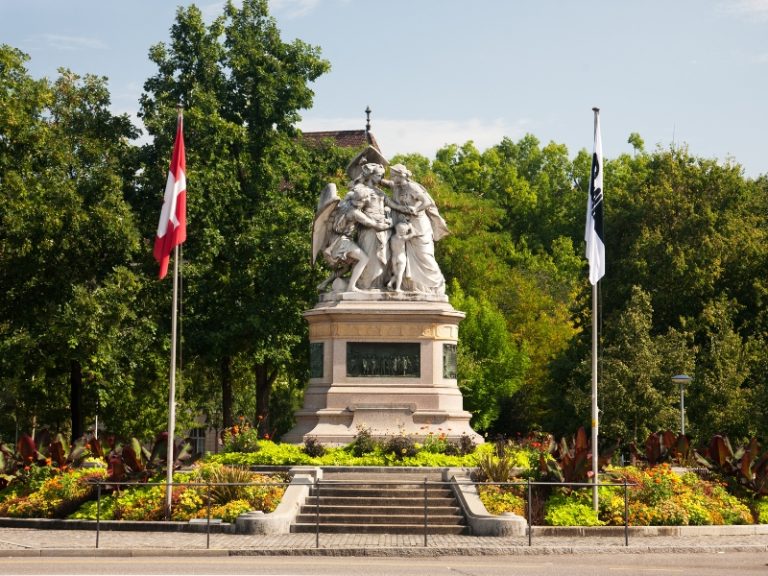
This monument by Frédéric Auguste Bartholdi, the sculptor of the Statue of Liberty, was unveiled in 1895 in the park by the Elisabethen church. It thanks Switzerland for helping the people of Strasbourg during the siege of 1870 in the Franco-Prussian War, when Swiss delegates arranged for civilians to leave the city.
2Offene Kirche Elisabethen
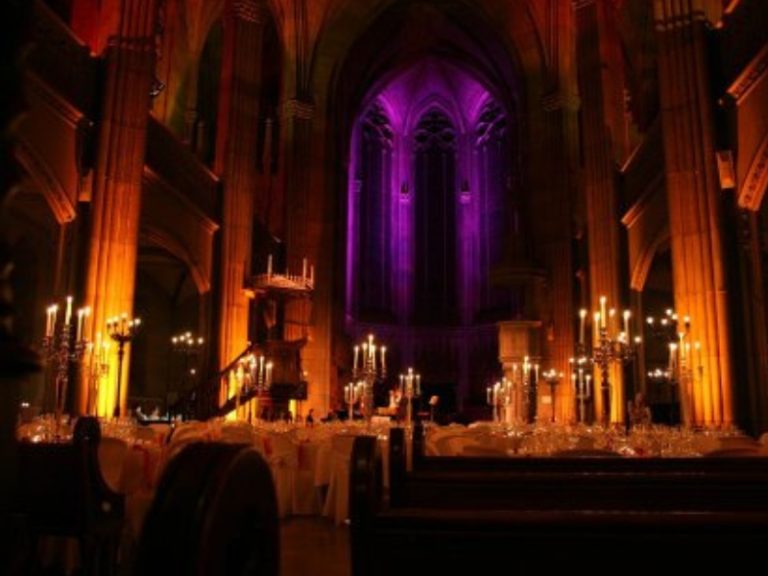
The Elisabethen church was built between 1857 and 1865 to plans by Ferdinand Stadler and paid for by the Basel philanthropist Christoph Merian and his wife, who are buried in its crypt. It is regarded as one of the most important neo-Gothic churches in Switzerland, and since 1994 it has been run as an open church for services, concerts and events.
3Kunstmuseum Basel
Basel's art museum on St Alban-Graben grew out of the Amerbach Cabinet, a private collection the city bought in 1661, and it is often called the oldest public art collection in the world. The main building opened in 1936, and the new building across the street, opened in 2016, has a grey brick façade with a frieze that can display text in light.
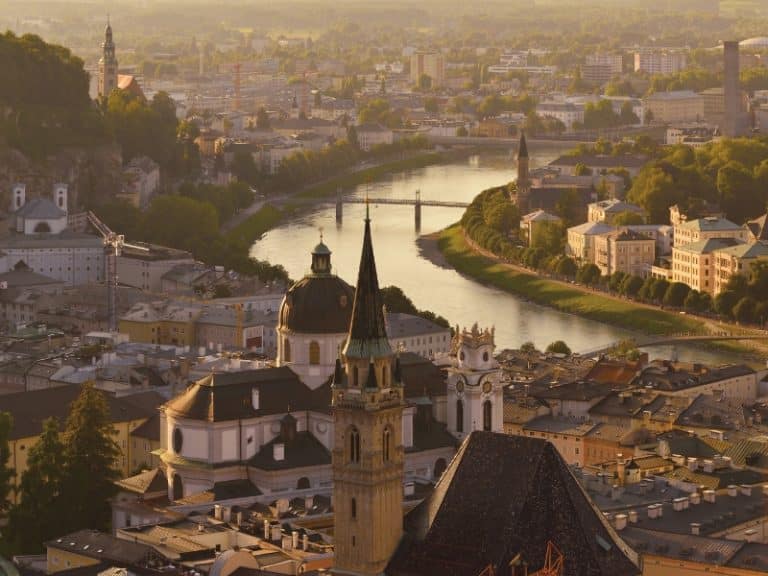
4Basel Minster
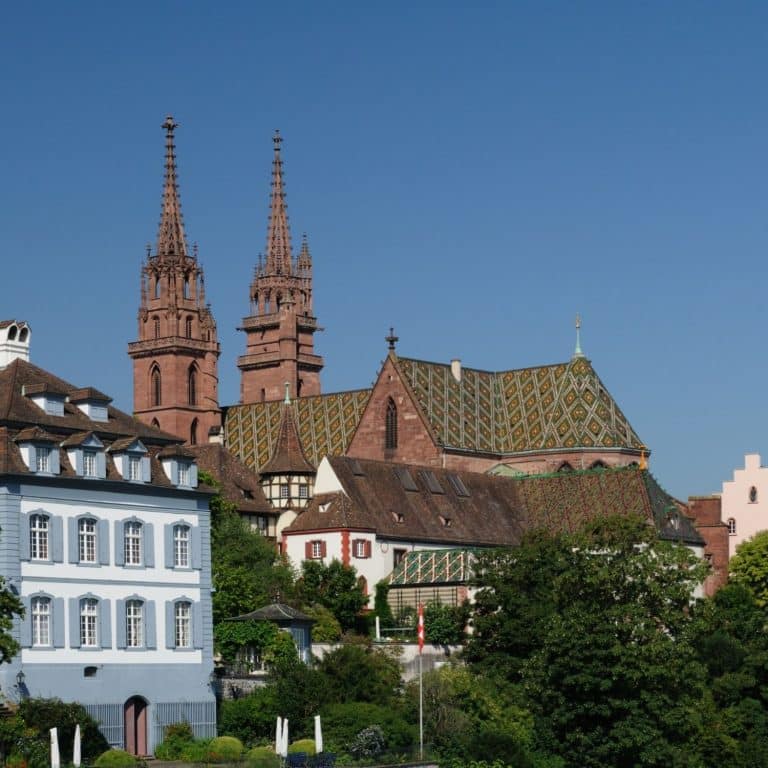
Built of red sandstone between 1019 and 1500, the Minster mixes Romanesque and Gothic styles and was largely rebuilt after the great earthquake of 1356. On the west front, Saint George fights the dragon and Saint Martin shares his cloak, and the humanist Erasmus of Rotterdam is buried inside. Behind it, the Pfalz terrace looks out over the Rhine.
5Natural History Museum Basel
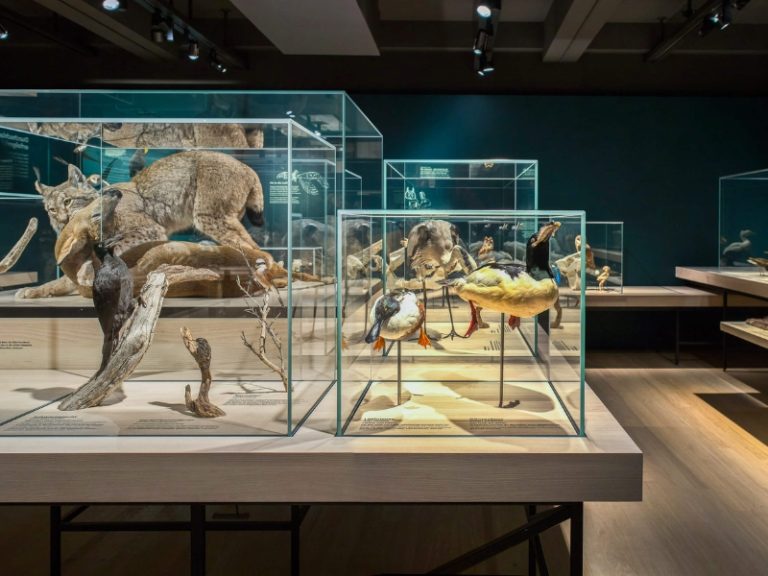
The Naturhistorisches Museum shares a neoclassical building on Augustinergasse with the Museum der Kulturen, designed by Melchior Berri and completed in 1849. Its collections range from minerals and fossils to dinosaurs and the animals of the Alps, and the street outside runs along the Minster hill high above the Rhine.
6Basel Town Hall
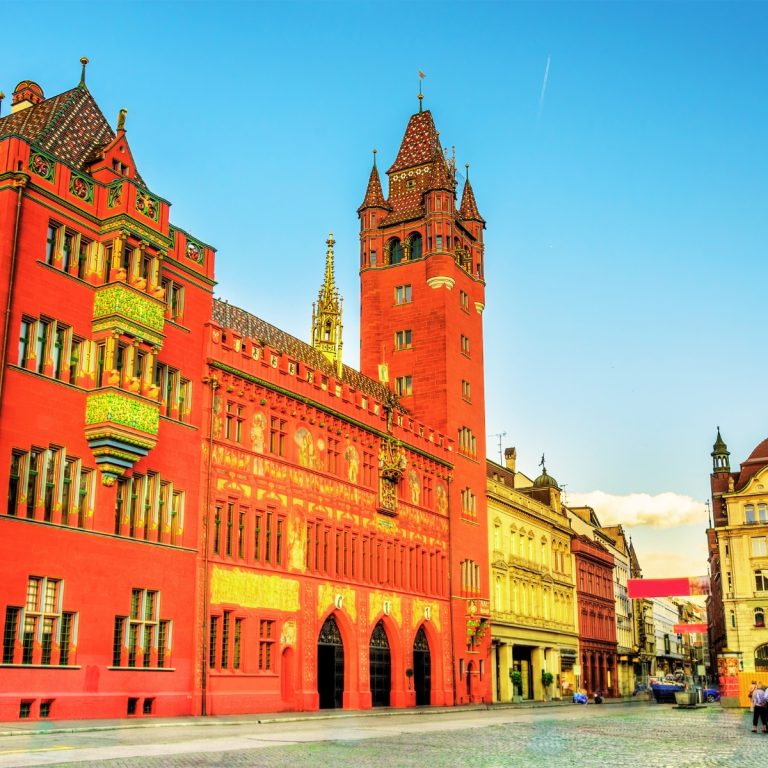
The red Town Hall on the Marktplatz was built between 1504 and 1514, shortly after Basel joined the Swiss Confederation in 1501. Its painted façade, gilded details and clock make it easy to spot, and it is still the seat of the cantonal government and parliament of Basel-Stadt.
7Spalentor
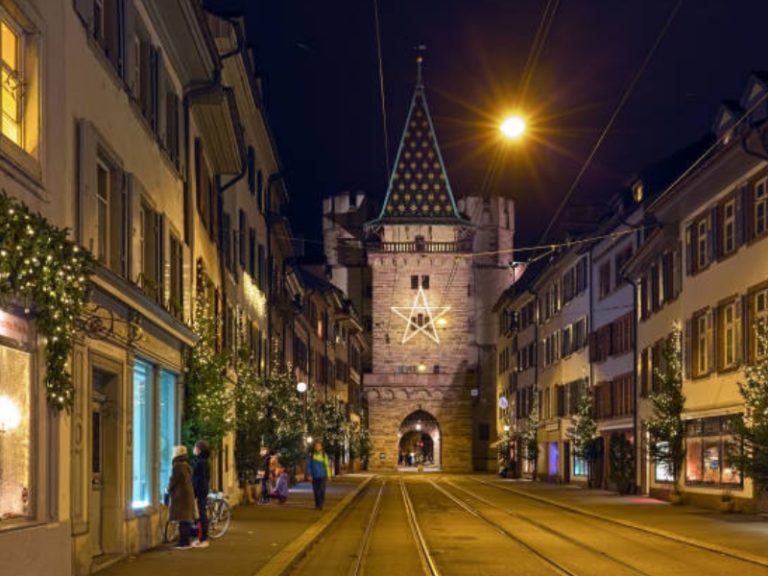
The Spalentor was built around 1400 as the grandest gate of the city wall that Basel raised after the earthquake of 1356. Look for its roof of coloured glazed tiles and the figures of the Virgin Mary and two prophets on the outer side. It is one of only three city gates that survive in Basel.
Read the full story →
8St Peter's Church
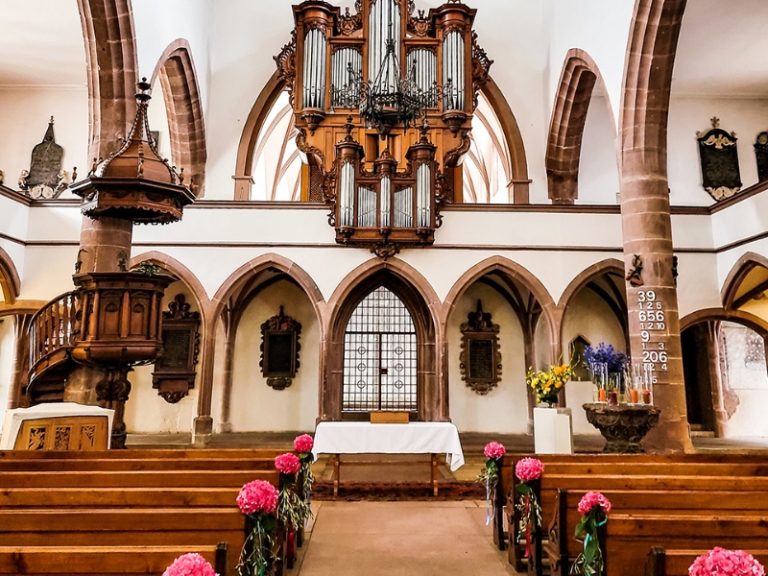
The Peterskirche is one of Basel's old parish churches, a Gothic church standing beside Petersplatz on the edge of the university quarter. It became Protestant with the Basel Reformation of 1529. Next to it, the tree-lined Petersplatz hosts a flea market and part of the city's autumn fair, the Herbstmesse.
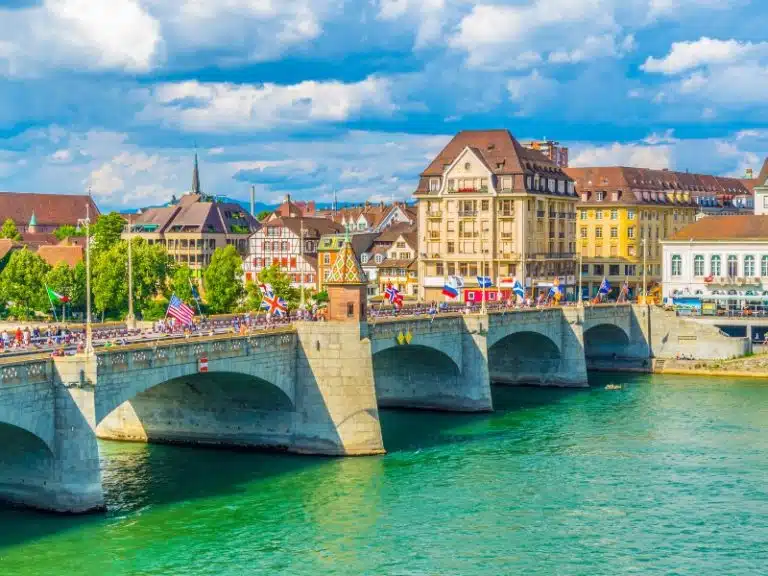
9Mittlere Brücke
A bridge has stood here since around 1225, making it one of the oldest crossings of the Rhine, and for centuries it was the only bridge in Basel. The present stone bridge was built between 1903 and 1905. In its middle stands the Käppelijoch, a small chapel where, according to tradition, condemned people were once thrown into the river.
Read the full story →
10Rhine in BaselFinish
At Basel the Rhine makes a wide bend to the north, the Rheinknie, and splits the city into Grossbasel and Kleinbasel. In summer many locals swim downstream with a waterproof bag called a Wickelfisch, and small ferries without engines cross the river pulled only by the current along a cable.
Read the full story →
Only logged in customers who have purchased this product may leave a review.




Anonymous (verified owner) –
Mexico –
Collected on GetYourGuide
Excellente
Mexico –
Collected on GetYourGuide
Adina– Romania –
Collected on GetYourGuide
It was a really cool tour, learning about Basel and walking around the city (while walking we also saw other things that we liked and we took a detour from the guide). The thing that sucked was the part that unfortunately it is not something you can download in advance on your phone and use without a network. Other than that really cool and really good for the price
Mexico –
Collected on GetYourGuide
Tetiana– Canada –
Collected on GetYourGuide
Ok
Germany –
Collected on GetYourGuide
Man hat einen Überblick über Basel bekommen und es war in Ordnung. Ich persönlich muss allerdings sagen das ich eine durch Menschen geführte Führung besser finde, weil man nicht die ganze Zeit aufs Handy gucken muss und man die Stadt auf eine ganz andere Art und Weise erkunden und wahrnehmen kann.
Jan– Germany –
Collected on GetYourGuide
Guter und umfassender 1. Eindruck, Route sinnvoll angelegt, Texte auf das Wesentliche konzentriert. App funktioniert störungsfrei, ist in der Anwendung gut konzipiert. Die Stadt für sich im eigenen Tempo kennenlernen, nicht in der Grupoe, sondern für sich, empfand ich als angenehm und entscheidenden Vorteil. Zudem ist man gleich zu Beginn der Reise aufgefordert, in der unbekannten Stadt selbstständig zu agieren und sich zu orientieren.
Switzerland –
Collected on GetYourGuide
Es ist eine gute Art eine Stadt selber zu entdecken. Aber die geheimen Orte blieben aus, es waren die stadtbekannten Sehenswürdigkeiten.
Netherlands –
Collected on GetYourGuide
Sommige teksten wordt het voorlezen op het laatst versneld afgespeeld