
Table of Contents
A vibrant city on Spain’s Mediterranean coast
Valencia is a vibrant city on Spain’s Mediterranean coast, known for its stunning beaches, rich history, and lively culture. It boasts beautiful architecture, including the iconic City of Arts and Sciences complex, as well as charming historic neighborhoods. Valencia is also a foodie’s paradise, with a variety of delicious local dishes and fresh seafood.
Key Features of Valencia
- City of Arts and Sciences: This iconic complex features stunning futuristic architecture, including a planetarium, science museum, opera house, and aquarium.
- Beautiful Beaches: Valencia boasts beautiful Mediterranean beaches, perfect for sunbathing, swimming, and enjoying the coastal lifestyle.
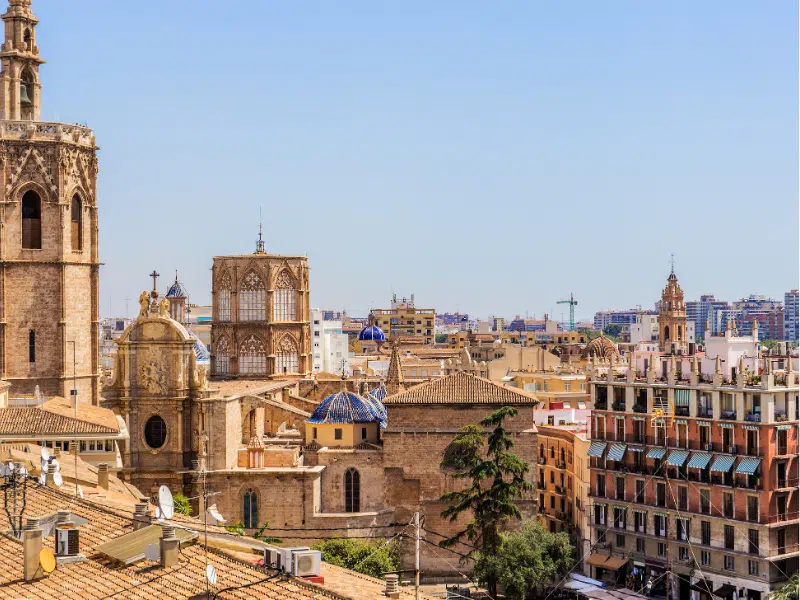
- Historic Old Town: The historic center of Valencia is filled with charming narrow streets, traditional architecture, and historic landmarks like the Valencia Cathedral.
- Delicious Food: Valencia is known for its delicious cuisine, including paella, tapas, and fresh seafood.
- Vibrant Culture: The city has a lively cultural scene with festivals, concerts, and a variety of museums and art galleries.
- Pleasant Climate: Valencia enjoys a Mediterranean climate with mild winters and hot summers, making it a great destination for year-round travel.

Fun Facts About Valencia
- The Birthplace of Paella: Valencia is considered the birthplace of the iconic Spanish dish, paella.
- A City of Festivals: Valencia hosts numerous festivals throughout the year, including the vibrant Fallas Festival, a colorful celebration of spring.
- The World’s Narrowest Building: Valencia is home to the second-narrowest building in the world, a quirky structure measuring just 107 cm wide.
- A Riverbed Turned Park: The Turia Park, a beautiful urban green space, was created on the former riverbed of the Turia River.
- The Holy Grail? According to some, the Valencia Cathedral houses the Holy Grail, the cup used by Jesus Christ at the Last Supper.
- Orange Capital: Valencia is known as the orange capital of Spain, producing millions of oranges annually.
- A City of Art and Science: The City of Arts and Sciences is a futuristic complex designed by famous architect Santiago Calatrava, featuring a planetarium, science museum, opera house, and aquarium.
- A Safe Haven: During the Spanish Civil War, Valencia served as the temporary capital of Spain.
- The Valencian Language: Valencian, a Romance language closely related to Catalan, is spoken in Valencia and parts of surrounding regions.
- A City of Markets: Valencia boasts a vibrant market culture, with numerous traditional markets offering fresh produce, local delicacies, and handcrafted goods.

Local Legends of Valencia
The Legend of the Holy Grail: One of the most famous legends associated with Valencia is the claim that the Holy Grail, the cup used by Jesus Christ at the Last Supper, is housed in the Valencia Cathedral. This belief is based on historical records and the presence of a chalice within the cathedral, though its authenticity remains a subject of debate.
The Legend of the Dragon of Valencia: According to local folklore, a dragon once terrorized the city of Valencia. The beast was said to live in a cave near the Turia River and demanded sacrifices from the people. A brave knight named Sant Jordi (Saint George) eventually defeated the dragon, freeing the city from its terror. This legend is celebrated annually during the festival of Sant Jordi, which is also celebrated as St. George’s Day in other parts of Europe.
The Legend of the Seven Gates: Another legend tells of a time when Valencia was surrounded by seven gates, each guarded by a powerful guardian. These gates were said to protect the city from evil forces. However, a traitorous knight betrayed the city, allowing an enemy army to enter through one of the gates. As a punishment, the gates were sealed forever, leaving the city vulnerable to attack.
The Legend of the Moorish King: Some legends claim that the Moors, who ruled Valencia for centuries, left behind hidden treasures within the city. These treasures are said to be guarded by magical spells and enchantments, making them difficult to find. Many treasure hunters have searched for these hidden riches over the years, but few have ever claimed to have found them.

What about the history of Valencia?

Roman Influence: As part of the Roman Empire, Valencia played a significant role in the region. The city was known as Valentia Edetanorum and was a prosperous center of trade and commerce.
Moorish Conquest: In the 8th century, the Moors conquered Valencia, bringing their Islamic culture and architecture to the city. The Moors ruled Valencia for several centuries, leaving a lasting impact on its heritage.
Christian Reconquest: In the 13th century, Christian forces reconquered Valencia, marking the beginning of a new era for the city. The Christian rulers rebuilt the city and established it as a major center of trade and commerce in the Kingdom of Aragon.
Golden Age: Valencia experienced a golden age during the 15th and 16th centuries, becoming a thriving cultural and economic hub. The city witnessed a flourishing of arts, literature, and trade.
Napoleonic Wars: In the 19th century, Valencia was occupied by French forces during the Napoleonic Wars. The city suffered significant damage during this period.
Modern Valencia: In the 20th century, Valencia underwent a period of modernization and industrialization. The city’s economy grew, and its population expanded. Today, Valencia is a vibrant and cosmopolitan city, known for its stunning architecture, beautiful beaches, and rich cultural heritage.
Must Visit Attractions in Valencia
- Plaça de Bous: This bullfighting arena is a symbol of Valencian bullfighting tradition. It has been the scene of numerous bullfights and other events over the years.
- Plaza de toros: Another bullfighting landmark, the Plaza de toros is an imposing building that has seen some of the most famous bullfighters.
- City Hall: The Valencia City Hall building is a prominent example of modernist architecture in the city. Its facade and interiors are true works of art.
- Central Market: This covered market is one of the largest and oldest in Europe. Here you’ll find a wide variety of fresh products, from fruits and vegetables to meat and fish.
- La Lonja de la Seda: Declared a UNESCO World Heritage Site, La Lonja de la Seda is a Gothic civil building that was once the nerve center of the silk trade in Valencia.
- Plaça de la Mare de Déu: Located in the heart of the historic center, this square is one of the most important meeting points in the city. It is surrounded by historic buildings, such as the Cathedral and the Micalet.
- Valencia Cathedral: The Valencia Cathedral is an impressive religious building that combines various architectural styles. Its tower, the Micalet, offers panoramic views of the city.
- University of Valencia: Founded in the 15th century, the University of Valencia is one of the oldest universities in Spain. Its historic buildings and gardens are a true treasure.
- Plaça d’Alfons el Magnànim: This square, dedicated to King Alfonso V of Aragon, is one of the largest and most emblematic spaces in the historic center.
- Mercat de Colón: This modernist market, located in the Eixample district, is a spectacular building that houses numerous restaurants and specialty shops specializing in gourmet products.
- Puente de las Flores: This bridge, located in the Turia Garden, is a floral construction that offers spectacular views of the Turia River and the City of Arts and Sciences.
This walking tour will take you through the heart of Valencia, allowing you to experience the city’s rich history, stunning architecture, and cultural significance.

Explore Valencia with World City Trail
Embark on an unforgettable journey through the enchanting city of Valencia with World City Trail. Our interactive walking tour combines the thrill of exploration with the rich history and culture of this beatiful city.
Key Features:
Interactive gameplay: Solve engaging puzzles and challenges as you explore the city.
Iconic landmarks: Discover famous attractions like the The Central Market and the La Lonja de la Seda.
Hidden gems: Uncover lesser-known spots, such as the Plaça d’Alfons el Magnànim or the Mercat de Colón.
Cultural insights: Learn about Valencia’s fascinating history.
Flexibility: Explore at your own pace and create your own itinerary.
Learn more fun facts about Valencia!
Book your Valencia adventure today and experience the magic of this beatiful city.
Further reading on Wikipedia: Valencia Cathedral