
Table of Contents
A vibrant coastal city in Croatia
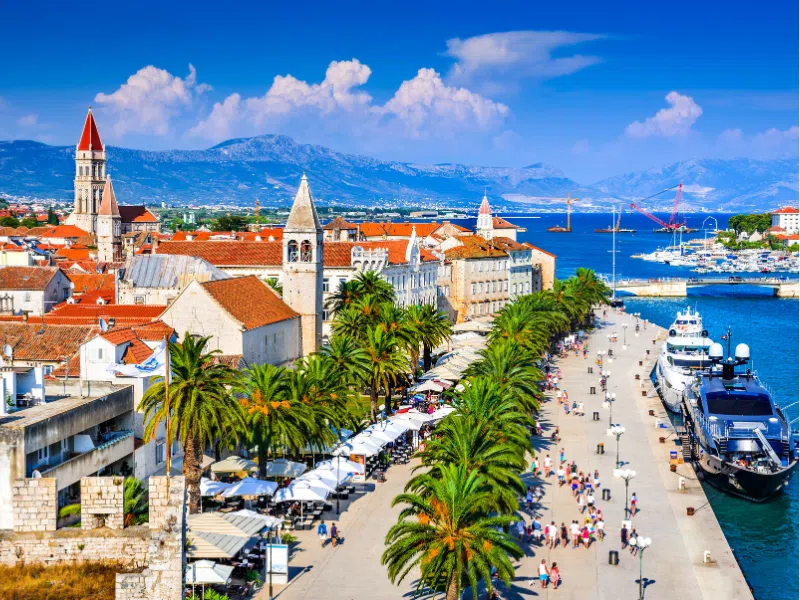
Split is a vibrant coastal city in Croatia, known for its rich history, stunning architecture, and breathtaking natural beauty. With its historic Diocletian’s Palace, beautiful beaches, and charming Old Town, Split offers a captivating blend of ancient and modern.
Key features of Split:
- Diocletian’s Palace: A UNESCO World Heritage Site, this ancient Roman palace forms the heart of the city, offering a fascinating glimpse into the past.
- Peristyle: The main square within Diocletian’s Palace, surrounded by historic buildings and a beautiful fountain.
- Old Town: The charming Old Town, with its narrow streets, colorful buildings, and lively atmosphere.
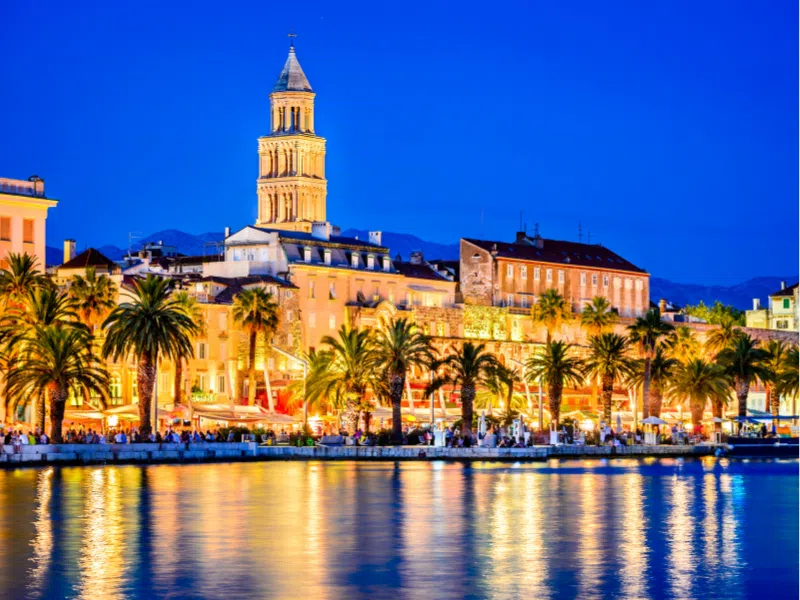
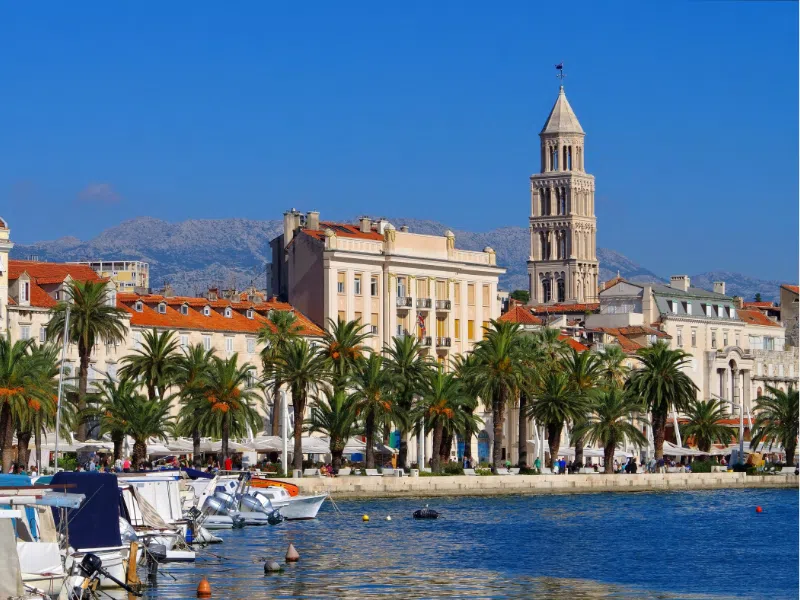
- Riva Promenade: A waterfront promenade offering stunning views of the Adriatic Sea.
- Marjan Hill: A forested hill overlooking the city, offering hiking trails, panoramic views, and a botanical garden.
- Beaches: Split has several beautiful beaches, including Bačvice Beach, Znjan Beach, and Obojena Beach.
- Cultural Scene: The city offers a vibrant cultural scene, with museums, theaters, and a lively nightlife.
- Gastronomy: Split is known for its delicious seafood, local wines, and traditional Croatian cuisine.
Fun facts about Split:
- Diocletian’s Dream: According to legend, Roman Emperor Diocletian dreamed of building a palace in Split, and his dream became a reality.
- A City within a Palace: Diocletian’s Palace is so large that it was once considered a city within a city.
- The Game of Thrones Connection: Split’s historic architecture and stunning scenery have made it a popular filming location for the popular TV series Game of Thrones.
- The City of Festivals: Split hosts numerous festivals throughout the year, including the Split Summer Festival, the Ultra Europe Music Festival, and the Split Film Festival.
- A Sailing Paradise: Split’s location on the Adriatic Sea makes it a popular destination for sailing enthusiasts.
- The City of Cats: Split is known for its large population of stray cats, which are often seen wandering the streets and interacting with locals and tourists.
- A World Heritage Site: Diocletian’s Palace and the historic core of Split are UNESCO World Heritage Sites, recognized for their exceptional cultural and historical significance.
- A City of Legends: Split is home to many legends and myths, including tales of pirates, sea monsters, and hidden treasures.
Local Legends of Split
- The Legend of the Griffin: It is said that a mythical creature called a griffin once guarded the city of Split. The griffin was a fierce protector, warding off enemies and ensuring the city’s safety.
- The Legend of the Mermaid: Some tales tell of a beautiful mermaid who lived in the Adriatic Sea near Split. She would often rise from the depths to sing her enchanting songs, captivating sailors and fishermen.
- The Legend of the Hidden Treasure: There are rumors of a hidden treasure buried somewhere beneath Diocletian’s Palace. Many have searched for this mythical treasure, but none have ever found it.
- The Legend of the Pirate King: It is said that a fearsome pirate king once made his home in Split, terrorizing ships that sailed through the Adriatic Sea.
- The Legend of the Vampire: Some believe that a vampire haunts the streets of Split, lurking in the shadows and preying on the unwary.
A Brief History of Split
- Roman Colony: Founded by the Roman Emperor Diocletian in the 4th century AD, Split was originally a Roman colony built around his magnificent palace.
- Medieval Center: After the fall of the Roman Empire, Split became a thriving medieval center, serving as a key trading post on the Adriatic Sea.
- Venetian Rule: In the 15th century, Split came under Venetian rule, which influenced its architecture and culture.
- Habsburg Rule: In the 17th century, Split was conquered by the Habsburg Empire, which ruled the city for centuries.
- Austrian Empire: During the 19th century, Split was part of the Austrian Empire, experiencing a period of economic growth and cultural development.
- Kingdom of Yugoslavia: After World War I, Split became part of the Kingdom of Yugoslavia.
- Independent Croatia: In 1991, Split declared independence along with the rest of Croatia, following the breakup of Yugoslavia.
Must-Try Food in Split

Traditional Croatian Cuisine:
- Peka: A traditional Croatian dish cooked under a bell-shaped lid, often featuring meat or seafood with vegetables.
- Pasticada: A hearty beef stew braised in red wine and served with gnocchi.
- Dalmatian Pljeskavica: A grilled meat patty similar to a hamburger, often served with ajvar (a spicy red pepper spread).
- Brudet: A flavorful fish stew made with fresh seafood and vegetables.
Must Visit Attractions in Split
Croatian National Theater: A historic theater building known for its impressive architecture and diverse performances.
Grgur Ninski: A bronze statue of Grgur Ninski, a Croatian bishop and national hero.
Golden Gate: A Roman triumphal arch that once served as the main entrance to Diocletian’s Palace.
Saint Domnius Cathedral: A magnificent cathedral built within the walls of Diocletian’s Palace.
Peristil: The main square within Diocletian’s Palace, surrounded by historic buildings and a beautiful fountain.
Diocletian’s Palace: A UNESCO World Heritage Site, this ancient Roman palace forms the heart of the city.
Jupiter’s Temple: The ruins of a Roman temple dedicated to the god Jupiter.
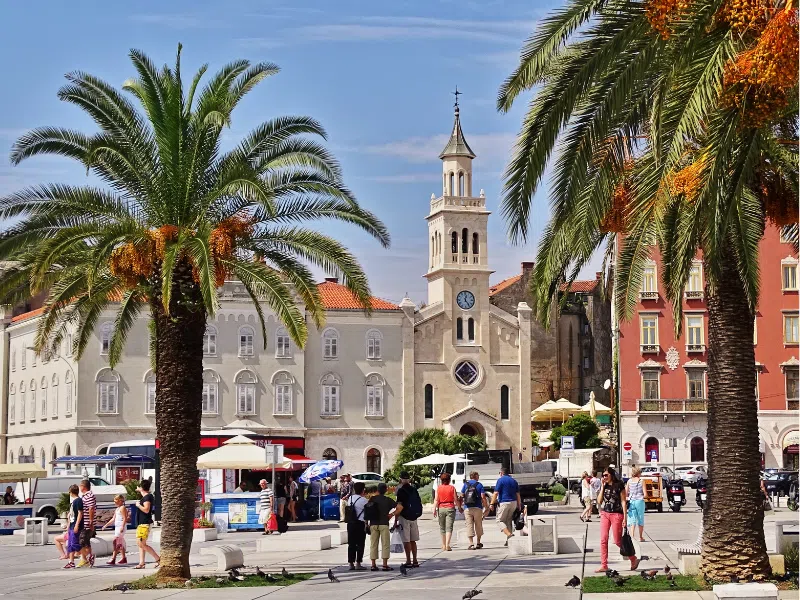
People’s Square: A vibrant square with numerous cafes, restaurants, and shops.
Split Riva: A waterfront promenade offering stunning views of the Adriatic Sea.
Prokurative: A historic building complex that once served as the administrative center of the Venetian Republic.
This walking tour will take you through the heart of Split, allowing you to experience the city’s rich history, stunning architecture, and cultural significance.
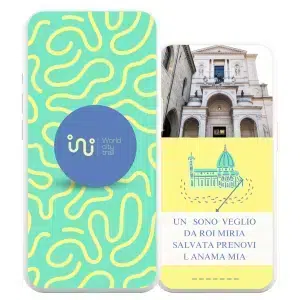
Explore Split with World City Trail
Embark on an unforgettable journey through the enchanting city of Split with World City Trail. Our interactive walking tour combines the thrill of exploration with the rich history and culture of this beatiful city.
Key Features:
Interactive gameplay: Solve engaging puzzles and challenges as you explore the city.
Iconic landmarks: Discover famous attractions like the Grgur Ninski and the Golden Gate.
Hidden gems: Uncover lesser-known spots, such as the People’s Square or the Split Riva.
Cultural insights: Learn about Split’s fascinating history.
Flexibility: Explore at your own pace and create your own itinerary.
Learn more Fun Facts about Split!
Book your Split adventure today and experience the magic of this beatiful city.
Further reading on Wikipedia: Diocletian's Palace