
Table of Contents
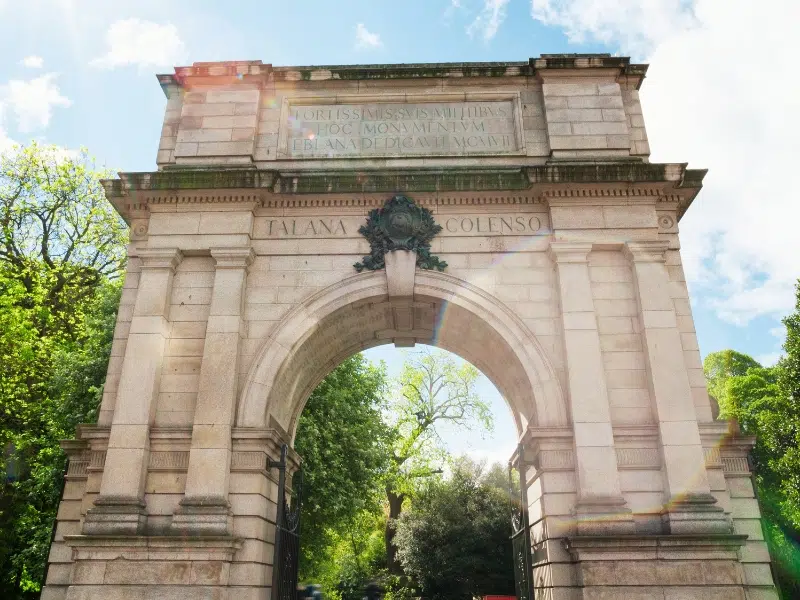
The Fusilier’s Arch is a striking war memorial located at the Grafton Street entrance to St. Stephen’s Green in Dublin, Ireland. Erected in 1907, it commemorates the officers, non-commissioned officers, and enlisted men of the Royal Dublin Fusiliers who fought and died in the Second Boer War (1899-1902).
A Monument to Sacrifice
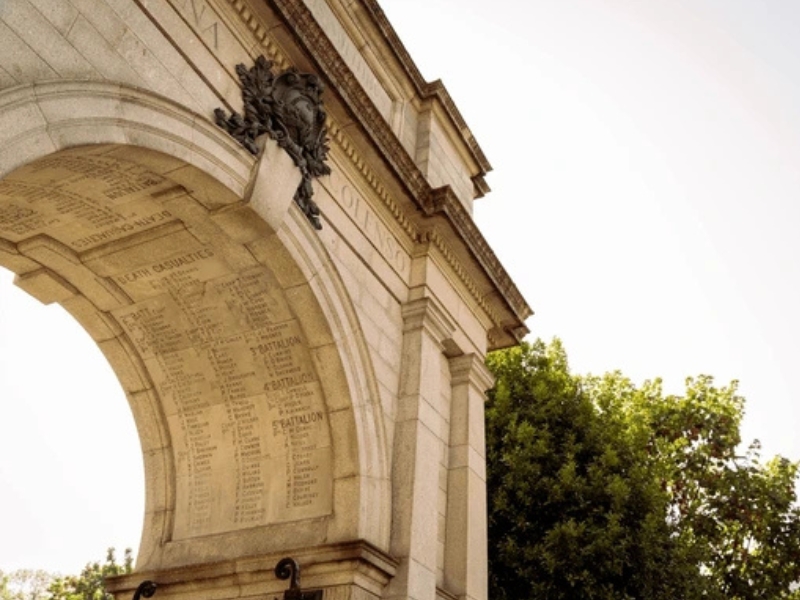
The arch is a poignant reminder of the sacrifices made by Irish soldiers in service to the British Empire. The names of over 200 soldiers who lost their lives in the Boer War are inscribed on the underside of the arch.
The design of the arch is inspired by Roman triumphal arches, with a grand, imposing structure that commands attention. The archway is flanked by ornate columns and topped with a decorative cornice. The names of the battles in which the Royal Dublin Fusiliers fought are inscribed on the frieze.
A Controversial Legacy
While the Fusilier’s Arch commemorates the sacrifice of Irish soldiers, it also serves as a reminder of Ireland’s colonial past. The Boer War was a conflict between the British Empire and the two Boer republics in South Africa. The involvement of Irish soldiers in this conflict has been a subject of debate, particularly in light of Ireland’s own struggle for independence.
The arch has been a source of controversy, with some arguing that it glorifies British imperialism. Others, however, see it as a memorial to the bravery and sacrifice of Irish soldiers.
A Dublin Landmark
Despite its controversial past, the Fusilier’s Arch remains a prominent landmark in Dublin. It is a popular meeting point for locals and tourists alike, and it is often featured in photographs and films. The arch’s striking design and its location in the heart of the city make it a memorable sight.
The arch is often used as a backdrop for public events, such as protests and celebrations. It has also been featured in numerous films and television shows, further enhancing its iconic status.
A Reflection of Irish History
The Fusilier’s Arch is a reminder of Ireland’s complex history. The Irish people have a long and often tragic history of involvement in wars and conflicts, both at home and abroad. The arch serves as a memorial to those who have lost their lives in these conflicts, and it invites us to reflect on the sacrifices they made.
The arch is also a symbol of Ireland’s changing relationship with Britain. In the early 20th century, Ireland was part of the British Empire. However, the Easter Rising of 1916 and the subsequent War of Independence led to the establishment of the Irish Free State.
The Fusilier’s Arch is a reminder of this complex history and the sacrifices made by Irish people in the pursuit of independence. It is a symbol of both the past and the future, and it continues to be a significant part of Dublin’s cultural landscape.
Tips for Visiting the Fusilier’s Arch
- Best Time to Visit: The Fusilier’s Arch can be visited year-round. However, the spring and summer months offer pleasant weather for exploring the surrounding area.
- Nearby Attractions: The arch is located near many other popular attractions in Dublin, including St. Stephen’s Green, Grafton Street, and Trinity College.
- Photography: The arch is a popular spot for photography, especially at night when it is illuminated.
- Local Culture: Take some time to explore the nearby shops, cafes, and restaurants. The area around the arch is a vibrant hub of Dublin’s cultural life.
- Historical Context: To fully appreciate the significance of the Fusilier’s Arch, it is helpful to learn about the history of the Boer War and the role of the Royal Dublin Fusiliers.
By visiting the Fusilier’s Arch, you can gain a deeper understanding of Ireland’s complex history and its involvement in global conflicts. This iconic landmark is a reminder of the sacrifices made by Irish soldiers and a symbol of the city’s rich heritage.
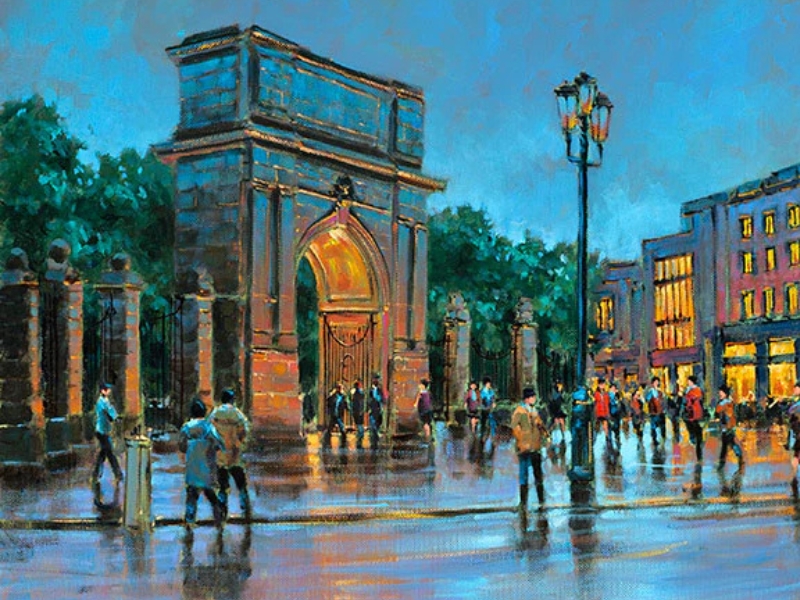
Fusilier’s Arch is part of Dublin scavenger hunt and walking tour!
Embark on an unforgettable journey through the enchanting city of Dublin with World City Trail. Our interactive walking tour combines the thrill of exploration with the rich history and culture of this beautiful city.
Key Features:
Interactive gameplay: Solve engaging puzzles and challenges as you explore the city.
Hidden gems: Uncover lesser-known spots.
Cultural insights: Learn about the city’s fascinating history.
Flexibility: Explore at your own pace and create your own itinerary.
Family friendly activity and a great way to explore the city!
Further reading on Wikipedia: Dublin