
Table of Contents
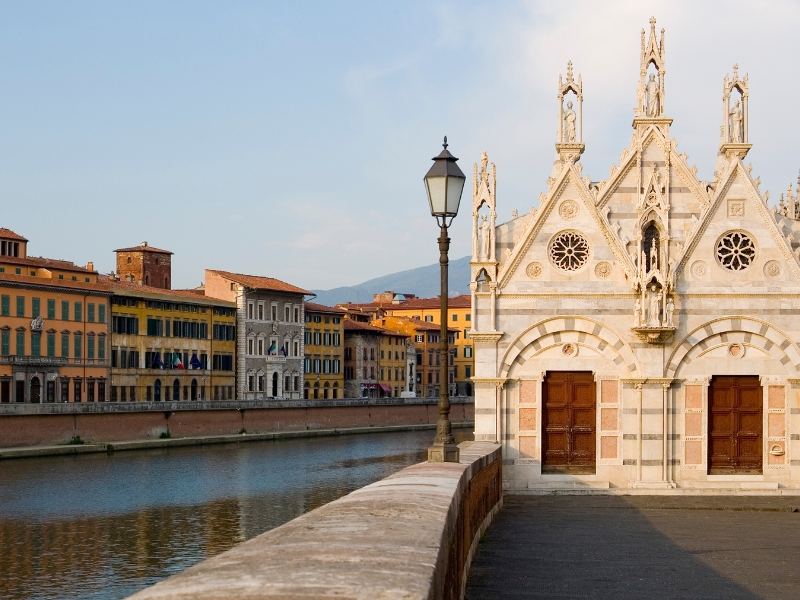
Santa Maria della Spina, a small but exquisitely beautiful church nestled on the banks of the Arno River in Pisa, Italy, is a masterpiece of Italian Gothic architecture. Its delicate, almost ethereal design, combined with its rich history and the precious relic it once housed, makes it a unique and captivating landmark. It’s a testament to the artistry and craftsmanship of the Pisan people and a must-see for visitors exploring this historic city.
A Church Born of Devotion
The Santa Maria della Spina’s origins are deeply intertwined with a relic of immense religious significance: a thorn believed to be from the Crown of Thorns worn by Jesus Christ during his crucifixion. This sacred relic, acquired by the powerful and wealthy Gherardesca family, who were prominent figures in Pisan society, was gifted to the city of Pisa in 1294.
This act of devotion and generosity elevated the city’s status and solidified the Gherardesca family’s influence. To provide a fitting home for this precious thorn, the existing small oratory of Santa Maria in Horto was chosen and dramatically transformed into the jewel box we know today as Santa Maria della Spina. The church’s very name, “della Spina,” meaning “of the Thorn,” directly and permanently references this revered relic, forever linking its identity to the sacred thorn.
A Masterpiece of Pisan Gothic Artistry
Construction of the Santa Maria della Spina, heavily influenced by the distinctive Italian Gothic style, took place primarily during the late 13th and early 14th centuries. While smaller in scale compared to Pisa’s grand cathedral and baptistery, Santa Maria della Spina’s intricate details and refined elegance make it a true architectural gem.
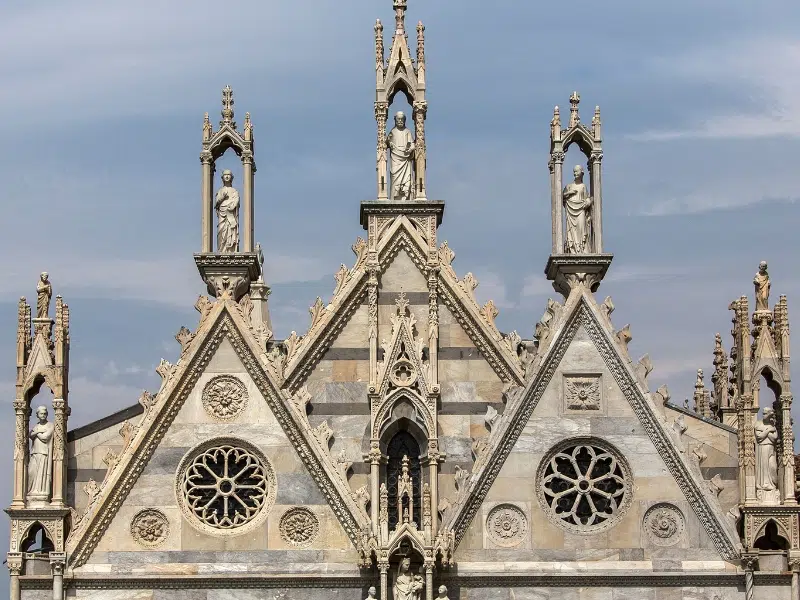
The exterior is characterized by its striking white marble facade, adorned with delicate carvings, pointed arches, and slender pinnacles that reach towards the sky. The extensive use of pristine white marble gives the church an almost otherworldly sense of lightness and luminosity, enhancing its ethereal beauty and making it stand out against the backdrop of the Arno River and the surrounding cityscape.
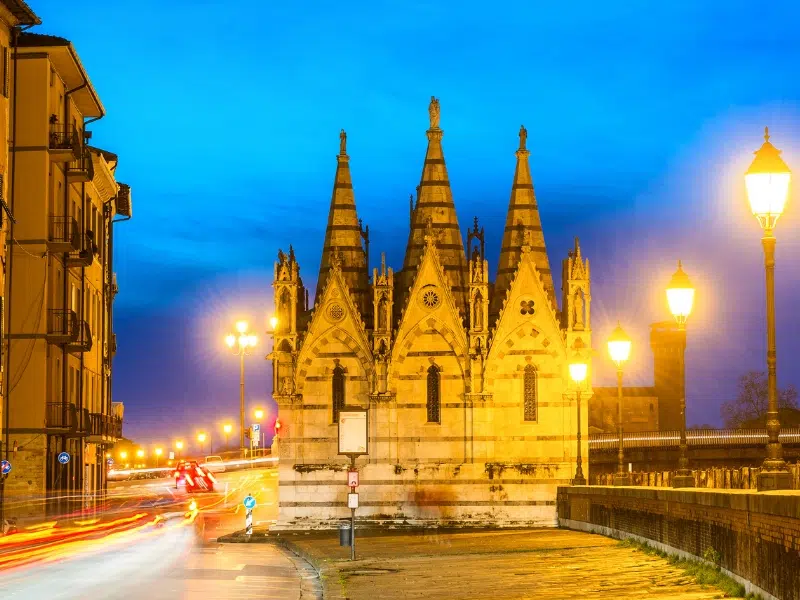
The church’s most striking and unique feature is its intentionally asymmetrical design. Due to its precarious location on the banks of the Arno River, the church was built on an uneven foundation. Rather than attempting to force a perfectly symmetrical structure onto this challenging site, the skilled architects ingeniously and creatively incorporated the irregularity into the overall design. This resulted in a dynamic and visually captivating silhouette, adding to the church’s unique charm and showcasing the remarkable skill and adaptability of its builders. The asymmetry serves not as a flaw but as a testament to their ingenuity.
A Church’s Enduring Legacy
For centuries, Santa Maria della Spina served as the revered home for the sacred thorn. The relic was housed in an exquisitely crafted and elaborate reliquary, a testament to the craftsmanship of the era, and displayed to the public on special occasions and holy days, attracting pilgrims from far and wide and bolstering the church’s religious and cultural importance. However, the thorn eventually embarked on its own journey, making its way to France, where it now resides in the Sainte-Chapelle in Paris. Despite the relocation of the relic, the church remarkably retains its name, “della Spina,” and its historical and artistic significance.
Over the centuries, Santa Maria della Spina has undergone several restorations and renovations, necessary to preserve its delicate structure and protect it from the elements. The most significant restoration took place in the 19th century, when the church was carefully moved slightly from its original location to safeguard it from the recurring threat of flooding from the Arno River. This relocation, while essential for the church’s survival, further altered its relationship with its immediate surroundings and added another layer of complexity and intrigue to its already rich and fascinating history.
Santa Maria della Spina is part of Pisa scavenger hunt and walking tour!
Embark on an unforgettable journey through the enchanting city of Pisa with World City Trail. Our interactive walking tour combines the thrill of exploration with the rich history and culture of this beautiful city.
Key Features:
Interactive gameplay: Solve engaging puzzles and challenges as you explore the city.
Hidden gems: Uncover lesser-known spots.
Cultural insights: Learn about the city’s fascinating history.
Flexibility: Explore at your own pace and create your own itinerary.
Family friendly activity and a great way to explore the city!
Further reading on Wikipedia: Pisa