
Table of Contents
Perugia, the capital of Italy’s Umbria region, is a city rich in history, culture, and stunning landscapes. From its medieval streets and Renaissance art to its vibrant festivals and delicious cuisine, Perugia offers an unforgettable experience for every traveler.
Key Features of Perugia
- Perugia’s Grifo: The griffin, a mythical creature with the head of an eagle and the body of a lion, is Perugia’s symbol. You’ll see it everywhere!
- A City of Stairs: Prepare for some legwork! Perugia’s hilltop location means lots of charming (and sometimes challenging) stairways and inclines.
- Mini Metro: Perugia has its own unique transportation system: a Mini Metro, a small, automated train that climbs the hill, connecting the lower parts of the city to the historic center.
- Hidden Gardens: Tucked away within the city walls, you can find secret gardens and courtyards, offering peaceful escapes from the bustling streets.
- Local Ceramics: Perugia and the surrounding Umbrian region are known for their beautiful ceramics. Look for colorful maiolica pottery in local shops.
- The Corso: The Corso Vannucci is Perugia’s main street, a lively pedestrian thoroughfare perfect for strolling, shopping, and people-watching.
- A Sweet Treat Beyond Baci: While Baci are famous, don’t miss other Perugian treats, like torcolo, a traditional ring-shaped cake often enjoyed during festivals.
- Palazzo dei Priori: This impressive palace is the seat of Perugia’s government and a stunning example of medieval architecture. It’s open to visitors and houses some beautiful artwork.
Fun Facts About Perugia
- University of Ancient Standing: Perugia boasts one of Italy’s oldest universities, founded in 1308. Imagine walking the same halls as students from centuries past!
- Baci: A Chocolate Love Story: The iconic Baci Perugina chocolates, with their romantic messages, originated in Perugia in 1922. They’re a sweet symbol of Italian love.
- Subterranean Secrets: Perugia’s underground is a hidden world of Etruscan and medieval tunnels. Exploring these passages is like stepping back in time.
- Jazz Capital of Italy: Perugia hosts the Umbria Jazz Festival, a major European jazz event attracting top musicians and fans from around the globe.
- Ancient Walls Still Standing: Perugia’s impressive Etruscan walls, dating back to the 3rd century BCE, offer a glimpse into the city’s ancient past.
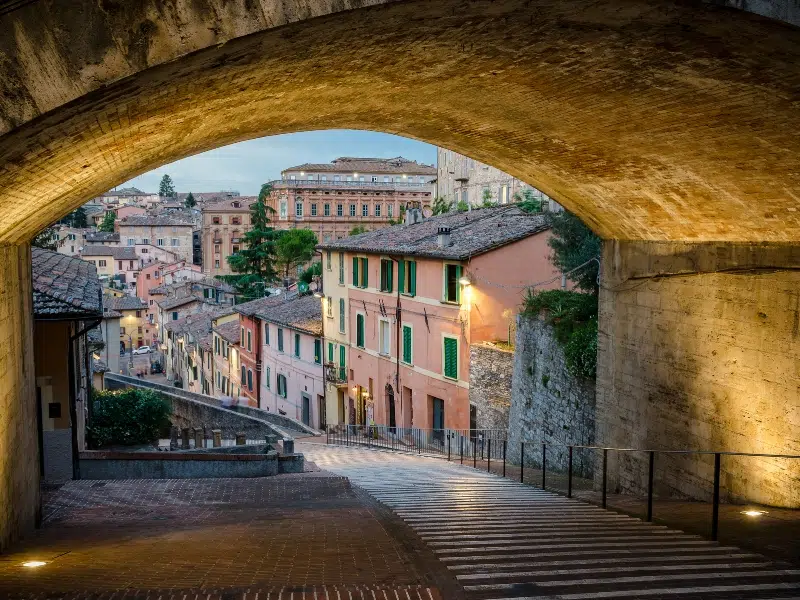
- A Grand Etruscan Entrance: The Etruscan Arch (Arco Etrusco), also called the Arch of Augustus, is one of the best-preserved Etruscan arches in Italy. It’s a monumental sight!
- Fountain of Dreams: The Fontana Maggiore, a stunning 13th-century fountain in the city center, is a masterpiece of medieval artistry and a must-see.
- Home to a Painter Saint: Perugia is the birthplace of the Renaissance painter, Pietro Perugino, who was also the teacher of Raphael.
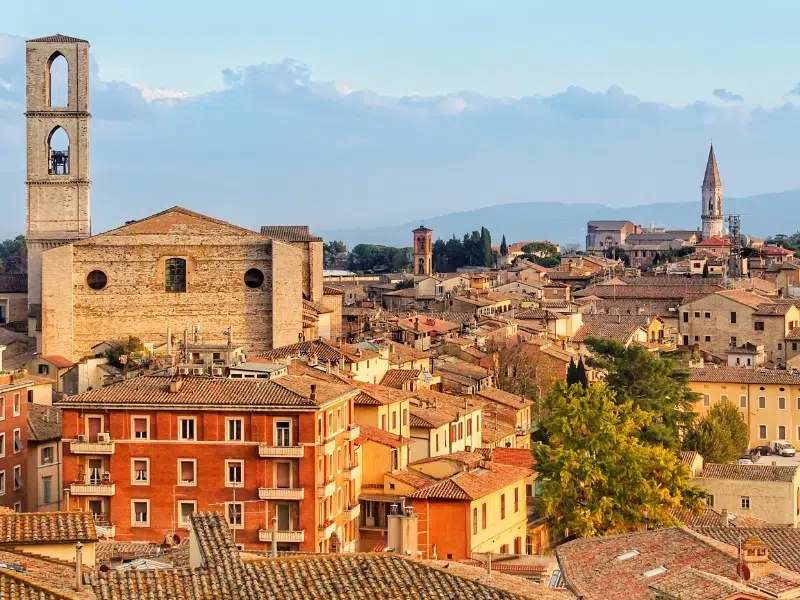
- A Hilltop Haven: Perugia’s location on a hilltop offers breathtaking panoramic views of the Umbrian countryside. Get your camera ready!
- Chocolate Heaven (Eurochocolate): Beyond Baci, Perugia is a chocolate lover’s paradise, especially during the annual Eurochocolate festival, a celebration of all things chocolate.

Local Legends About Perugia
- The Griffin’s Grudge: Perugia’s guardian, the mighty griffin, isn’t just a symbol – it’s said to be a real protector. Local lore whispers that anyone who dares to disrespect or remove a griffin statue will face the creature’s wrath, from minor mishaps to major misfortune.
- Echoes of Forbidden Love in the Rocca: The Rocca Paolina, Perugia’s underground fortress, isn’t just a historical site; it’s a stage for a tragic love story. Legend has it that the ghostly figures of two star-crossed lovers, perhaps from feuding families or a forbidden romance, are forever trapped within its passages, their spectral forms destined to meet but never unite.
- The Etruscan Fortune: Imagine stumbling upon a hidden treasure, a hoard of gold and jewels left behind by the ancient Etruscans! Local legends tantalize with tales of a vast fortune buried somewhere beneath Perugia’s streets. Some say it’s a cursed treasure, guarded by ancient spirits, while others believe it’s waiting for a worthy soul to uncover it.
- The Whispering Walls of the Palazzo: The Palazzo dei Priori, Perugia’s grand palace, is more than just a seat of power. Locals claim that the palace walls whisper secrets of the city’s past, revealing hidden intrigues and forgotten stories.
- The Fontana’s Blessing: The Fontana Maggiore, Perugia’s magnificent fountain, isn’t just beautiful; it’s said to bring good luck. Legend claims that those who toss a coin into its waters will be blessed with love, happiness, or a safe return to Perugia.
What About the History of Perugia?
Etruscan Roots
Perugia wasn’t just founded by the Etruscans; it was a thriving Etruscan metropolis, a powerhouse of art, culture, and trade. Imagine its bustling streets, filled with artisans, merchants, and the echoes of a unique language. Later, when the Romans arrived, Perugia didn’t simply become “part” of the Empire. It cleverly integrated Roman culture while fiercely preserving its Etruscan identity, creating a fascinating blend of traditions.
Papal Power and Artistic Patronage
When Perugia came under papal rule in the 16th century, it wasn’t simply a change of management. It was a transformation! The papacy didn’t just exert control; they became major patrons of the arts, shaping Perugia’s religious and architectural landscape. This era left behind a legacy of stunning churches, opulent palaces, and a distinct artistic style that defines much of the city today.
A City Forged in Conflict
Perugia’s history isn’t just a story of art and culture; it’s a tale of resilience. From its Etruscan origins to its struggles for independence and its eventual integration into modern Italy, Perugia has weathered countless storms. Its story is one of constant reinvention, a testament to the enduring spirit of its people.
Must-Try Food in Perugia
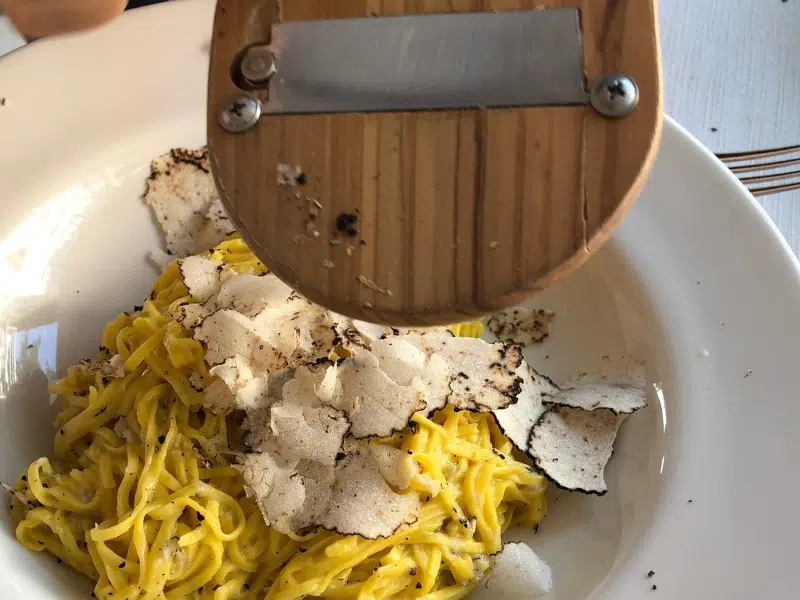
- Strangozzi al Tartufo: A local handmade pasta, similar to thick spaghetti, often served with a black truffle (tartufo) sauce. Umbria is famous for its truffles, and Perugia is no exception.
- Torta al Testo: A traditional Umbrian flatbread, similar to focaccia but cooked on a griddle (testo). It’s often stuffed with prosciutto, sausage, or cheese.
- Porchetta: A slow-roasted, herb-stuffed pork dish that is crispy on the outside and tender on the inside. Often eaten in sandwiches or as a main dish.
- Tagliatelle al Sugo d’Oca: Fresh egg pasta served with a rich, slow-cooked goose meat sauce—an Umbrian specialty.
- Rocciata: A dessert similar to strudel, filled with apples, nuts, and raisins, flavored with cinnamon and sometimes a splash of local liquor.
- Cioccolato Perugina: Perugia is famous for Baci Perugina, the iconic chocolate hazelnut candies wrapped in love notes. Visit the Perugina Chocolate House for a taste!
Must-Visit Attractions in Perugia
- Etruscan Arch (Arco Etrusco): One of Perugia’s most significant historical structures, this grand archway dates back to the 3rd century BCE and served as a main entrance to the city during Etruscan times.
- Teatro Morlacchi: Perugia’s historic opera house, Teatro Morlacchi, was constructed in the late 18th century in a neoclassical style. It is still an active venue for opera, theater, and concerts, making it a great place to experience Perugia’s vibrant cultural scene.
- Church of Saint Philip Neri: Located near the Etruscan Arch, this stunning Baroque church was built in the 17th century. It features a richly decorated interior with intricate stucco work, frescoes, and a remarkable high altar. The church is a peaceful retreat and a hidden gem for art lovers.
- Cattedrale San Lorenzo: Perugia’s Duomo, a beautiful Gothic cathedral, dominates Piazza IV Novembre. Inside, you’ll find stunning frescoes, an impressive wooden choir, and religious relics, including the Holy Ring, said to be the wedding ring of the Virgin Mary.
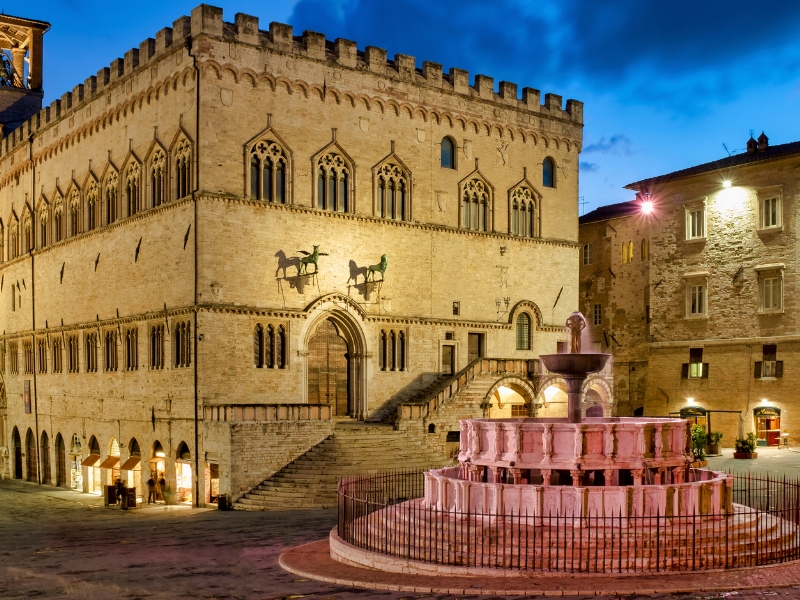
- Palazzo dei Priori: A masterpiece of medieval Gothic architecture, Palazzo dei Priori is one of Italy’s finest town halls. Constructed between the 13th and 16th centuries, it houses the National Gallery of Umbria and the Collegio della Mercanzia and Collegio del Cambio.
- Fontana Maggiore: This ornate medieval fountain, located in the heart of Piazza IV Novembre, is one of Perugia’s most recognizable landmarks. Designed in the late 13th century by Nicola and Giovanni Pisano, the fountain is adorned with intricate bas-reliefs depicting biblical scenes, zodiac signs, and scenes of rural life in medieval Umbria.
- National Gallery of Umbria: Located inside Palazzo dei Priori, this prestigious museum boasts an incredible collection of Umbrian art from the 13th to the 18th centuries. Highlights include masterpieces by Perugino, Pinturicchio, Fra Angelico, and Piero della Francesca. The gallery provides a deep dive into the region’s artistic heritage.
- Corso Pietro Vannucci: This elegant pedestrian street is the main artery of Perugia’s historic center. Named after the famous Renaissance painter Pietro Vannucci (Perugino), it’s lined with boutiques, bookshops, and traditional cafés.
- Piazza della Repubblica: A lively square in the heart of Perugia, Piazza della Repubblica is a popular meeting spot. Lined with charming cafés, shops, and historic buildings, it’s a great place to take a break. It also connects to Corso Pietro Vannucci, Perugia’s main shopping street.
- Via della Viola: A charming and slightly hidden street in Perugia’s historic center, Via della Viola is known for its bohemian atmosphere, colorful murals, and artisan workshops.
This walking tour will take you through the heart of Perugia, allowing you to experience the fun facts about Perugia’s rich history, stunning architecture, and cultural significance.
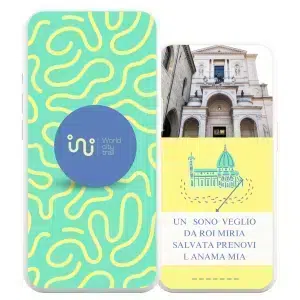
Explore Perugia with World City Trail
Embark on an unforgettable journey through the historic streets and cultural treasures of Perugia with World City Trail. This interactive walking tour combines exploration, entertainment, and local heritage into a unique and engaging experience.
Key Features:
- Interactive Gameplay: Solve fun puzzles and challenges as you explore Perugia’s hidden gems, from medieval streets to Etruscan landmarks.
- Iconic Landmarks: Visit must-see sites like Piazza IV Novembre, Rocca Paolina, and the Etruscan Arch while discovering the city’s rich history.
- Hidden Gems and Fun Facts About Perugia: Uncover Perugia’s lesser-known treasures, including its underground tunnels, local legends, and ancient traditions.
- Flexibility: Explore at your own pace, crafting an itinerary that suits your interests while immersing yourself in Perugia’s unique charm.