
Table of Contents
The Puente de Piedra, a venerable stone bridge spanning the Ebro River in Zaragoza, transcends its functional purpose. It embodies a tangible link to the city’s historical continuity, a silent observer of its evolution, and a testament to the enduring power of infrastructure. This iconic bridge, far from being a mere crossing, represents a living narrative of Zaragoza’s past, a space where the rhythmic flow of the river blends with the enduring strength of ancient stone. It’s a sanctuary where the timeless beauty of Romanesque and Gothic architecture meets the dynamic energy of modern life, offering a profound connection to the city’s enduring spirit.
A Chronicle of Connection
The Puente de Piedra‘s narrative is deeply rooted in Zaragoza’s Roman origins, when the city was known as Caesaraugusta. Its origins, tied to the strategic importance of the Ebro River crossing, illustrate the historical connection between infrastructure and urban development. Over time, the bridge evolved from a simple Roman structure to the enduring landmark that stands today, reflecting the changing fortunes and needs of Zaragoza.
Reconstructed and reinforced over centuries, particularly during the medieval period, the bridge’s design reflects a blend of Romanesque and Gothic influences. Its architectural design, a testament to the skill of generations of builders, became a symbol of Zaragoza’s resilience and its enduring connection to the river. The bridge is a testament to the way that vital infrastructure can adapt and survive through centuries of change.
Architectural Expression
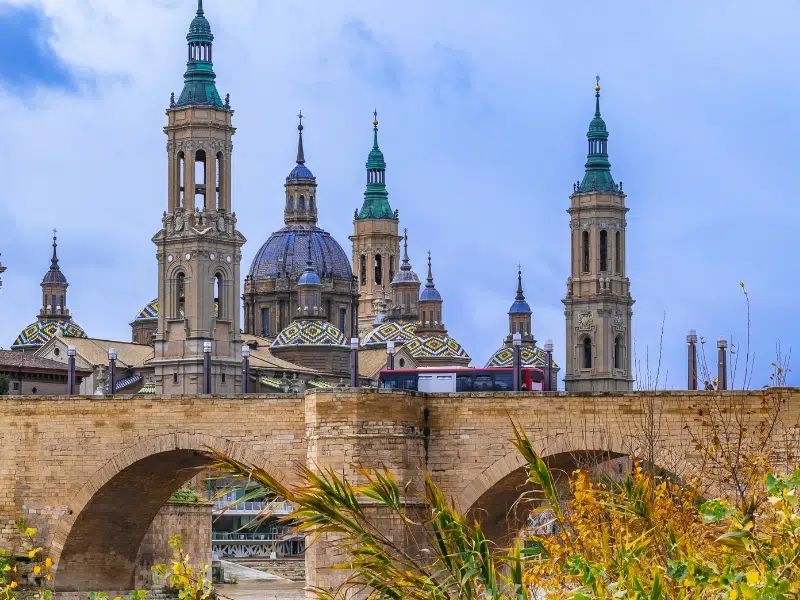
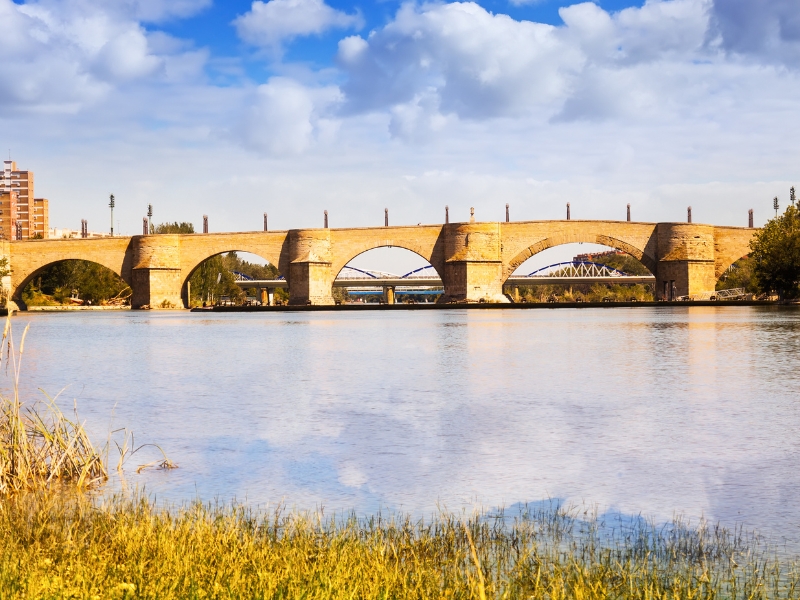
The Puente de Piedra‘s architectural design is characterized by its robust simplicity and its ability to evoke a sense of historical depth. The stone arches, with their varied spans and weathered surfaces, provide a glimpse into the ingenuity of medieval builders. The bridge’s strategic placement, offering panoramic views of the Ebro River and the Basilica of Our Lady of the Pillar, creates a visually stunning backdrop for historical reflection and urban exploration.
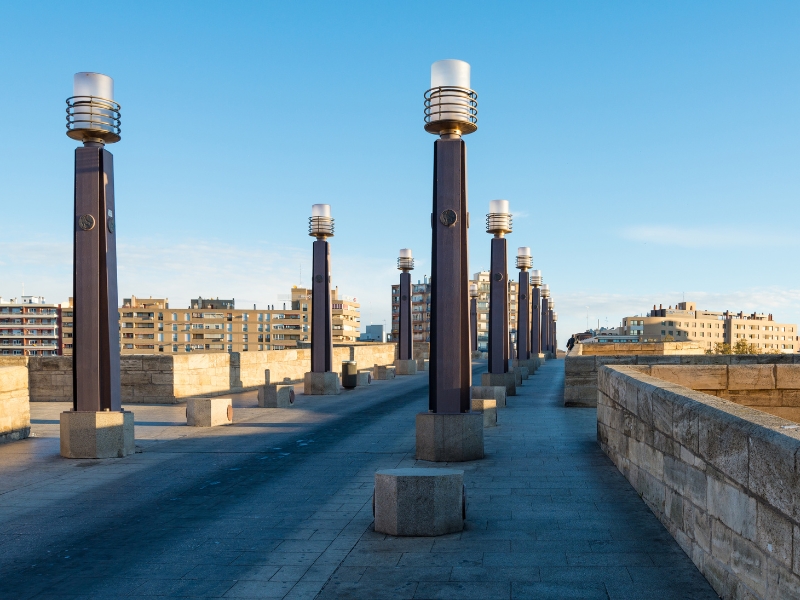
The incorporation of defensive elements, such as the central tower, reflects the bridge’s historical role as a vital point of control. The varying textures and colors of the stone, along with the play of light and shadow, create a dynamic and evocative visual experience. The architectural elements are designed to preserve the historical integrity of the bridge while allowing for its continued use as a vital transportation link.
A Living Monument of History
The Puente de Piedra also plays a crucial role in Zaragoza’s cultural landscape, acting as a bridge not just between the two banks of the Ebro River but between the past and present of the city. Its architectural significance goes beyond its historical purpose as a functional crossing; it has become a symbol of Zaragoza’s resilience and adaptability.
Through the centuries, the bridge has witnessed the growth and modernization of the city while preserving its ancient character. Today, the Puente de Piedra stands as a living monument—a place where locals and visitors alike can reflect on the city’s rich history while experiencing the dynamic rhythm of modern life. It is a space where time and continuity converge, offering a lasting connection to Zaragoza’s evolving identity.
Puente de Piedra is part of Zaragoza scavenger hunt and walking tour!
Embark on an unforgettable journey through the enchanting city of Zaragoza with World City Trail. Our interactive walking tour combines the thrill of exploration with the rich history and culture of this beautiful city.
Key Features:
Interactive gameplay: Solve engaging puzzles and challenges as you explore the city.
Hidden gems: Uncover lesser-known spots.
Cultural insights: Learn about the city’s fascinating history.
Flexibility: Explore at your own pace and create your own itinerary.
Family friendly activity and a great way to explore the city!
Further reading on Wikipedia: Zaragoza