
In the heart of Bremen, within the fantastical architecture of Böttcherstraße, lies a captivating tribute to a local legend: the Seven Lazy Brothers (Die Sieben Faulen). Far from being a derogatory label, this endearing moniker refers to a group of fictional siblings who, despite being initially dismissed as indolent, ultimately proved their ingenuity and transformed their community. Their story, immortalized in art and architecture, stands as a charming symbol of Bremen’s spirit of innovation and its appreciation for unconventional thinking.

The Legend: From Idleness to Ingenuity
The folk tale of the Seven Lazy Brothers, popularized by Bremen writer Friedrich Wagenfeld (1810–1846), tells of a poor farmer from the region who had seven sons. These sons were seen as lazy because they refused to engage in the traditional, back-breaking farm work of their era. They disliked getting their feet wet and muddy in the fields or having to clean their shoes after walking on unpaved roads. Unable to find work in Bremen due to their perceived idleness, they ventured out into the wide world to seek their fortunes.
Years later, they returned, not with riches, but with something far more valuable: innovative ideas and new ways of doing things. One brother suggested digging drainage ditches to dry the wet fields, another proposed paving the muddy roads, a third devised a dyke system to prevent the Weser River from flooding. What seemed like “laziness” – a reluctance to engage in inefficient, arduous labor – was, in fact, a deep-seated desire for efficiency and improvement. Their radical solutions revolutionized farming and urban life, leading to greater prosperity for their father and the entire community. The astonished citizens of Bremen finally recognized their astuteness and foresight, transforming the brothers from objects of scorn into symbols of resourcefulness.
Böttcherstraße: A Stage for the Legend
The most prominent artistic tributes to the Seven Lazy Brothers are found in Böttcherstraße, Bremen’s famous Expressionist street, a unique architectural ensemble largely developed between 1922 and 1931 by the prosperous coffee merchant Ludwig Roselius. Roselius, a patron of the arts and a visionary, conceived Böttcherstraße as a “Gesamtkunstwerk” (total work of art), a blend of North German brick architecture, Art Deco, and Expressionism, with a focus on Germanic cultural ideals.
Within this extraordinary street, the legend of the Seven Lazy Brothers is immortalized in two key artistic installations:
- The House of the Seven Lazy Brothers (Haus der Sieben Faulen): Located at Böttcherstraße No. 7, this building was originally part of the HAG-Haus, named after Roselius’s Kaffee HAG company. The first version of the building was completed in 1927. After sustaining damage during World War II, the building was largely rebuilt in 1954. It was after this reconstruction that it truly acquired its current name and the prominent seven upright figures on its gable, sculpted by Aloys Röhr (created 1924-1927 for the original building, but prominently featured on the rebuilt structure). These proud figures symbolize the brothers’ ultimate success and the recognition of their cleverness, far from “lazy” in their accomplishments.
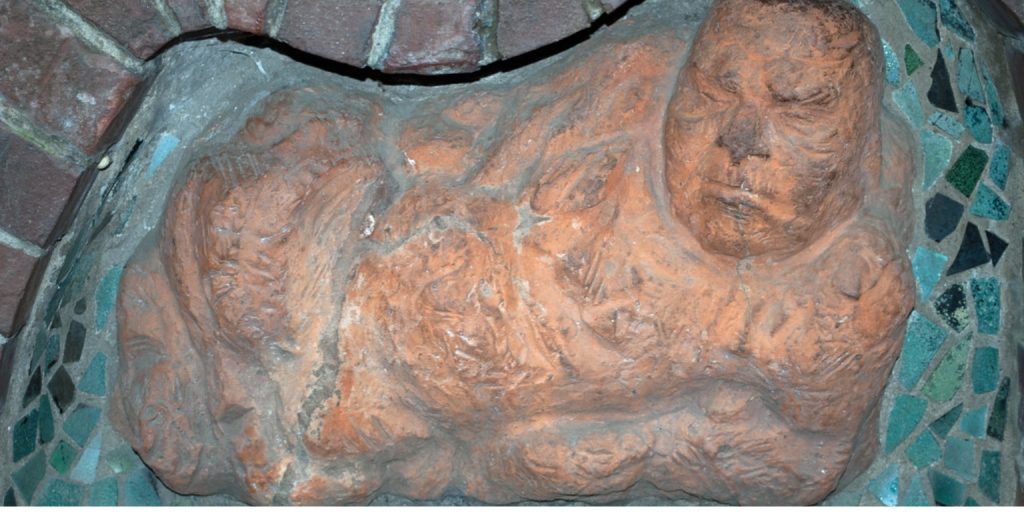
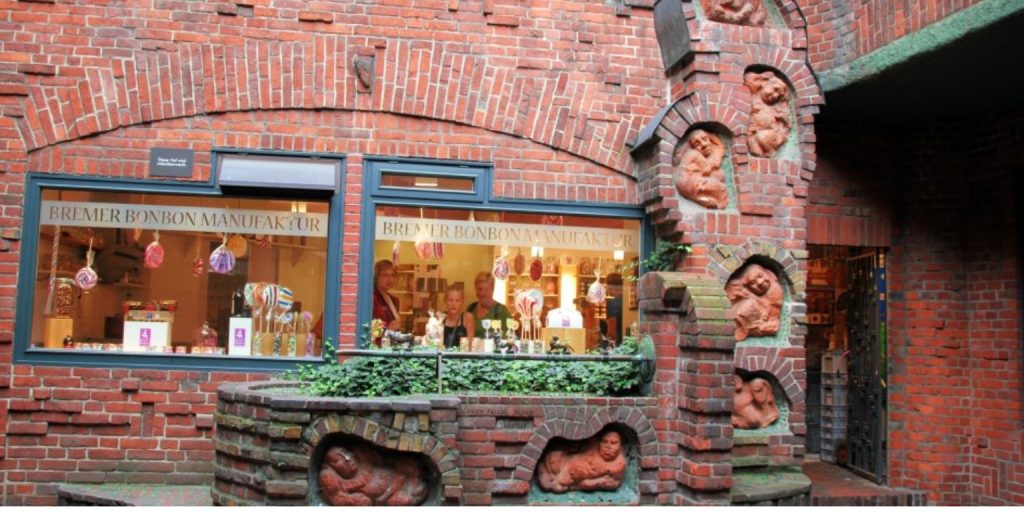
- The Fountain of the Seven Lazy Brothers (Sieben Faulen-Brunnen): Situated in a charming courtyard within Böttcherstraße (specifically near the Paula Modersohn-Becker House), this fountain was designed by the renowned Expressionist sculptor Bernhard Hoetger, one of Roselius’s key collaborators. While the entire Böttcherstraße project was conceived in the 1920s, the fountain was part of the earlier phase of the street’s development. It depicts the brothers in a more whimsical, almost caricatured style, reflecting their initial reputation. The water element adds a sense of vitality and continuous movement, hinting at the flow of new ideas.
A Symbol of Bremen’s Spirit
The story of the Seven Lazy Brothers remains a beloved part of Bremen’s cultural identity. It’s a reminder that true innovation often comes from questioning established norms and seeking smarter, not just harder, ways of working. Their “laziness” was a form of creative problem-solving, a willingness to challenge the status quo – qualities that resonate deeply with Bremen’s history as a Hanseatic city known for its independent spirit and pragmatic ingenuity.
Today, visitors to Böttcherstraße can easily find these artistic tributes. The House of the Seven Lazy Brothers and the Fountain of the Seven Lazy Brothers, integrated into Roselius’s architectural vision (developed primarily between 1922 and 1931, with the house being rebuilt in 1954), offer a delightful and thought-provoking encounter with Bremen’s rich folklore and its underlying message about the value of unconventional brilliance. They serve as a constant, charming reminder to look beyond first impressions and appreciate the power of a fresh perspective.